
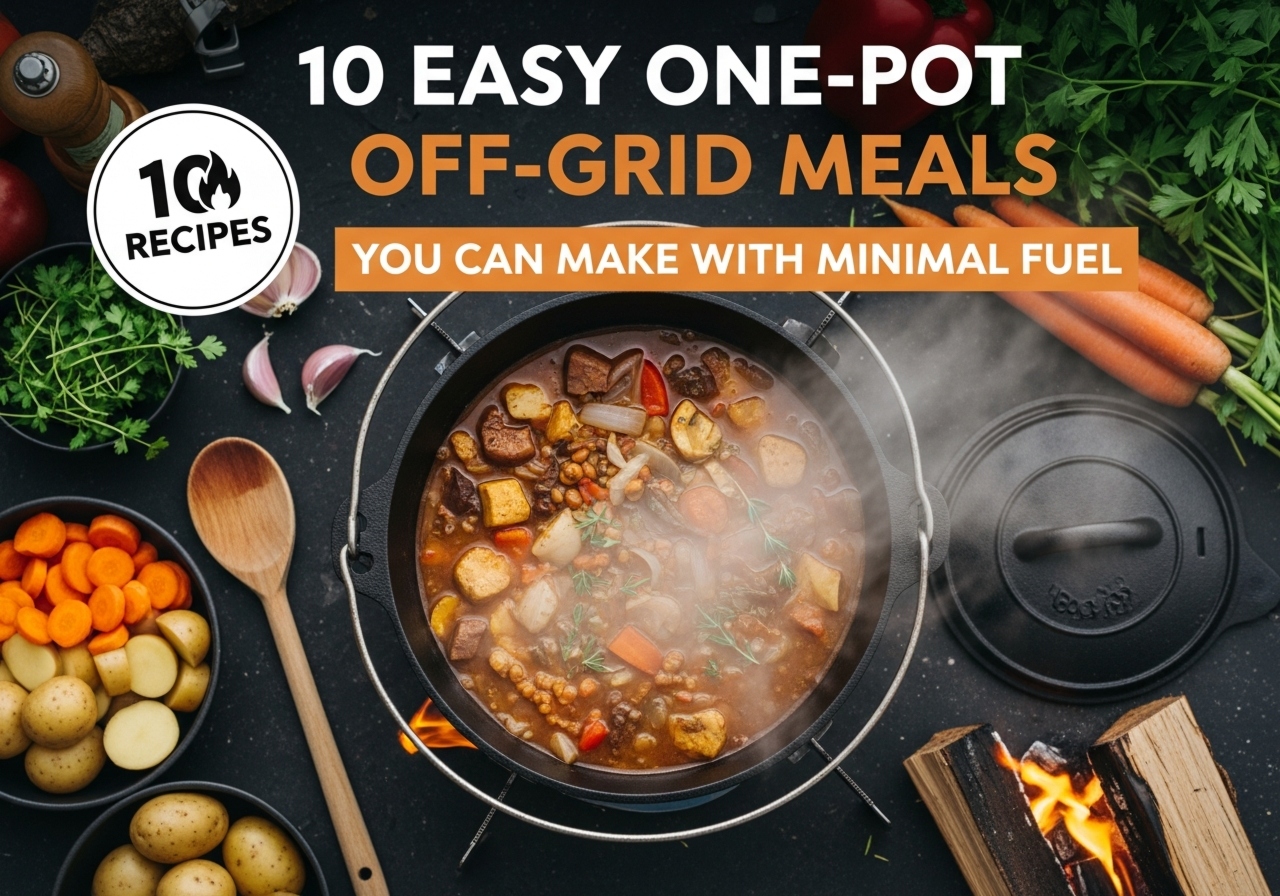
Want a set of reliable, low-fuel one‑pot meals you can make when your power or propane supply is limited?
10 Easy One‑Pot Off‑Grid Meals You Can Make With Minimal Fuel
This guide gives you ten simple one‑pot meals designed for off‑grid living, camping, or emergency cooking. Each meal focuses on minimal fuel use, straightforward ingredients, and practical techniques so your pot spends less time on the flame and more time keeping food hot with residual heat.
Below is a quick summary so you can pick a meal based on time and fuel demand.
| # | Meal | Main Ingredients | Approx Cook Time | Fuel Use |
|---|---|---|---|---|
| 1 | Lentil & Rice Stew | Lentils, rice, onion, spices | 30–40 min | Low |
| 2 | One‑Pot Beans & Ham Hock | Dried beans, ham hock, aromatics | 60–90 min (soak reduces) | Moderate |
| 3 | One‑Pot Pasta with Chickpeas & Tomatoes | Pasta, canned tomatoes, chickpeas | 20–25 min | Low |
| 4 | Potato & Kale Stew | Potatoes, kale, onion, broth | 25–35 min | Low |
| 5 | Steel‑Cut Oats with Nuts & Fruit | Oats, dried fruit, nuts | 10–20 min | Very low |
| 6 | Quinoa Chili | Quinoa, beans, tomatoes, chili spices | 30–40 min | Low |
| 7 | Coconut Veg Curry with Rice | Rice, mixed veg, coconut milk | 30–35 min | Low |
| 8 | Simple Fish & Vegetable Soup | Firm white fish, root veg, broth | 15–20 min | Very low |
| 9 | Chicken & Barley One‑Pot | Chicken thighs, barley, vegetables | 45–60 min | Moderate |
| 10 | Smoky Bean & Sweet Potato Stew | Canned/dried beans, sweet potato, paprika | 30–40 min | Low |
Off‑Grid One‑Pot Cooking Basics
When you’re cooking with limited fuel, your approach should change from speed to efficiency. You concentrate heat into one pot, use lids, take advantage of heat retention, and reduce the number of boiling rounds. Think about the sequence of cooking: start with ingredients that need the highest, longest heat and finish with delicate items that only require gentle warming.
Essential one‑pot equipment
Choosing the right pot and tools saves fuel and improves results. A heavy‑bottomed pot or Dutch oven distributes heat better and reduces scorching; a good lid holds in steam and shortens active cooking time. You don’t need lots of gadgets—just a durable pot with a tight lid, a long‑handled spoon, an insulated cozy or towel for retaining heat off the flame, and a simple strainer. If you have a camping pressure cooker or small cast‑iron Dutch oven, they’re hugely helpful.
| Item | Why it helps |
|---|---|
| Heavy‑bottomed pot / Dutch oven | Even heat, less scorching, can retain heat longer |
| Tight‑fitting lid | Traps steam, speeds cooking, reduces fuel use |
| Small pressure cooker | Cuts cooking time massively for beans and grains |
| Insulating cozy / towel | Holds residual heat after removing from flame |
| Spoon, ladle, small strainer | Basic prep and serving tools |
Fuel‑saving techniques
A handful of techniques will repeatedly cut fuel use: pre‑soak beans and grains, bring only to a simmer rather than a rolling boil, use a lid, and use residual heat (carryover cooking) to finish dishes. You can also pre‑chop vegetables to reduce active stove time, brown meats quickly and then simmer with a lid, and use hot coals or an ember bed to maintain steady low heat if you have them.
1. Lentil & Rice Stew (Hearty & Fast)
This is a forgiving, protein‑rich meal that cooks quickly and keeps warm well. Lentils don’t need pre‑soaking, which saves time and fuel. You’ll get a complete meal with vegetables and spices in a single pot that simmers gently.
Ingredients
Use basic staples you likely have stored. Lentils are fast‑cooking and pair well with rice for a filling meal.
- 1 cup brown or green lentils, rinsed
- 1/2 cup long‑grained rice (or 3/4 cup for more carbs)
- 1 medium onion, chopped
- 2 cloves garlic, minced
- 1 carrot, diced
- 1 tsp ground cumin, 1 tsp smoked paprika
- 4 cups water or broth
- Salt, pepper, 2 tbsp oil
Method
The key is to get a gentle simmer, then cover and let residual heat do the rest. Sauté the aromatics briefly to boost flavor without long cooking.
- Heat oil over medium, sauté onion and garlic 2–3 minutes.
- Add carrot, cumin, paprika; cook 1 minute.
- Stir in lentils and rice, add water/broth, bring to a boil.
- Reduce to low, cover tightly, simmer 20–25 minutes until lentils and rice are tender.
- Turn off heat and keep covered for 10 minutes for carryover cooking.
Time & Servings
This takes about 30–40 minutes active/carryover; serves 3–4. You can stretch it by adding more water and vegetables.
Fuel tips
Bring to boil quickly on higher heat, then immediately reduce to the smallest flame and cover. Use an insulating cloth around the pot after turning off to finish cooking.
Variations
Swap rice for bulgur or barley (adjust liquid/time), add canned tomatoes for a tangier stew, or stir in leafy greens at the end.
Storage
Cool quickly and refrigerate up to 3 days, or freeze portions for 2–3 months.
2. One‑Pot Beans & Ham Hock (Comfort with Minimal Fuss)
If you have dried beans and a ham hock or smoked neck bone, you can make a deeply flavored stew with little active heat time. Pre‑soaking beans or using an overnight soak cuts fuel dramatically. This is the sort of meal that benefits from long, slow simmering, but you can minimize flame time with a pressure cooker or thermal cooking.
Ingredients
Dried beans give you control over texture and cost. A ham hock adds smoky depth.
- 2 cups dried navy or pinto beans (soaked 6–8 hours or overnight)
- 1 smoked ham hock (or smoked turkey wing)
- 1 large onion, 2 carrots, 2 celery stalks, chopped
- 4–6 cups water or broth
- 2 bay leaves, 1 tsp thyme, salt & pepper
Method
Use soaking and initial rapid boiling to cut overall time. If you have a pressure cooker, use it to shorten fuel use significantly.
- Drain soaked beans, add to pot with ham hock and aromatics; cover with water.
- Bring to a boil, then reduce to low and simmer with lid on. If using a pressure cooker, follow manufacturer’s time (20–30 minutes under pressure).
- Simmer on low 45–60 minutes without pressure, until beans are tender. Remove ham hock, shred meat, return to pot.
- Adjust seasoning and let sit covered off heat for 10 minutes.
Time & Servings
Active time: 1–1.5 hours (less with a pressure cooker); serves 4–6.
Fuel tips
Use soaked beans to save up to half the cooking time. Brown the ham hock briefly to release fat, then add liquid and simmer low. If possible, finish the pot in coals or an insulated cooler.
Variations
Use canned beans if fuel is extremely limited—reduce simmering to 15–20 minutes. Add smoked paprika for extra smoky notes.
Storage
Refrigerate for 3–4 days; freezes well.
3. One‑Pot Pasta with Chickpeas & Tomatoes (Fast, Filling)
This is a pantry superstar: pasta, canned chickpeas, and tomatoes combine into a hearty meal in roughly the time it takes to cook pasta. You can even cook pasta directly in sauce to save water and fuel. It’s forgiving about timing and allows you to taste as you go.
Ingredients
Use quick‑cook pasta shapes and pantry staples for a fast meal.
- 8 oz pasta (short shapes like penne)
- 1 can (14 oz) chickpeas, drained
- 1 can (14 oz) crushed tomatoes
- 1 onion, 2 cloves garlic, 2 cups water or broth
- 1 tsp oregano, 1 tsp chili flakes optional, 1 tbsp oil
Method
Cooking pasta in the sauce concentrates flavor and reduces dishwashing. Keep an eye on liquid so pasta cooks evenly.
- Sauté onion and garlic in oil 2–3 minutes. Add tomatoes, water, spices.
- Stir in pasta and chickpeas. Bring to a boil.
- Reduce to medium‑low, cover and simmer 12–15 minutes, stirring once or twice. Add a splash more water if needed.
- When pasta is al dente, turn off heat and keep covered 5 minutes.
Time & Servings
About 20–25 minutes total; serves 2–3.
Fuel tips
Bring to boil quickly, then reduce. Because pasta absorbs liquid, you get concentrated flavor and little wasted heat. Use small flame for simmering.
Variations
Stir in a handful of spinach at the end, or add tuna or canned salami for extra protein.
Storage
Keeps 2–3 days refrigerated. Reheat with a splash of water.
4. Potato & Kale Stew (Simple Root‑Veg Comfort)
This one is both nutritious and forgiving. Potatoes and root vegetables hold up well to retained heat, which means you can turn off the stove early and let the stew finish in the hot pot. It’s a great way to use stale bread as a side or thicken the stew with a bit of flour.
Ingredients
Root vegetables are great staples for off‑grid cooking.
- 3–4 medium potatoes, cubed
- 1 large carrot, 1 onion, chopped
- 2 cups chopped kale or collard greens
- 4 cups broth or water, 1 tsp thyme, 2 tbsp oil
Method
Cook starchy vegetables until just tender, then add greens at the end so they don’t overcook.
- Heat oil, sauté onion 2–3 minutes. Add carrot and potatoes, stir 1–2 minutes.
- Add broth and thyme; bring to a simmer. Cover and cook 15–20 minutes until potatoes are tender.
- Stir in kale, cook 3–5 more minutes. Turn off heat and let sit covered for 10 minutes.
Time & Servings
About 30–35 minutes; serves 3–4.
Fuel tips
Cut potatoes into uniform pieces to reduce cook time. Use a lid and lower flame as soon as liquid simmers.
Variations
Add a can of beans to turn veg stew into protein‑rich meal, or toss in smoked sausage slices early for flavor.
Storage
Store up to 3 days; potatoes may change texture but remain tasty.
5. Steel‑Cut Oats with Nuts & Fruit (High‑Energy Breakfast)
A warming, nutrient‑dense breakfast that you can cook in one pot and keep hot for a while. Steel‑cut oats take longer than rolled oats but are very forgiving to carryover cooking and taste great when finished off the flame. You can prepare a large batch in the evening and reheat or eat cold in the morning.
Ingredients
Choose oats that fit your schedule—rolled oats cook faster, steel‑cut hold up well for slow finishing.
- 1 cup steel‑cut oats (or 1.5 cups rolled oats)
- 3–4 cups water or milk (or mix)
- 1/2 cup dried fruit, 1/4 cup chopped nuts, pinch salt
- Sweetener to taste
Method
Use a 2:1 to 3:1 liquid ratio for steel‑cut oats. Bring to a boil, then simmer gently.
- Bring liquid and salt to boil, stir in oats.
- Reduce to low and simmer 10–20 minutes for steel‑cut (or 5–8 for rolled), stirring occasionally.
- Remove from heat and let sit covered for 10 minutes; stir in fruit and nuts before serving.
Time & Servings
10–25 minutes depending on oats; serves 3–4.
Fuel tips
Make a big batch and keep in an insulated container to avoid reheating. Use milk only if you have fuel to reheat safely.
Variations
Add canned pumpkin, mashed banana, or spices like cinnamon and cardamom.
Storage
Keep refrigerated up to 4 days; reheat with splash of liquid.
6. Quinoa Chili (Protein‑Packed, One‑Pot)
Quinoa cooks faster than many grains and adds complete protein to a vegetarian chili. This is sturdy, full of flavor, and holds heat well. You can make it with minimal liquid so it’s rich and thick without long simmering.
Ingredients
Quinoa cooks quickly and absorbs flavors. Combine with beans for extra bulk.
- 1 cup quinoa, rinsed
- 1 can beans (black or kidney), drained
- 1 can diced tomatoes, 1 onion, 1 bell pepper
- 2 cups broth or water, 1–2 tbsp chili powder, cumin, salt
Method
Quinoa needs about 15 minutes simmering; coordinate other ingredients to match that timing.
- Sauté onion and pepper in a little oil until soft. Add spices 1 minute.
- Add quinoa, beans, tomatoes, broth; bring to a boil.
- Reduce to low and cover, simmer 12–15 minutes until quinoa is fluffy.
- Turn off heat and let rest covered 10 minutes.
Time & Servings
About 30 minutes total; serves 3–4.
Fuel tips
Quinoa’s quick cook time makes this chili ideal when fuel is limited. Use a tight lid and small flame for simmering.
Variations
Top with grated cheese or a dollop of yogurt if you have dairy; add corn or chopped zucchini for more veg.
Storage
Refrigerate up to 4 days; freezes well.
7. Coconut Vegetable Curry with Rice (Fragrant & Filling)
A coconut curry gives you rich flavor without long cooking. Use quick‑cooking rice and hearty vegetables so you can minimize active stove time. This is a great way to use a can of coconut milk and whatever veg you have on hand.
Ingredients
Coconut milk adds fat and richness that keeps you satisfied with small portions.
- 1 cup rice (white or parboiled)
- 1 can coconut milk (14 oz) + 1 cup water or broth
- 3 cups mixed vegetables (potato, squash, carrot, cauliflower)
- 1 onion, 2 tbsp curry paste or 1 tbsp curry powder, salt
Method
Simmer tougher veg first, then add coconut milk and rice towards the end so all components finish together.
- Sauté onion and curry paste briefly. Add vegetables and enough water to cover; bring to simmer.
- When veg are nearly tender, add coconut milk and rice. Stir, cover and simmer 15–20 minutes until rice is done.
- Turn off heat and keep covered for 10 minutes to finish.
Time & Servings
About 30–35 minutes; serves 3–4.
Fuel tips
Use parboiled rice for quicker cook time. Reduce flame once simmering; coconut milk keeps food tasting rich even with small portions.
Variations
Add chickpeas for protein, or toss in spinach at the end.
Storage
Refrigerate 3–4 days; reheat gently.
8. Simple Fish & Vegetable Soup (Quick & Gentle)
Fish cooks very fast, which makes this soup ideal for saving fuel. Use firm white fish fillets so the pieces won’t disintegrate in the pot. You can make a full meal by adding barley or potatoes if you want more bulk.
Ingredients
Keep seasonings light and bright to complement the fish.
- 1 lb firm white fish (cod, pollock), cut into chunks
- 2 carrots, 1 onion, 2 potatoes optional, 4 cups broth
- 1 bay leaf, parsley, salt & pepper, 1 tbsp oil
Method
Bring the broth to a simmer, cook root veg until tender, then poach fish just until opaque.
- Sauté onion and carrots briefly in oil. Add broth and potatoes, simmer until potatoes are tender (10–15 minutes).
- Stir in fish, reduce to very gentle simmer for 5–7 minutes until fish is cooked.
- Turn off heat and let sit covered for 5 minutes. Add parsley and adjust salt.
Time & Servings
About 20–25 minutes; serves 3–4.
Fuel tips
Poach fish off intense heat—simmering is enough. If you have a way to keep the pot insulated, turn off heat as soon as fish is cooked and let carryover finish the flavors.
Variations
Use canned fish in a pinch and heat briefly with vegetables for a very low‑fuel version.
Storage
Fish soup is best eaten within 24–48 hours; refrigerate promptly.
9. Chicken & Barley One‑Pot (Hearty & Reliable)
Barley holds up well in long cooking and adds chew and nutrition. Using bone‑in chicken thighs gives flavor quickly without long braising. If you have a small pressure cooker, this meal becomes especially fuel‑efficient.
Ingredients
Bone‑in thighs and pearl barley make a comforting combination.
- 4 bone‑in chicken thighs
- 3/4 cup pearl barley, rinsed
- 1 onion, 2 carrots, 2 stalks celery, 4 cups broth
- 1 tsp thyme, salt & pepper
Method
Brown chicken quickly for flavor, then simmer gently with barley until tender. Barley benefits from some resting time off heat.
- Brown chicken thighs skin‑side down 3–4 minutes per side; remove.
- Sauté onion, carrot, celery briefly, add barley, stir 1 minute.
- Return chicken to pot, add broth, bring to simmer. Cover and cook 35–45 minutes until barley is tender.
- Remove from heat and rest covered 10 minutes.
Time & Servings
About 60 minutes active including browning; serves 4.
Fuel tips
Searing adds flavor in a short time—keep browning quick and finish on low. Use pressure cooking to cut simmering dramatically.
Variations
Use chicken breasts for leaner meal (monitor cook time so they don’t dry out), or substitute farro for barley.
Storage
Refrigerate up to 3 days; freeze portions.
10. Smoky Bean & Sweet Potato Stew (Vegetarian, Filling)
Sweet potatoes and beans form a satisfying base that’s high in fiber and flavor. Smoked paprika or a dash of liquid smoke gives you barbeque-like depth without meat. This is great for cold nights and reheats well.
Ingredients
Sweet potatoes add sweetness and body, while beans add protein.
- 2 large sweet potatoes, peeled and cubed
- 1 can beans (or 1.5 cups cooked dried beans)
- 1 onion, 2 cloves garlic, 1 can diced tomatoes
- 2 tsp smoked paprika, 3 cups broth, salt & pepper, oil
Method
Cook sweet potatoes until tender, add beans and tomatoes to warm them through. The stew thickens as it cools so you can turn off early.
- Sauté onion and garlic in oil 2–3 minutes. Add sweet potatoes, paprika, and tomatoes.
- Add broth, bring to a boil, reduce and simmer covered 15–20 minutes until potatoes are tender.
- Stir in beans and heat 5 minutes. Turn off heat and let sit covered 10 minutes.
Time & Servings
About 30–40 minutes; serves 4.
Fuel tips
Pre‑cube sweet potatoes to cut boiling time. Use canned beans to remove long simmering needs. Keep flame low once simmering.
Variations
Add greens like spinach at the end, or top with crumbled feta or a dollop of yogurt.
Storage
Refrigerate 3–4 days; freezes well.
Final tips for maximizing fuel efficiency
A few consistent habits will make all these meals easier and more fuel‑efficient.
- Pre‑soak dried beans and some whole grains overnight.
- Use a tight lid and lower flame as soon as possible.
- Consider an insulated cozy or wrapping the pot to use carryover heat.
- Use a pressure cooker for grains and beans when available.
- Batch cook: reheat meals instead of making new ones when fuel is limited.
Final thoughts
You don’t need complicated gear or constant fuel to eat well off the grid. By choosing quick‑cooking staples, using heat‑retention strategies, and cooking everything in one pot, you keep preparation simple and fuel use low. These ten recipes give you a dependable repertoire—mix and match ingredients based on what you have and how much fuel you want to use, and you’ll be comfortable and well‑fed even when resources are limited.