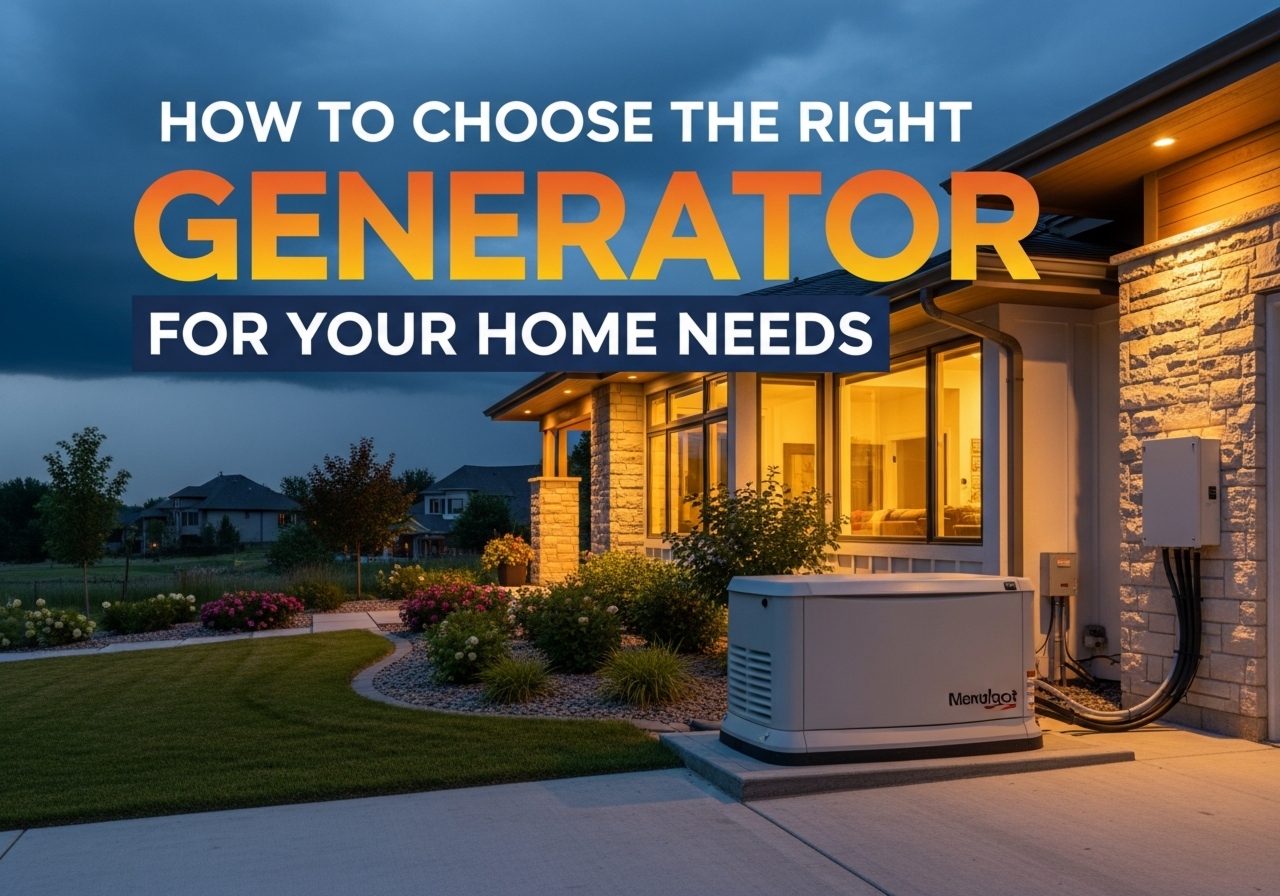
Have you ever watched the refrigerator light go out during a storm and felt an odd mixture of helplessness and determination about what to do next?
How To Choose The Right Generator For Your Home Needs
Choosing a generator for your home feels a bit like deciding which kitchen appliance deserves the prime counter spot. You want something reliable, quiet enough not to upset the neighbors, powerful enough to keep the essentials running, and simple enough that you won’t panic when you have to start it at 3 a.m. This guide walks you through the decisions step by step so you can make a choice that fits your routine, your budget, and your peace of mind.
Why you might want a generator
A power outage is more than an inconvenience; it interrupts routines, affects food in the fridge, and can make you feel disconnected. You might want a generator to keep medical equipment running, preserve food, run a sump pump, or simply keep lights and heat on so you can sleep. Understanding your motivations clarifies which type of generator suits you best.
How a generator changes home life
Having a generator alters how your household behaves during storms and outages. You may find yourself more relaxed, not rushing to store perishables or worry about thawing pipes, and more able to maintain routines for children, pets, or elderly family members. The right generator is not just a machine; it’s a small insurance policy for daily life.
Types of generators and what they mean for you
Different generators suit different households. Below is a simple comparison so you can match the kind of unit to the kind of life you lead.
| Type | What it is | Typical use | Pros | Cons |
|---|---|---|---|---|
| Portable | Small, moveable units you can lift or wheel | Power a few circuits or individual appliances | Lower upfront cost, flexible placement | Manual setup, noisy, limited runtime |
| Inverter | A portable generator with cleaner power and fuel efficiency | Sensitive electronics, quieter operation | Clean power for electronics, quieter, better fuel economy | More costly than basic portable units |
| Standby (automatic) | Permanently installed, connected to home electrical panel and fuel line | Whole-house backup for continuous power | Automatic start, whole-house capability, seamless | High installation cost, professionally installed |
| Whole-house diesel | Large, heavy-duty standby systems | Long-duration outages, off-grid or critical needs | Robust, long-lasting, good for frequent use | Expensive, noisy, needs space and maintenance |
You’ll notice the differences hinge on how much convenience, power, and money you’re willing to commit. If you want something you can tuck in a closet and forget, a portable may fit. If you want the house to function as if nothing happened, standby is the way to go.
Calculate your power needs
You can’t pick the right generator without knowing what you need it to run. Start with the essentials, then factor in occasional extras.
Make a list of appliances and systems
Write down everything you want to run during an outage: refrigerator, lights, heating or cooling system, sump pump, internet router, TV, medical equipment, garage door opener, etc. Be specific about models if you can, because wattage varies.
Understand running watts vs starting watts
Appliances have two power figures: running (continuous) watts and starting (surge) watts. Motors—like refrigerators, pumps, and AC units—need extra electricity to start. You must size the generator to handle the higher starting wattage.
Example calculation
Below is a simplified example to illustrate how you might calculate needs.
| Appliance | Running Watts | Starting Watts |
|---|---|---|
| Refrigerator | 700 | 2200 |
| Sump pump | 800 | 1300 |
| Furnace blower | 900 | 1800 |
| Lights (10 LED bulbs) | 100 | 100 |
| Router/modem | 20 | 20 |
| Total running watts | 2520 | — |
| Highest starting requirement | — | 2200 |
In this case you’d look for a generator with at least 2520 running watts, and enough surge capacity to handle the 2200 starting watt requirement. Because multiple appliances might start at once, it’s wise to allow a buffer—aim for a generator with about 20–25% higher capacity than your calculated total.
Essential circuits vs whole-house approach
Deciding whether to power a few circuits or the entire house affects the type of generator and its cost.
Essential circuits (partial powering)
If your priorities are lights, fridge, sump pump, and a few outlets, a portable or smaller inverter generator paired with a manual transfer switch will likely cover your needs. This is cost-effective and simpler to install.
Whole-house powering (standby units)
If you want HVAC, water heater, and large appliances to run, a standby generator connected to your main panel is the practical choice. It’s more convenient and automatic, but it costs more upfront and requires professional installation.
Fuel types: which one suits your lifestyle?
Different fuels affect convenience, runtime, availability, and safety. Consider what fuel you can source reliably and store safely.
| Fuel | How it works | Pros | Cons | Best for |
|---|---|---|---|---|
| Gasoline | Used in most portable generators | Readily available, lower initial cost | Less stable for long storage, shorter runtime | Portable use or emergency short-term needs |
| Diesel | Efficient and durable | Long engine life, better fuel efficiency | Noisy, needs proper storage and spill precautions | Frequent use, high-demand whole-house systems |
| Propane (LP) | Burns cleaner, stored in tanks | Long shelf life, cleaner combustion | Lower energy density, requires tanks | Standby systems, homeowners with propane supply |
| Natural gas | Continuous supply via utility line | Convenient, no refueling | Needs utility access, may be shut off in disasters | Permanently installed standby generator |
| Dual-fuel | Runs on two fuels, often gas + propane | Flexibility when one fuel is unavailable | More complex, slightly higher cost | Homeowners who want redundancy |
Propane and natural gas are popular for standby systems because they can provide long runtime without the need for refueling in the driveway. Gasoline is convenient for portable units but remember it degrades and can gum up carburetors if left long periods.
Sizing a generator properly
You can overbuy or underbuy. Overbuying means unnecessary cost; underbuying means disappointment the first time your air conditioner struggles.
Step-by-step sizing
- List the devices you want to power.
- Find running and starting watts (user manual or manufacturer website).
- Add running watts for all devices.
- Identify the highest starting watt requirement among motor-driven appliances and add it to the running total if multiple motors will start simultaneously.
- Add a safety buffer (20–25%).
Practical tips for sizing
- If you plan to run central AC, be realistic: central units require significant starting power.
- For homes with electric ovens or heat pumps, consider whole-house standby or a high-capacity unit.
- If you’re unsure, consult an electrician. They’ll translate your list into an accurate load calculation.
Transfer switches and electrical connection
How you connect the generator to your home matters for safety and convenience.
Manual transfer switch
A manual transfer switch lets you select circuits to power, but you physically move a breaker or throw a switch after starting the generator. It’s less costly and often used with portable units.
Automatic transfer switch (ATS)
An ATS detects power loss, starts the standby generator automatically, and switches the circuits without your intervention. This is ideal if you want seamless backup and are away during outages.
Never backfeed
Never plug a generator into a wall outlet or try to feed power through the main panel without a proper transfer switch. Backfeeding endangers utility workers and can damage equipment. A licensed electrician should install transfer equipment.
Placement, noise, and neighbors
The right placement keeps you safe and preserves neighborly relations.
Where to put a generator
Place portable units outdoors on a dry, level surface at least 20 feet from doors, windows, and vents to avoid carbon monoxide entering your home. Standby generators are usually installed on a concrete pad near the house, following local codes.
Noise considerations
Generators vary in noise levels. Inverter units tend to be quieter; standby units will make noise but are placed farther away and sometimes soundproofed. Consider local ordinances and how the noise will affect you and your neighbors, especially in a quiet neighborhood.
A few neighborly gestures
If your generator will run for long periods, let close neighbors know and reassure them about safety measures. Small courtesies go a long way and can make outage season less tense for everyone.
Safety: carbon monoxide, fuel handling, and more
Safety must be your top priority when using any generator.
Carbon monoxide (CO)
The biggest hazard is CO poisoning. Generators produce exhaust that can be lethal in enclosed spaces. Always run generators outdoors and away from openings. Install battery-operated CO detectors on every level of your home and test them regularly.
Fuel storage and handling
Store fuel in approved containers in a cool, ventilated space; never store fuel in the house. Use small amounts for portable generators and plan for safe refueling—turn off the generator and let it cool before adding fuel.
Grounding and electrical safety
Follow manufacturer instructions for grounding. Use heavy-duty, outdoor-rated extension cords for appliances not connected through a transfer switch, and avoid overloading individual outlets. If you’re unsure about electrical setups, get a licensed electrician involved.
Maintenance: treat the generator like a living thing
A generator will serve you best if you care for it.
Routine maintenance tasks
- Change oil and filters per the manual.
- Run the generator monthly for 15–20 minutes to circulate fluids and avoid stale fuel issues.
- Keep the unit clean and free of debris.
- Replace spark plugs and fuel lines as recommended.
Seasonal considerations
Before winter or storm season, perform a thorough check. If the unit sits unused for long periods, add fuel stabilizer to gasoline and cycle the unit occasionally.
Keeping records
Maintain a log of maintenance, fuel changes, and any repairs. This helps you keep track of performance and is useful for warranty claims.
Budgeting: up-front and long-term costs
Think of the purchase as an investment that has both immediate and ongoing costs.
Up-front expenses
- Cost of generator unit
- Installation and transfer switch
- Concrete pad or enclosure for standby units
- Permits (if required)
Ongoing expenses
- Fuel
- Regular maintenance (oil, filters, parts)
- Professional checkups
- Increased insurance costs in some cases
Cost examples (very general)
- Portable inverter: $500–$3,000
- Large portable: $1,000–$4,000
- Standby unit with installation: $5,000–$20,000+
Prices vary with capacity, brand, and local installation costs. Remember that a standby system’s convenience and automatic function are part of what you’re paying for.
Choosing brands and warranties
Brand reputation and warranty terms matter because a generator is a long-term relationship.
What to look for in a brand
- Local dealer or service network
- Readable manuals and good customer support
- Parts availability
- Consistent reviews from users in similar climates and usage patterns
Warranties and service plans
Compare warranty lengths and what they cover. Some manufacturers offer extended warranties or service plans that might be worth the extra cost if you expect heavy use.
Installation: what to expect when hiring a pro
If you opt for a standby unit, professional installation is essential.
The installation process
- Site assessment and permit application
- Concrete pad or base preparation
- Electrical connection to the transfer switch and main panel
- Fuel source hookup (natural gas, propane tank, or diesel setup)
- Initial testing and demonstration
Choosing an installer
Look for licensed electricians with generator experience. Ask for references and examples of installations in homes similar to yours. A proper installer will know local code requirements and handle permits.
Common mistakes and how to avoid them
You can avoid many problems with a little forethought.
- Undersizing the generator: Always calculate with surge watts and include a buffer.
- Incorrect installation: Use licensed professionals for transfer switches and panel work.
- Poor maintenance: Schedule routine runs and service.
- Unsafe fueling: Never refuel a hot generator; store fuel safely.
- Ignoring carbon monoxide: Install detectors and keep units well away from openings.
Practical scenarios and recommendations
Different households have different priorities. Here are a few typical scenarios and suggested approaches.
If you live alone in a small home or apartment
You probably need a compact inverter or small portable generator that runs the essentials—fridge, a few lights, maybe a space heater if appropriate. Consider battery backups or UPS units for electronics.
If you have a family with medical needs
Prioritize reliability and automatic operation. A standby generator with an automatic transfer switch and a reliable fuel source is worth the investment. Confirm the system can handle medical equipment starting loads.
If you have a large home with central HVAC
Plan for whole-house standby power. Discuss large-capacity options with an electrician, and consider fuel redundancy if outages are frequent and prolonged.
If you occasionally need power for work or recreation
A mid-sized portable or inverter generator can serve double duty for jobsite tools or tailgating while providing emergency home power when needed.
Checklist before you buy
A simple checklist keeps you organized when you’re scouting models.
- Have you listed essential appliances and their wattages?
- Did you calculate starting and running watts with a buffer?
- Do you know whether you want partial or whole-house backup?
- What fuel type is available and practical for you?
- Have you considered noise, placement, and permits?
- Have you compared brands, warranties, and local service options?
- Did you budget for installation and ongoing fuel/maintenance costs?
Use this checklist as you shop and to guide conversations with dealers and electricians.
Questions to ask a dealer or installer
These questions make sure you don’t leave with surprises.
- What is the real-world runtime at 50% load on this model?
- Can you show me the starting and running watt spec in writing?
- What kind of service plan or warranty is offered?
- How long will installation take and what permits are needed?
- Will the unit require regular professional maintenance?
- What are the noise levels at typical operating distances?
Write these down and put them in front of you during negotiations.
Emergency planning and generator operation
A generator is one piece of a larger emergency plan.
Practice using it
Try starting and connecting the generator before you need it. Familiarity reduces errors when you’re stressed.
Make a refueling plan
If you rely on gasoline, know where you’ll get more during prolonged outages. If you have propane or natural gas, confirm supply arrangements.
Communicate with family
Ensure everyone knows how the generator works, where the fuel is, and safety rules, such as keeping doors and windows closed on the generator side to avoid exhaust infiltration.
Final considerations and living with your choice
You’ll live with the generator you choose. Think about how it fits into your daily rhythms and neighborhood life.
- A small inverter unit might become your trusted companion—quiet, portable, and easy to use.
- A fully installed standby system might feel like the house’s unseen but reliable helper, always ready to take over when the lights go out.
Either way, aim for a machine you can operate confidently and maintain. The right choice reduces stress and helps your home stay warm, fed, and lit when the weather or the grid disagrees with your plans.
Parting thought
Choosing a generator is less about the machinery and more about the small rituals of home: a refrigerator humming, a lamp glowing in the evening, a child’s nightlight steady through a thunderstorm. The right generator keeps those small comforts intact, and that, in the end, is what matters most.
If you want, you can tell me the appliances you care about and the typical length of outages where you live, and I’ll help calculate a recommended wattage and shortlist suitable types for your situation.