
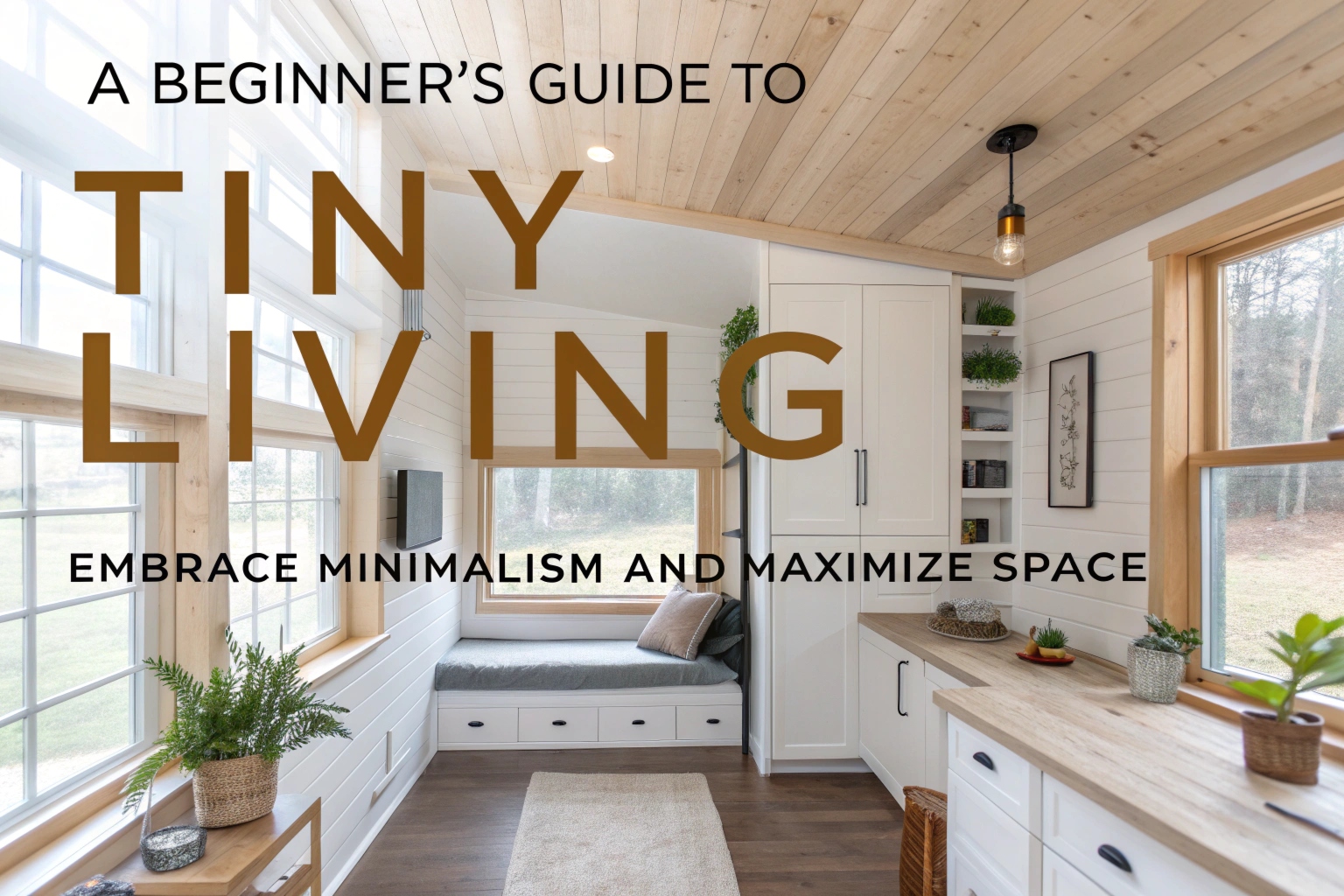
Have you ever thought about what it would feel like to open a front door and find everything you need, and nothing you don’t?
A Beginner’s Guide To Tiny Living: Embrace Minimalism And Maximize Space
You will find that tiny living is less about sacrifice and more about choosing what matters. In the quiet of a small kitchen or beneath the low slant of a loft, you’ll notice details you never had time for before — the way light moves across a countertop, the sound of rain on a metal roof. This guide is written so you can plan thoughtfully, live comfortably, and keep your life intimate without feeling cramped.
Why Choose Tiny Living?
Tiny living often begins with a practical idea — lower costs, simpler maintenance — and grows into a philosophy of attention. You’ll save money on utilities, feel closer to what you own, and have the freedom to put resources into experiences or relationships rather than square footage. Tiny living also makes you notice routines, and with that notice often comes a gentle, steady contentment.
Financial advantages
When you choose a smaller footprint, your recurring expenses shrink. You’ll spend less on heating and cooling, less on furnishing large rooms, and possibly less on property taxes and mortgage payments. That money can be redirected to travel, creative projects, retirement savings, or the occasional indulgence.
Environmental and sustainability benefits
Smaller homes use fewer resources. Lower energy consumption, fewer materials used in construction, and reduced water usage all mean a smaller ecological footprint. You can amplify that by choosing efficient appliances, solar panels, rainwater capture, or composting systems.
Emotional and lifestyle benefits
Tiny living tends to sharpen priorities. You’ll find yourself keeping things that serve an emotional or practical purpose and letting go of the rest. This reduction in clutter often helps reduce mental friction, improves focus, and makes daily life feel simpler and more intentional.
Types of Tiny Homes
There are many ways to live small, and each type has its own practical and legal considerations. Choose the kind of tiny home that matches your lifestyle, mobility needs, and the local regulations where you plan to live.
| Type | Mobility | Typical Cost Range (USD) | Main Advantages | Main Challenges |
|---|---|---|---|---|
| Tiny House on Wheels (THOW) | Mobile | $30,000 – $150,000+ | Mobility, can avoid some zoning in certain areas | Road-legal limits, weight/size restrictions, parking |
| Fixed Tiny House (on foundation) | Stationary | $40,000 – $200,000+ | Permanent utilities, sturdier insulation | Zoning, permits, land cost |
| Converted Van/RV | Mobile | $10,000 – $80,000+ | Highly mobile, low upfront cost | Limited space for long-term living, insulation, comfort |
| Shipping Container | Stationary | $20,000 – $120,000+ | Durable, modular, quick construction | Insulation, rust, permits, appearance concerns |
| Accessory Dwelling Unit (ADU) | Stationary | $60,000 – $300,000+ | Legal on many properties, adds property value | Local regulations, construction costs |
| Micro-apartment | Stationary (urban) | Rent varies | Central location, amenities nearby | Less privacy, dependence on building systems |
| Houseboat | Mobile (water) | $20,000 – $500,000+ | Unique lifestyle, mobility on water | Mooring fees, maintenance, weather/vessel regulations |
Legal and Zoning Considerations
You must understand the rules where you plan to park or build. Zoning laws, building codes, and homeowner association rules differ widely. Some places welcome tiny homes as ADUs; others prohibit residential structures under a certain size. Mobile tiny homes often face their own set of travel and parking regulations.
- Start by calling the local planning department or checking municipal websites.
- Ask specifically about minimum square footage requirements, foundation rules, septic and sewer connections, and parking/overnight restrictions.
- If you’re planning a THOW, learn the vehicle classification rules and whether it’s legally considered a dwelling.
- Research financing and insurance options — not all lenders or insurers treat tiny homes the same as traditional homes.
Planning Your Tiny Home
Good planning keeps surprises to a minimum. You’ll want to balance cost, comfort, and the life you want to lead in that space.
Define your non-negotiables
Write a clear list: must-have features, nice-to-haves, and outright no-thanks items. You might insist on a full-sized bed, be flexible about a bathtub, or require room for a home office. The clearer you are up front, the easier the design process will be.
Location, location, and location
Consider climate (insulation needs differ), access to services (groceries, healthcare), community (are you near friends or potential neighbors), and rules (zoning, RV parks, co-housing). The same tiny home will function differently in coastal Maine, central Texas, or an urban micro-apartment block.
Budget and financing
Decide total budget, and then break it down: land (if applicable), construction or purchase, utilities/ hookups, furnishings, permits, and a 10–20% contingency. Financing routes include personal savings, RV loans (for mobile tiny homes), personal loans, construction loans, or owner financing. Some banks are unfamiliar with tiny homes — community lenders or credit unions may be more helpful.
Designing for Space
Design is where tiny living becomes delightful. Thoughtful layouts, clever storage, and an honest understanding of your daily patterns will keep the space feeling larger than it is.
Layout and flow
Plan from the inside out. Consider how you move through the space: preparing meals, entering with groceries, getting ready in the morning, arriving home with wet coats. Circulation should feel natural, not like an obstacle course. Open sight lines make small spaces feel bigger; a narrow corridor can feel confining unless used with care.
Vertical space and lofts
Loft sleeping areas are common because they free up floor space. You’ll want to be comfortable climbing up and down, and you’ll need to consider headroom, ventilation, and safety (rails, guard heights). Use vertical walls for shelves, hanging storage, and lighting to keep surfaces clear.
Multipurpose furniture
Every piece of furniture should earn its keep. A bench that stores shoes and functions as seating, a fold-down table that becomes a desk and dining area, or a couch that converts to a spare bed will multiply your usable square footage.
Lighting and windows
Strategic windows bring in natural light and a sense of spaciousness. Skylights over loft areas and windows at both ends of the main room create cross-ventilation and the impression of depth. Layer lighting — task lights for kitchens and desks, ambient lights for living areas, and soft lighting for sleeping nooks.
Storage Solutions
When you have few square feet, storage becomes sacred. Think of storage as furniture, not an afterthought.
| Storage Type | Best For | Practical Tips |
|---|---|---|
| Under-bed drawers | Clothing, linens | Use sliding drawers or lift-up platforms for easy access |
| Wall-mounted shelving | Books, small objects | Anchor into studs; use baskets to keep things tidy |
| Ceiling-mounted racks | Seasonal items, lightweight gear | Ensure secure mounts and accessibility |
| Clever entry storage | Coats, shoes, daily items | Use vertical cubbies or a narrow bench with hooks |
| Built-in cabinets | Kitchenware, tools | Tailor to your exact dimensions to save wasted space |
| Multi-use furniture | All-purpose | Hide storage inside benches, ottomans, or stairs |
Downsizing: How to Let Go
The emotional task of letting go can be the hardest part. It’s useful to approach downsizing like an author editing a manuscript: keep what moves the story forward, cut what’s redundant, and be ruthlessly kind to yourself.
Start with a plan
Work by category — clothes, books, kitchenware, sentimental items — rather than by room. This avoids shifting clutter from one place to another. Set small, achievable goals: one box today, three boxes this weekend.
Gentle decision rules
If you haven’t used something in a year, if it doesn’t fit your lifestyle now, or if it doesn’t bring you joy or serve a clear purpose, consider letting it go. For sentimental items, take a photo if you can’t keep the physical object.
Practical methods
Use a four-box system: Keep, Sell/Donate, Recycle/Trash, Unsure. Put a deadline on the Unsure box — if you haven’t opened it in three months, decide then. Host a small sale or use online marketplaces for items that are worth money. Donate usable items to local charities.
Practical Systems for Living Small
A tidy tiny home is the result of good systems, not constant effort. A few routines and well-placed habits will keep things organized and pleasant.
Daily and weekly routines
Establish small habits like clearing surfaces each evening, wiping counters after cooking, and doing a five-minute tidy every morning. Weekly tasks: laundry, deep-clean the bathroom, check food supplies, and tidy paperwork.
Utilities and services
- Electricity: Consider energy-efficient lighting and appliances. Solar panels can reduce bills if the roof and location allow.
- Water and wastewater: If you’re off-grid, plan for water storage, filtration, and waste disposal or composting toilets.
- Heating/cooling: Small homes heat up and cool down quickly. Efficient insulation, mini-split systems, or wood stoves (where legal) work well.
- Internet and phone: Make sure you can get reliable service for remote work or streaming; consider cellular hotspots or fixed wireless if needed.
Maintenance plan
Create a seasonal maintenance checklist: inspect the roof and seals, clean gutters, service appliances, and check for pests. Tiny homes can be easier to maintain, but they still need attention.
Furnishing and Equipment Recommendations
Choose items with proportion in mind. Bulky furniture will overwhelm a small space.
Kitchens
Opt for compact appliances: a two-burner stove, a small convection oven or toaster oven, and an efficient refrigerator. Consider a pull-out countertop or fold-down table for extra prep space. Magnetic strips for knives and wall rails for utensils free up drawer space.
Bathrooms
A wet bath (toilet and shower in the same waterproof area) saves space, as do corner sinks and wall-mounted fixtures. Ventilation is crucial — excess moisture will make a small home feel unpleasant quickly.
Sleeping
A well-made mattress matters more in a tiny home because you can’t hide the quality under layers of bedding or accessories. Consider a foam mattress that fits your loft or bed platform. Think about under-bed storage or a mattress that lifts to reveal storage.
Climate control
Mini-split HVAC units give precise temperature control with lower energy use. Good insulation and double-glazed windows will reduce heating and cooling needs dramatically.
Budgeting and Financing
Tiny home costs vary wildly, but you can make a realistic budget by categorizing expenses and staying conservative in your estimates.
- Construction/purchase: material costs, labor, contractor fees.
- Land or pad: site prep, foundation, septic or sewer, utility hookups.
- Permits and inspections: local fees, engineering, utility permits.
- Furnishings and appliances: plan room-by-room.
- Contingency: 10–20% of total budget for overruns.
If you plan to build yourself, track your time and be honest about what you can realistically take on. Labor is expensive when outsourced, but time-consuming if handled alone.
Moving In: Your First Month
Your first month in a tiny home is part logistics, part emotional adjustment. Expect a period of reorganization.
Week-by-week plan
| Week | Focus |
|---|---|
| Week 1 | Unpack essentials, set up kitchen, test systems (water, electricity, heating), sleep well. |
| Week 2 | Organize storage, optimize layout, set up a cleaning routine. |
| Week 3 | Fine-tune lighting, curtains/blinds, and personal items; measure for any built-ins needed. |
| Week 4 | Assess what you miss or have too much of; sell/donate extras; finalize small build-outs. |
Give yourself grace. You’ll likely swap out a few items and tweak storage solutions after living in the space.
Living with Others and Hosting
Tiny homes can be romantic and cozy, but you’ll want rules and rhythms if you share space.
Privacy strategies
Curtains, sliding doors, and thoughtful placement of furniture create small private enclaves. Agree on quiet hours and spatial boundaries. Consider schedule-sharing for shared tasks and personal time.
Hosting guests
Expect guests to stay for short durations. A bit of planning — an inflatable mattress tucked away, extra linens stored compactly, and a protocol for meals — will keep visits pleasant. You’ll likely host fewer people at a time, but visits can be more intimate and memorable.
Common Mistakes and How to Avoid Them
- Underestimating storage needs: Build storage into the bones of the home.
- Skimping on the bed or seating: You’ll use these every day; choose comfort.
- Ignoring local rules: Legal trouble is expensive and stressful.
- Forgetting maintenance: Tiny homes still require seasonal attention.
- Over-customizing for novelty: Design for long-term comfort, not just what’s trendy.
Maintaining Well-being and Minimalism
Living small is an ongoing practice. Minimalism isn’t a one-time purge: it’s a pattern of thoughtful decisions.
- Keep a “one in, one out” rule for non-essentials to prevent slow accumulation.
- Make space for rituals: a morning coffee nook, a place to read, a plant that needs watering.
- Stay connected to community. Tiny living can be isolating if you’re far from friends; find local groups, markets, or shared workspaces.
- Keep hobbies that don’t require much physical space — writing, drawing, cooking, music.
Sustainability and Long-term Considerations
If long-term sustainability is important, plan for durable materials and modular systems that can be improved over time. Solar, graywater reuse, and efficient insulation pay dividends. Think about resale value and ease of moving or repurposing parts of the home.
Resources and Next Steps
Begin by visiting local planning offices and calling lenders familiar with small-scale projects. Find online communities for practical tips and builders who specialize in tiny homes. Read case studies or visit a show or a friend’s tiny home to see daily life in action. Look into workshops on carpentry or plumbing if you plan to build.
Conclusion
You will find that tiny living is less an absence than a rearrangement. You trade square feet for closeness to sunlight, to objects that matter, to the people you live with. The small rooms will ask you to pay attention, and in return they will give you a measure of clarity and calm that larger houses sometimes obscure. If you approach the idea with kindness toward yourself, a clear plan, and a few creative solutions, you’ll discover a way of living that’s practical, surprising, and quietly rich.