
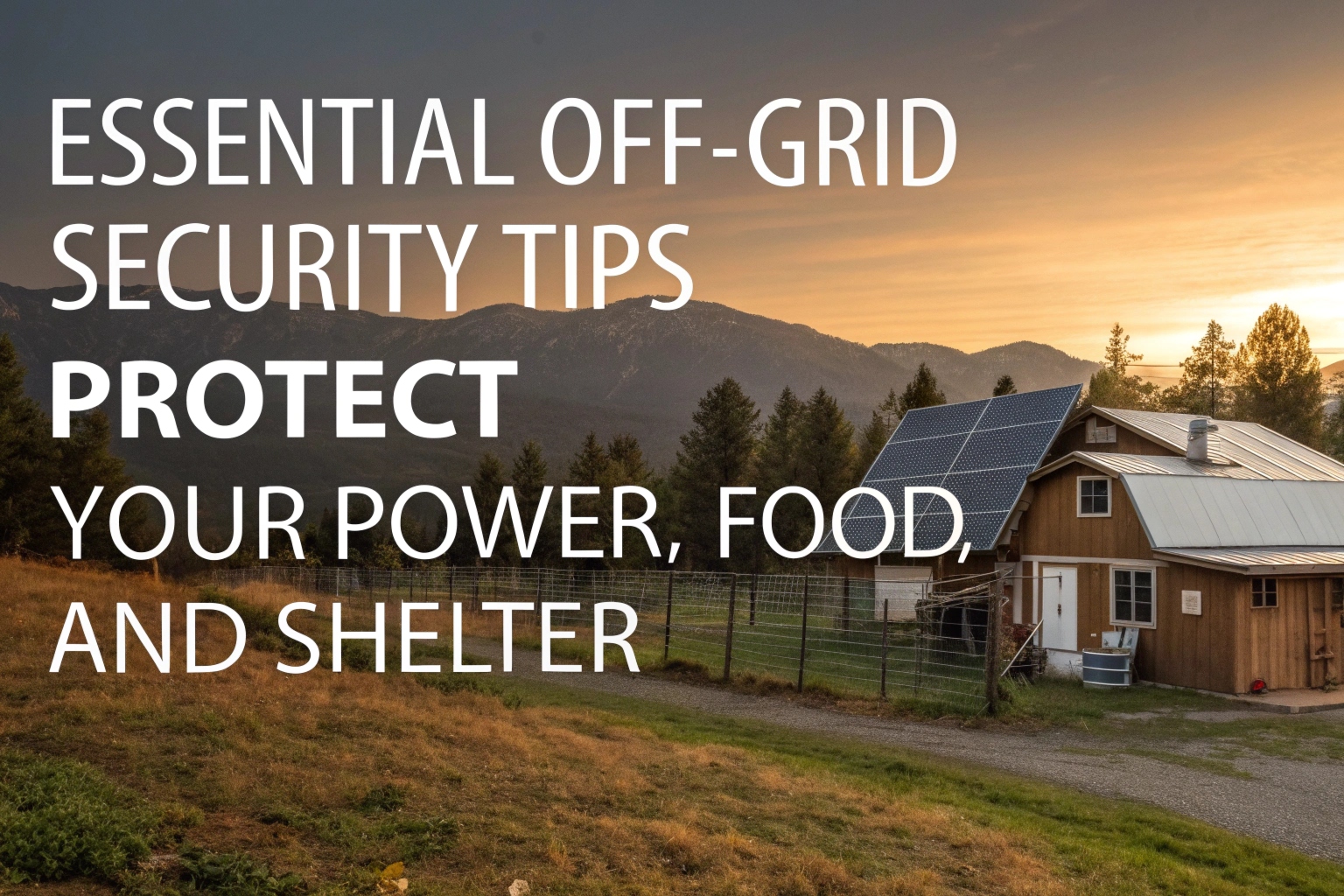
Are you confident that your off‑grid setup can withstand both everyday challenges and unexpected threats to your power, food, and shelter?

Essential Off‑Grid Security Tips: Protect Your Power, Food, And Shelter
You’ve chosen a lifestyle that prioritizes independence, resilience, and self‑reliance. That freedom brings responsibilities: protecting the systems that keep you alive, comfortable, and safe. This guide breaks down practical, actionable strategies to secure your off‑grid home — focusing on power, food, shelter, and the human factors that connect them. Each section gives clear steps you can take, equipment options, and routine practices that reduce risk and increase your peace of mind.
Why off‑grid security matters
You may already know that off‑grid living removes many dependencies, but it also concentrates risk. When you rely on your own power systems, food stores, and structures, an interruption can become critical quickly. Thinking proactively about security helps you prevent problems, recover faster, and maintain autonomy when external systems fail.
Risk assessment: identify what matters most
Before buying gear or building barriers, you should evaluate threats specific to your location and lifestyle. Walk your property mentally and physically. What assets are most vulnerable? What are the realistic threat scenarios — theft, wildlife, weather, mechanical failure, or a neighbor dispute?
- Threats: Human intruders, wildlife, theft, vandalism, fire, storm damage, equipment failure.
- Assets: Solar arrays, batteries, fuel, food stores, water systems, tools, shelter.
Use a simple scoring system (likelihood x impact) to prioritize where to spend time and money.
How to perform a basic vulnerability scan
Spend a half day walking your perimeter and structures. Note entry points, visible valuables, and places with poor lighting or concealment. Photograph or sketch weak spots. Then list countermeasures ranked by cost and effectiveness. You’ll use this to plan upgrades and daily routines.
Perimeter security and physical deterrence
A strong perimeter reduces the chance of incidents before they reach your door. You want a layered approach: natural obstacles, hard barriers, lighting, and passive surveillance.
Natural barriers and landscaping
You can use thorny shrubs, berms, and strategic plantings to deter casual intruders and channel foot traffic. These measures are low tech and low cost, and they preserve a natural look.
- Use native, tough plants that require little maintenance.
- Keep sightlines clear for defensive observation and cameras.
Fencing, gates, and gates locks
A solid fence signals that the property is defended. Pair it with a sturdy gate and high‑quality locking hardware. Choose materials suited to your environment (metal for longevity, wood for aesthetics).
- For remote properties, consider double gates for vehicle control.
- Use padlocks rated for outdoor use or round shackle locks for extra resistance.
Lighting and passive surveillance
Good lighting works as a deterrent, but you’ll want to avoid constant obvious lights that drain power or draw attention. Motion‑activated LEDs and solar‑powered fixtures give you presence only when needed. Position lights to illuminate access points, pathways, and storage areas.
Visibility and observation points
Create observation points or windows in your shelter that let you see key parts of the property without exposing yourself. Use defensive landscaping and camera placement to reduce blind spots.
Home and shelter hardening
Your shelter is your last line of defense. Improving doors, windows, structural integrity, and safe rooms dramatically increases your personal security in a variety of scenarios.
Doors, locks, and entry control
Invest in solid doors (metal or solid core wood) for main points of entry. Reinforce frames and use long screws for strike plates. Deadbolts, crossbars, and door jammers add layers of resistance.
- Use high‑security deadbolts and reinforced strike plates.
- Consider door barricade devices for short‑term emergency use.
Windows and glazing protection
Windows are a common weak point. Use laminated glass, security film, bars, or shutters to slow forced entry. Shutters also protect against wind and flying debris.
Creating a safe room
Designate a secure interior space where you can retreat, communicate, and hold out during an incident. Stock it with communications, water, food, first aid, and tools. It should have a reinforced door and at least one secondary escape route.
Structural resilience against storms and fires
Fortify roofs, anchor structures to resist strong winds, and use fire‑resistant construction materials where applicable. Remove fuel loads like brush near your shelter to create defensible space against wildfires.
Securing your food stores
Your food supply is a primary survival asset. Protect it from theft, pests, and spoilage. Your strategy should include storage diversification, inventory management, and physical protection.
Types of food storage and associated risks
Different storage methods have distinct vulnerabilities. Understand what works best for your environment and what needs extra protection.
| Storage Type | Strengths | Vulnerabilities |
|---|---|---|
| Canned & dry goods | Long shelf life, compact | Theft, moisture, rodents |
| Root cellar | Low tech refrigeration | Flooding, pests, mold |
| Freeze‑dried / MREs | Lightweight, long shelf life | High cost, packaging failure |
| Garden/greenhouse produce | Fresh food supply | Seasonal, wildlife, theft |
| Livestock & eggs | Renewable protein | Predation, theft, disease |
Physical protection for food
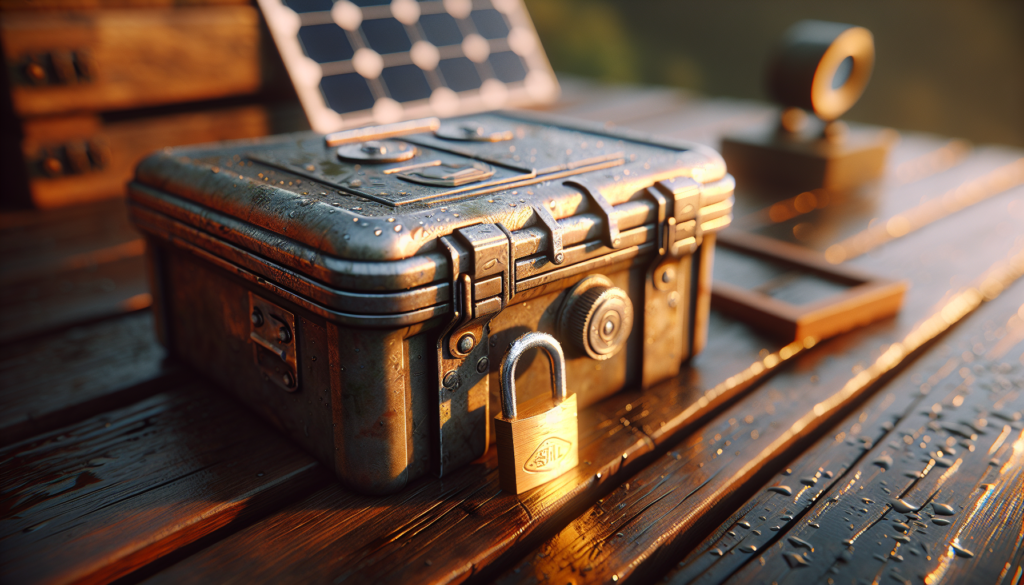
Store high‑value food items in lockable containers or secure sheds. Elevate containers off the ground to reduce rodent access. Use metal or plastic bins with gasket seals and padlocks for long‑term storage.
- Consider a small, lockable root cellar or underground cache for long‑term staples.
- Install rodent traps and use food‑grade diatomaceous earth in seams to deter insects.
Inventory management and rotation
You should track what you have and rotate food to use older items first. Use a simple spreadsheet or labeled bins with “use by” dates. Maintain realistic consumption estimates to avoid running low unintentionally.
Redundancy and diversification
Don’t rely on a single food source. Combine stored staples with a garden, preserved meats, and foraged/seasonal foods. Diversification reduces the impact of a single failure.
Water security and sanitation
Water is essential and often overlooked in security planning. Protect sources from contamination and theft, and prepare for system failures.
Protecting water sources
If you use wells, cisterns, or surface water, secure access points and maintain covers and filters. A locked well cap and tamper‑resistant fittings prevent contamination and theft. Test water periodically.
Storage and treatment redundancy
Store an emergency supply of potable water in food‑grade containers. Maintain redundant treatment options: household bleach, filters, UV purifiers, and boiling supplies. In a pinch, you should be able to treat water without electricity.
Sanitation and hygiene
Proper sanitation prevents disease outbreaks that can incapacitate you. Keep latrine systems, greywater evaporation, and soap available. Plan for human waste isolation if systems fail.
Power system security: generation and storage
Your power system is a cornerstone of off‑grid comfort and security. Protect generation sources (solar, wind, generators), battery banks, and fuel supplies.
Securing solar arrays and mounts
Solar panels are visible and valuable. Use mounting options that discourage theft (roof mounts with locking rails, tamper‑resistant bolts). Place arrays where you can monitor them or mount cameras nearby.
- Use bolts with one‑way heads or security fasteners.
- Consider microinverters or string inverters located inside a locked enclosure.
Battery bank protection and ventilation
Batteries are expensive and dangerous if mishandled. Enclose battery banks in ventilated, locked compartments. Label hazards, and keep fire extinguishers nearby.
- Install gas detection where lead‑acid batteries vent hydrogen.
- Use proper wiring, fuses, and a battery management system to reduce fire risk.
Inverter and charge controller security
Keep key electronic components in lockable, weatherproof enclosures. Back up configurations and keep firmware updated.
Generator and fuel security
Generators are noisy, valuable, and consume fuel. Store spare fuel in approved containers within a locked, ventilated shed away from living spaces.
- Rotate fuel and add stabilizers to prevent degradation.
- Use a chained and locked mounting for portable generators if they’re left outside.
Power redundancy and prioritization
Design your power system with prioritization and redundancy in mind. Identify critical loads (communications, refrigeration, pumps) and put them on separate circuits or backup inverters.
- Use transfer switches to protect equipment and prevent backfeeding.
- Keep manual control options to shed nonessential loads quickly.
Communications and situational awareness
When you’re off‑grid, staying informed and able to communicate is essential. Your communications plan should include everyday use, emergencies, and quiet options for OPSEC.
Primary and backup communications
Maintain at least two communication modes: one high‑bandwidth (cell/satellite) and one low‑bandwidth (two‑way radios). Learn how to use them and keep spare batteries and solar chargers ready.
- Cell signal boosters help but can also call attention; weigh pros and cons.
- Consider a satellite messenger or shortwave radio for remote areas.
Monitoring and alarm systems
Cameras, motion sensors, and alarms give you early warnings. Choose systems that can operate off‑grid: cameras with local storage, battery backup, or solar power, and sensors tied to a local alarm.
- Use encrypted, closed systems and avoid broadcasting sensitive data publicly.
- Local alerts (sirens, lights) can be more reliable than remote alerts in no‑signal areas.
Quiet surveillance practices
Avoid advertising your capabilities. Keep camera locations discreet and avoid loud transmissions that reveal your presence. Use optical camouflage like low‑glare housings.
Operational security (OPSEC) and routines
Your behavior and routines can be as important as physical barriers. Good OPSEC makes you a less attractive target.
Limiting information exposure
Be careful about what you share publicly: social media, forum posts, and even casual conversations can reveal your location, equipment, and habits. Keep critical details private.
Randomizing routines
Vary your patterns: times you perform chores, when generators run, and when you fire up equipment. Predictable routines make targeting easier.
Check‑in and buddy systems
Establish a check‑in plan with trusted contacts. Even if you prefer isolation, having a schedule where someone knows you’re okay adds safety. Use code words and predefined failure protocols.
Non‑lethal defense and deterrence
Your objective is to avoid confrontation, but you should be prepared to defend your home safely. Focus on deterrents, non‑lethal options, and training.
Deterrents vs. force
Deterrents (lighting, dogs, signs, cameras) prevent many incidents. Use clear signage about alarm systems and private property, but avoid provoking trespassers into escalation.
Dogs and livestock as alerts and deterrents
A well‑trained dog can serve as an audible alarm and deterrent. Protect animals in secure shelters and ensure they’re trained for boundaries. Livestock should be in predator‑proof pens to reduce loss.
Non‑lethal tools
Consider tools like pepper spray, high‑lux lights, noise makers, and personal alarms. Learn how to use them safely and legally. Keep non‑lethal tools accessible but secured from children and visitors.
Firearms and legal considerations
If you choose firearms, you must train responsibly, store weapons securely, and understand local laws. Safe storage (locked safes, trigger locks) and clear rules about use reduce risks.
Community and neighbor relations
Even if you live remotely, relationships with neighbors or a like‑minded local community can be one of your strongest security assets.
Building reciprocal agreements
Form informal pacts for mutual aid: check on each other, share resources, and communicate security alerts. These relationships create redundancy and social deterrence to theft.
Recruiting trusted helpers
Identify a few trusted neighbors or friends who can assist in emergencies. Make sure each person understands your property layout, emergency protocols, and limitations.
Conflict prevention
Good neighbor relations reduce the chance of disputes escalating. Keep shared boundaries maintained, resolve disputes early, and be transparent about activities that might affect others.
Emergency planning and drills
You need clear, practiced plans for realistic scenarios. Plan for power outages, theft, medical emergencies, fires, and severe weather.
Creating layered emergency plans
Write plans for different timeframes: immediate (minutes), short‑term (hours to days), and long‑term (weeks). Assign tasks, list supplies, and include evacuation routes and safe havens.
Regular drills and scenario practice
Practice makes reaction time faster and mistakes less likely. Run monthly checks on critical systems and annual full drills for major incidents.
Evacuation and regrouping plans
Have a defined evacuation route and a secondary rendezvous point both on and off your property. Keep grab‑and‑go bags ready with documents, water, food, and communications gear.
Maintenance, testing, and documentation
Security requires ongoing attention. Regular checks and written records prevent small problems from becoming catastrophes.
Routine checks and maintenance schedule
Create a schedule for battery health checks, filter replacements, seal inspections, and mechanical maintenance. Log results and repair dates to identify patterns.
Testing backups and failovers
Periodically simulate failures: cut grid power, disconnect primary batteries, or unplug the generator. Confirm that your backup systems kick in and that you know how to manage them.
Documentation and spare parts
Keep manuals, wiring diagrams, and parts lists secure and accessible. Store essential spare parts: fuses, inverters, filters, belts, and connectors.
Tools, gear, and recommended equipment
Investing in the right gear makes security practical. Below is a broad checklist you can adapt to your needs.
| Category | Examples | Notes |
|---|---|---|
| Perimeter | Fencing, motion lights, security cameras | Choose durable, weatherproof items |
| Locks & storage | High‑security padlocks, lockable storage bins | Use tamper‑resistant hardware |
| Power | Charge controller, inverter, battery bank, generator | Redundant and prioritized circuits |
| Water | Filters, chlorine, storage containers | Multiple treatment options |
| Communications | VHF/UHF radios, satellite messenger, signal boosters | Keep spare power |
| Tools | Bolt cutters deterrent? pry bar, hand tools | Lock tools securely |
| Medical & safety | First aid kit, fire extinguisher, respirator | Tailor to common local threats |
Budgeting and phased improvements
You don’t need to implement everything at once. Prioritize based on risk assessment and proceed in phases.
Phased approach example
- Low cost, high impact: improved locks, motion lights, basic inventory control.
- Mid cost: secure sheds, battery enclosures, upgraded fencing.
- High cost: redundant power systems, satellite communications, structural upgrades.
Allocate a portion of your budget to maintenance and spare parts — often overlooked but critical.
Legal and ethical considerations
Understand local laws for firearms, fences, cameras (privacy laws), and water rights. Ensure your security measures don’t create hazards for others, and maintain ethical behavior in interactions and enforcement.
Training and personal skills
Equipment is useful only when combined with skills. Invest time in learning basic first aid, mechanical repairs, power system maintenance, and non‑confrontational conflict resolution.
Recommended training
- First aid and CPR
- Basic electrical theory and safe battery handling
- Generator maintenance
- Fire safety and suppression
- Legal use of force if applicable
Common mistakes to avoid
- Relying on a single system or source for food, water, or power.
- Neglecting routine maintenance and testing.
- Over‑advertising your capabilities on social platforms.
- Skipping legal checks when installing fences or surveillance.
- Undertraining and assuming gear alone will protect you.
Quick checklists
Keep simplified checklists for daily, weekly, and monthly tasks so nothing slips through the cracks.
Daily
- Check doors and gates locked.
- Confirm communications device battery status.
- Visual sweep of visible assets (panels, fuel drums, animal pens).
Weekly
- Inspect solar panels and mounts.
- Check food and water storage seals.
- Test one alarm or sensor.
Monthly
- Exercise generator and rotate fuel.
- Test battery bank health and inverter functionality.
- Run a short emergency drill.
Final thoughts and next steps
Taking security seriously while living off‑grid is about balancing visibility, redundancy, and routine. You should protect your essentials with practical, layered measures that match the risks you identified. Start with the highest‑impact, lowest‑cost options and build resilience over time. Keep learning, maintain your systems, and cultivate trusted relationships that strengthen your safety net.
If you want, you can ask for a customized security checklist tailored to your property size, climate, and likely threats and together you’ll map out a prioritized implementation plan that fits your budget and goals.