
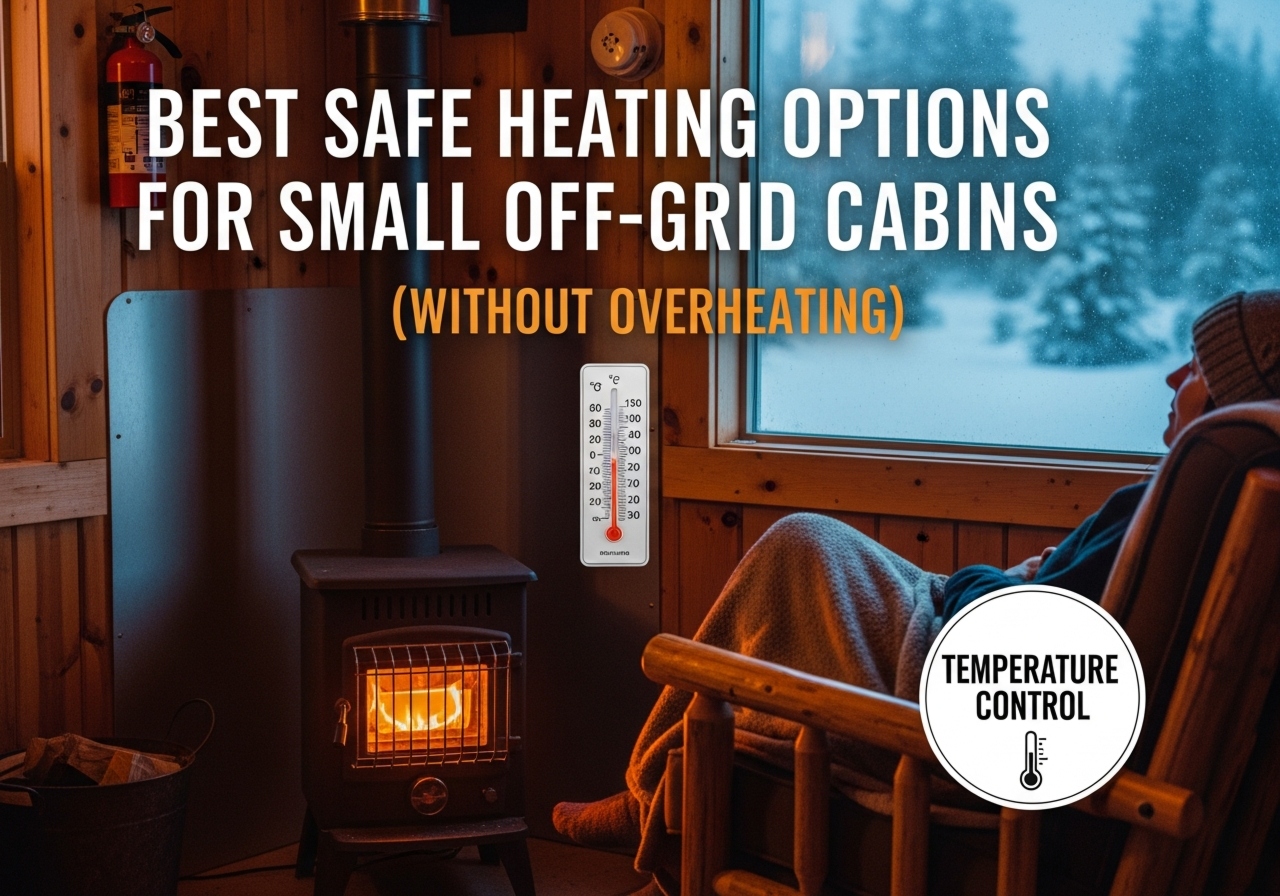
Are you looking for safe, efficient heating that keeps your small off‑grid cabin comfortable without overheating it?
Best Safe Heating Options for Small Off‑Grid Cabins (Without Overheating)
You’ll find this guide focused on practical, safe heating methods that work well off‑grid, with emphasis on avoiding overheating, managing fuel and power, and keeping indoor air safe. Each option includes safety notes, pros and cons, and tips for sizing and control so you can choose what fits your cabin, climate, and lifestyle.
How to think about safety and overheating in a small cabin
You’ll want to balance heat output, control, ventilation, and thermal mass. Small spaces heat quickly, so you need reliable ways to modulate heat and to prevent fires, carbon monoxide exposure, and moisture problems.
- Heat output vs room size: too much continuous output causes overheating. Look for heaters with adjustable output or thermostatic control.
- Combustion safety: if you use wood, pellets, propane, or kerosene, plan for ventilation, safe clearances, and CO detection.
- Electrical safety: if you use electric heaters on solar/battery systems, watch battery draw and inverter limits.
- Thermal mass: adding mass (stone, masonry, water barrels) reduces temperature swings and helps avoid overheating peaks.
Quick decision checklist
Use this checklist to narrow your choices before reading the details:
- Do you have reliable fuel (wood, pellets, propane) or mostly electricity from solar?
- How well insulated is your cabin? (Poor, moderate, excellent)
- How cold are winters where you are? (Mild, moderate, severe)
- How much maintenance can you do? (Low, medium, high)
- Do you prefer combustion or non‑combustion heating?
- Do you need quiet operation?
Answering these will steer you toward the right options below.
Heating options overview
This table compares common safe heating options for small off‑grid cabins, focusing on overheating risk, off‑grid suitability, and safety features.
| Option | Off‑grid suitability | Overheating risk | Control options | Safety concerns |
|---|---|---|---|---|
| EPA‑certified wood stove | Excellent (with wood) | Moderate (manual air control) | Primary air control, flue damper, stove fan, stove thermometer | Clearances, sparks, CO, chimney maintenance |
| Rocket mass heater | Good (with wood) | Low (thermal mass) | Burn control, mass design | Builds complexity, requires masonry, combustion safety |
| Pellet stove (off‑grid models) | Good (with pellets + electricity) | Low–moderate (thermostat) | Built‑in thermostats, auger control | Power for fans/auger, pellet storage, CO |
| Propane direct‑vent heater | Very good | Low (thermostatically controlled) | Thermostat, built‑in safety | Fuel storage, proper venting, CO if not sealed‑combustion |
| Kerosene heater | Moderate | High (continuous burn) | Manual or basic thermostat | Indoor air pollutants, CO, fuel smell, ventilation |
| Electric resistance heater (space heater) | Limited (requires battery/inverter) | High (simple heaters raise temp quickly) | Thermostat, timers | High power draw, fire risk if tip‑over or poor wiring |
| DC/12V heaters (low‑power) | Good for small loads | Low (limited output) | Built‑in control | Inefficient for full heating, limited output |
| Mini‑split heat pump | Very good (with enough PV/batteries) | Low (modulating inverter compressor) | Precise thermostat, zoning | Initial cost, requires electricity, refrigerant system |
| Radiant in‑floor (hydronic) | Good (with wood boiler or electric) | Low (slow response, thermal mass) | Zone thermostats | Installation complexity, freeze protection |
| Passive solar + thermal mass | Excellent | Very low (self‑regulating) | Shading and ventilation | Seasonal limits, design dependent |
How to size heating for a small cabin (without overheating)
You’ll need to estimate how many BTU or watts you need. Small cabins heat quickly, so plan for lower continuous output and the ability to step down or shut off.
Simple rule of thumb
- Mild climate, good insulation: 20–25 BTU per square foot.
- Moderate climate, average insulation: 25–35 BTU per square foot.
- Cold climate, poor insulation: 35–50+ BTU per square foot.
Example: For a 200 sq ft cabin in a moderate climate, aim for roughly 5,000–7,000 BTU. That’s far lower than typical living room heaters because small spaces require less continuous heat—control is more important than raw capacity.
More accurate approach: basic heat‑loss estimate
You can estimate heat loss roughly using:
- U × A × ΔT approach, where U is overall heat transfer coefficient, A is area of walls, roof, windows, and ΔT is indoor-outdoor temperature difference.
- If you want to avoid math, use the rule of thumb above and err on the low side for cabins with good insulation.
Overheating prevention while sizing
- Size for average conditions, not extremes; add a small backup for unusually cold nights.
- Prefer lower continuous output with good control (thermostat or manual dampers) over very high short bursts.
- Use thermal mass so that short high outputs store heat rather than sending peak hot air into the room.
Combustion versus non‑combustion heating: how to choose safely
You’ll face trade‑offs: combustion heaters (wood, pellet, propane, kerosene) provide good heat with off‑grid fuel options, but require ventilation, maintenance, and caution. Non‑combustion systems (electric resistance, heat pumps) are safe for indoor air but require reliable electricity and careful battery/inverter sizing.
- Choose combustion if you have abundant safe fuel and can manage venting/CO detection.
- Choose non‑combustion if you prioritize indoor air quality and have reliable power or small heat needs.
Wood stoves for small cabins
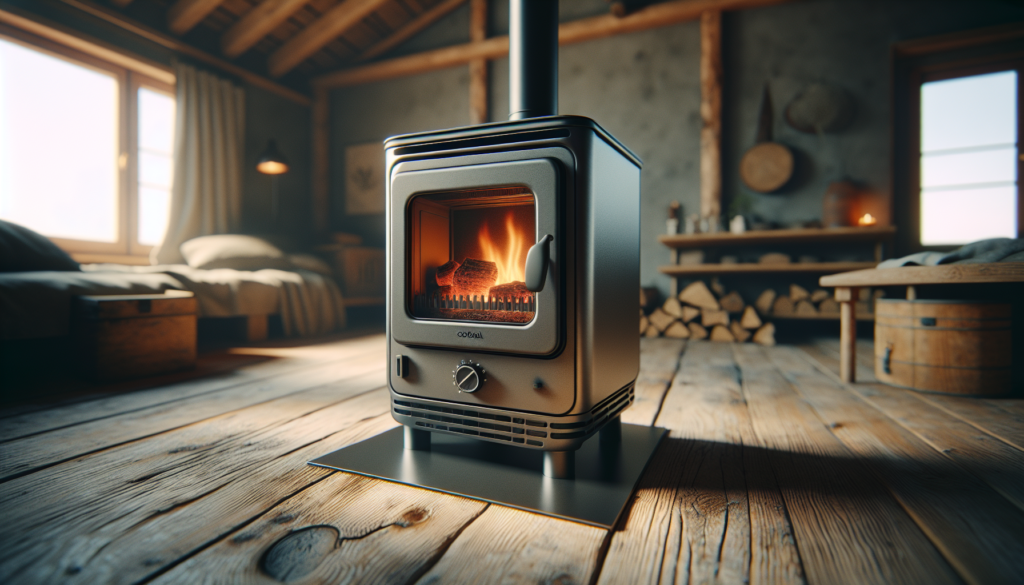
Wood stoves are classic for off‑grid cabins. You’ll get high heat output and independence from electricity, but you must manage fuel and safety.
Why wood stoves can be good
- No electricity required for basic models.
- Good radiative heat for small spaces.
- Can be paired with thermal mass (masonry, metal heat sinks) to store heat and reduce swings.
Overheating risks with wood stoves
- A small cabin will overheat if you run a stove at full burn continuously.
- You need to control burn rate (air inlet, smaller load) and use thermal mass to smooth peaks.
Safety practices for wood stoves
- Choose an EPA‑certified stove sized for your cabin.
- Maintain recommended clearances from combustibles; use hearth pads and heat shields if necessary.
- Install an insulated chimney with proper height and spark arrestor.
- Fit CO and smoke alarms, and test monthly.
- Use a stove thermometer to monitor flue temperature—keep it in the safe range (not too low to cause creosote, not too high).
- Regularly clean the chimney and ashpan.
Using thermal mass with a wood stove
- Incorporate masonry or water barrels to absorb excess heat from short high burns.
- Mass allows shorter burn cycles but keeps your cabin comfortable longer, reducing overheating.
Rocket mass heaters (RMHs)
Rocket mass heaters are efficient, producing high combustion efficiency and storing heat in mass. They can reduce fuel use and give long, even heat release.
Pros and cons
- Pros: Very fuel efficient, low steady room temps, great for reducing overheating when built properly.
- Cons: Requires expert design and build, may conflict with local codes, needs regular maintenance, can emit particulates if not properly constructed.
Safety and off‑grid suitability
- RMHs are off‑grid friendly, but the bench and mass must be designed to keep surfaces safe to touch.
- Follow experienced builders’ plans; incorporate good combustion chamber design and insulated riser to avoid smoke.
Pellet stoves
Pellet stoves use compressed wood pellets and typically need electricity for the auger, fans, and control electronics.
Why pellet stoves can be a safe option
- Many models have built‑in thermostats and precise feed control, which prevents overheating.
- They run cleaner and with more consistent output than manual wood stoves.
Off‑grid considerations
- Ensure you have power backup for the auger and fans (small battery/inverter or generator).
- Choose models specifically designed for low‑power environments if available.
- Safe pellet storage is dry and rodent‑protected.
Safety tips
- Install CO detection and keep the exhaust vent clear.
- Maintain the combustion chamber and ash removal per manufacturer instructions.
Propane heaters and direct‑vent units
Propane is a common off‑grid fuel that gives instant heat. Direct‑vent propane heaters are sealed combustion units that exhaust outdoors and draw combustion air from outside, making them safe for indoor air quality.
Advantages
- Thermostatic control reduces overheating risk.
- High heat output and clean combustion when properly vented.
- Easy to start and refuel.
Safety and best practices
- Use sealed direct‑vent units rather than unvented heaters to avoid CO and moisture issues.
- Store propane cylinders safely outside, upright, and away from heat sources.
- Install CO alarms; even sealed systems can leak.
- Check fittings and regulator regularly for leaks.
Kerosene heaters
Kerosene heaters deliver a lot of heat and are simple, but they have significant indoor air quality concerns.
Why they’re risky
- They produce more indoor pollutants and odor than propane or wood.
- Require ventilation and careful refueling.
- Higher risk of CO and other combustion byproducts.
Recommended usage
- Use only in well‑vented situations, and consider them as short‑term emergency heat rather than primary daily heat.
- Choose models with automatic shut‑off and tip‑over protection.
Electric heating options (resistance, DC, and heat pumps)
Electric options are clean indoors but demand reliable power. Off‑grid electricity requires matching heater type to your photovoltaic and battery system.
Electric resistance heaters (space heaters)
- High heat for small area, quick response.
- Very high energy draw—can drain batteries quickly and risk inverter overload.
- Use only with adequate inverter capacity and battery bank; best for short bursts.
DC/12V heaters
- Low voltage heaters exist for small loads; good for supplemental heat but not primary in cold climates.
- Use in very small, well‑insulated cabins or as seat heaters/foot warmers.
Mini‑split heat pumps
- Highly efficient (3–5x the output per watt compared to resistance).
- Modulating inverter compressors give precise temperature control and low overheating risk.
- Work in cold climates with models rated for low ambient temps.
- Require significant initial investment and reliable electricity generation (PV + battery or generator).
Radiant underfloor heating
- Works with electric mats or hydronic tubing heated by a wood boiler or electric element.
- Low response but excellent for preventing airflow hotspots; good for comfort and avoiding overheating.
- Hydronic systems pair well with wood boilers or solar thermal for off‑grid setups.
Preventing overheating: control strategies you can use
You’ll want a mix of hardware and behavior strategies to prevent overheating.
Thermostatic controls and modulation
- Use thermostats that control burn rate, fan speed, or fuel feed.
- Choose modulating heaters (variable output) rather than simple on/off units.
Zone heating and door management
- Heat only occupied zones; close doors or use curtains to isolate the living area.
- Use radiant or local heaters rather than heating the whole cabin.
Thermal mass
- Add masonry, stone, or water barrels to absorb quick heat bursts.
- Use thermal mass on the stove side to reduce indoor temperature spikes.
Venting and night cooling
- Use flue dampers, stove pipes with bypass dampers, and adjustable vents to control heat.
- At night, use controlled ventilation or open a small window if safe, to release excess heat and moisture.
Fans and air circulation
- Ceiling fans on low circulate warm air down without making rooms feel hotter.
- Small stove fans help distribute heat evenly and reduce hotspots near the stove.
Burn planning and maintenance
- Burn shorter, hotter fires that complete combustion (less smoke) and then close air to maintain residual heat, rather than running long, smoldering low fires that produce pollutants and uneven heat.
- Keep stoves and vents clean so they operate predictably.
Sample sizing examples
These examples will help you visualize practical heater sizes for common small‑cabin scenarios.
Example 1: 150 sq ft, well insulated, mild winter
- Rule of thumb: 20 BTU/sq ft → ~3,000 BTU.
- Small pellet stove or low‑output wood stove, or a 500–800 W electric radiant mat with backup, would be adequate.
- Use thermal mass and thermostat to avoid overheating.
2: 200 sq ft, average insulation, moderate winter
- Rule of thumb: 30 BTU/sq ft → ~6,000 BTU.
- A small EPA wood stove, 6,000–8,000 BTU direct‑vent propane heater, or a small mini‑split heat pump (6,000–9,000 BTU equivalent) would be appropriate.
3: 400 sq ft, cold climate, average insulation
- Rule of thumb: 40 BTU/sq ft → ~16,000 BTU.
- A larger wood stove with thermal mass, pellet stove with thermostat, or a high‑efficiency mini‑split could work. Ensure zoning to avoid overheating living areas.
Maintenance and seasonal checklist
You’ll keep the system safe and reduce overheating risk with regular upkeep.
- Monthly: test smoke and CO detectors; inspect clearances and floor protection; empty ash pans as needed.
- Quarterly: inspect flue, chimney, and vent piping for creosote and blockages (more often in heavy use).
- Annually: full chimney sweep, inspect seals, gaskets, and stove door glass; service pellet stove components.
- Fuel management: store wood/pellets dry and off ground; rotate stock; check propane tanks and regulators.
Carbon monoxide and indoor air quality
You must take CO seriously. Small, sealed cabins can accumulate dangerous gases quickly.
- Install at least one CO alarm near sleeping areas and another on each floor.
- Use alarms with battery and, if off‑grid, consider 10‑year sealed battery alarms.
- Never run unvented combustion heaters while you sleep; prefer sealed combustion (direct vent).
- Monitor humidity; condensation leads to mold—use ventilation to control moisture without losing all heat.
Fire safety and clearances
Fire safety is critical with combustion heating.
- Maintain manufacturer-specified clearances from stove to combustibles.
- Use non‑combustible hearth pads under stoves and stove pipes.
- Keep a fire extinguisher rated for wood/combustion fires in an accessible spot.
- Store fire tools and fuel safely, away from heat paths.
Emergency protocols
You must know what to do if there’s smoke, fire, or high CO reading.
- If a CO alarm sounds: get everyone outside immediately, call emergency services, and do not re-enter until cleared.
- If you see heavy smoke inside: shut stove air to reduce oxygen to the fire only if you can do so safely; otherwise evacuate and call help.
- For a chimney fire: evacuate, call the fire department, and let professionals deal with it.
Choosing the right option for your cabin
Use this decision flow to narrow choices:
- If you have abundant dry wood and want no electricity dependence: choose an EPA‑certified wood stove or a rocket mass heater if you can build it safely.
- If you want precise control and minimal indoor pollutants and have reliable electricity: choose a mini‑split heat pump.
- If you need a clean combustion option with thermostat control and easier installation: pick a direct‑vent propane heater.
- If you want consistent, automated fuel control with moderate electricity needs: consider a pellet stove with battery/inverter backup.
- If you only need small, short bursts of heat or backup: DC heaters or small electric mats may be appropriate.
Practical installation tips
- Place heaters centrally in the occupied space for even distribution, but respect clearance.
- Install thermostat sensors away from direct stove radiation so the control reads room temperature, not stove surface.
- Run flues and vents with recommended clearances and slope (for pellet stoves) and use the right vent materials.
- If installing a mini‑split, position indoor head high on a wall that allows airflow across the room; keep outdoor unit accessible for maintenance.
Cost considerations and lifecycle
- Upfront cost: mini‑split and radiant systems are high upfront; wood and pellet stoves are moderate; propane direct‑vent is variable.
- Fuel cost: wood can be lowest if you cut and season your own; pellets cost money and storage; propane is predictable but ongoing; electricity depends on PV system size.
- Maintenance cost: chimneys, pellet augers, and compressors have different schedules and costs—budget annually.
Common mistakes to avoid
- Oversizing a heat source for the cabin size—this causes overheating and short cycling.
- Skipping CO detectors or relying on one in the wrong place (put one near sleeping area).
- Improper venting or compromised seals on combustion appliances.
- Neglecting chimney cleaning and stove maintenance.
- Undersizing batteries/inverters for electric heaters leading to brownouts and inverter shutdowns.
Final checklist before you install
- Determine your fuel source availability and storage plan.
- Calculate approximate BTU/watt needs using the rules above.
- Choose a heating appliance with adjustable or thermostatic controls.
- Plan for ventilation and CO/smoke detection.
- Add thermal mass or heat buffering to reduce temperature swings.
- Ensure safe clearances, hearth protection, chimneys, and venting.
- Plan maintenance schedule and safe fuel handling procedures.
- Verify local codes and any permit requirements.
Summary: keeping your off‑grid cabin safe and comfortable without overheating
You’ll keep a small off‑grid cabin safe and comfortable by choosing a heating method that matches your fuel access, power availability, and maintenance capacity. Prioritize control: thermostats, modulating outputs, and thermal mass will help avoid overheating. For combustion systems, prioritize sealed combustion or proper venting and install CO and smoke detectors. For electric systems, size batteries and inverters properly and favor efficient heat pumps where feasible.
With appropriate sizing, control strategies, and safety measures in place, you’ll be able to stay warm and comfortable in your cabin without overheating or compromising safety.