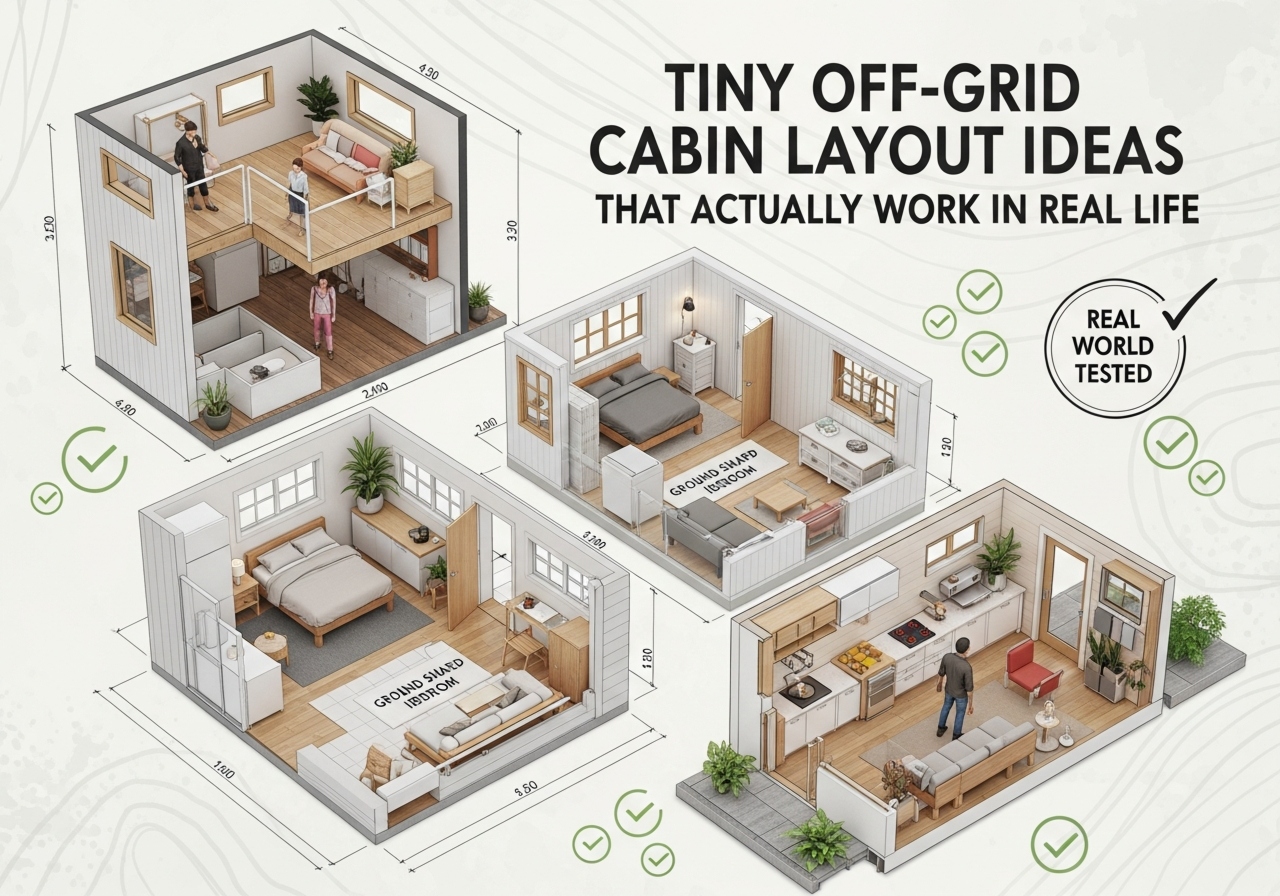
Are you planning a tiny off‑grid cabin and wondering which layout will actually work for your lifestyle, climate, and budget?
Tiny Off‑Grid Cabin Layout Ideas That Actually Work In Real Life
You’re about to read practical layout ideas and real‑world advice to help you design a tiny off‑grid cabin that functions, feels spacious, and supports off‑grid systems reliably. This guide breaks down principles, layout types, dimension suggestions, utilities, and common pitfalls so you can plan with confidence.
Why layout matters for off‑grid tiny cabins
Your layout determines daily comfort, energy efficiency, and how easily you can live off the grid. In a small footprint, everything must earn its place — circulation, storage, utilities and multi‑use furniture all interact, so thoughtful planning saves time, money and frustration.
Consider how you use space hourly, daily and seasonally. Layout decisions influence insulation effectiveness, solar gain, plumbing runs, and where you can place a wood stove or solar panels.
Constraints that shape layout choices
You’ll face a few common constraints when planning an off‑grid tiny cabin. Each has practical implications you’ll need to account for in your layout.
- Size limits: Tiny cabins range from about 64 sq ft up to 400 sq ft; smaller sizes force multi‑function spaces.
- Climate: Cold, heat, snow and humidity affect orientation, wall and roof R‑values, and entry zoning.
- Access and transport: If building on a trailer or remote site, weight and modular dimensions matter.
- Utilities: Water storage, batteries, and fuel must fit safely and conveniently.
- Codes and permits: Local rules can mandate setbacks, septic systems, or minimum habitable sizes.
Core design principles for real‑world off‑grid layouts
Good tiny cabin layouts follow a set of practical principles. These help you squeeze more function into less area while keeping daily living pleasant.
Multi‑function and transformable spaces
Your furniture and surfaces should do more than one job — a dining table becomes a desk, a bench is storage, a loft handles sleeping and storage. Use fold‑downs, sliding components and convertible furniture to increase utility.
Vertical planning and loft use
Lofts you can sleep in or store in free up ground floor living space. Vertical routing also reduces plumbing and wiring runs when systems are planned thoughtfully.
Zoning: wet, warm and work zones
Group plumbing together (kitchen and bathroom) to reduce runs. Keep a thermal core — wood stove or stove/oven — central for even heat. Create an entry “mud” zone to keep dirt contained.
Simplicity and minimal maintenance
Pick systems and finishes that you can repair or maintain remotely. Fewer moving parts and standardized components reduce troubleshooting in an off‑grid situation.
Energy and thermal efficiency first
A tight building envelope, good windows, and passive solar orientation reduce energy needs and the size of your off‑grid systems.
Popular tiny off‑grid layout types that actually work
Below are layout types that have proven effective. Each suits different priorities — solitude, family use, mobility, or simplicity.
| Layout type | Best for | Typical size | Pros | Cons |
|---|---|---|---|---|
| Lofted studio | Solo or couple focused on living area | 8×16 to 12×20 | Open feel, efficient heating, safe stove placement | Loft access limits usability for some |
| Trailer/tiny house on wheels | Mobile living or seasonal camps | 8.5×20 to 8.5×32 | Transportable, compact systems prebuilt | Weight and height constraints |
| Split level / raised sleeping deck | Privacy and headroom | 10×20 to 12×30 | Clear separation of sleep and living | More complex construction |
| Two‑room cabin (bedroom + living) | Small family or long stays | 12×20 to 14×28 | Dedicated bedroom, easier to heat selectively | Slightly larger footprint |
| Pod with attached bathroom | Simple build, staged expansion | 8×12 pod plus bathroom module | Modular, scalable | May require plumbing between modules |
| Open plan with peripheral utilities | Regional climates, entertaining | 12×24 to 14×30 | Great social space, flexible | Larger surface area to heat/cool |
Lofted studio
You’ll often see the lofted studio as the archetypal tiny cabin. Put a kitchen, seating, and bathroom on the ground level with a ladder or compact staircase leading to a sleeping loft. Lofts work best if you prioritize daytime living space and can climb a ladder or steeper stairs.
- Typical loft height: 3.5–4.5 ft (headroom while seated) over sleeping area.
- Stair or ladder options: alternating treads, storage stairs, or compact straight stairs.
- Best features: central wood stove, 8–10 ft ceiling in main area for openness.
Trailer/tiny house on wheels
If mobility matters, design within trailer width limits and legal height. Place heavier systems (batteries, water tanks) low and centered. Keep plumbing cluster near axle area to shorten runs.
- Max width (road legal without permit in many regions): 8.5 ft (2.6 m).
- Typical layouts: single wall kitchen, rear bathroom, front living/lofted bedroom.
Two‑room cabin
You’ll appreciate a separate bedroom if you want more privacy or steady long‑term use. A small hallway or sliding door can separate a 6×8 bedroom from a combined kitchen/living area.
- Bedroom dimensions: 6×8 to 8×10 ideally.
- Living/kitchen: 8×12 or larger so you have room for a multi‑use table.
Detailed layout ideas with dimensions and placement tips
These are practical, replicable layouts with sample dimensions and placement notes you can adapt to your site and needs.
8×16 lofted studio — compact weekend cabin
This footprint gives you functional living space for a solo user or couple who enjoy the outdoors.
- Ground floor: 8×10 living/kitchen; 8×6 bath/storage.
- Loft: sleeping area 8×10 accessed by ladder or alternating‑tread stairs.
- Key placements:
- Wood stove at one end of the main space with heat shield and clearance.
- Kitchen along one wall: compact sink, two‑burner cooktop, small fridge.
- Bathroom uses composting or cassette toilet to avoid blackwater plumbing runs.
- Benefit: minimal plumbing and short wiring runs reduce off‑grid system loads.
10×20 mixed use with separate bedroom
This layout suits a longer stay and gives a private sleeping room.
- Zone sizing: 10×8 bedroom, 10×8 living/kitchen, 10×4 entry/utility.
- Kitchen: L‑shaped along a short wall for counter and small oven/plate.
- Bathroom: compact 4×6 off the bedroom or entry; a corner shower or wet room saves space.
- Option: place water heater near bathroom and stack washer if desired.
12×24 family cabin with bunk nook
If you need to host guests or kids, use bunk alcoves and a convertible seating area.
- Main living: 12×12 open plan.
- Sleeping: 12×8 master bedroom; 12×4 bunk alcove with sliding door.
- Bathroom: 6×8 with conventional toilet and small tub or larger shower.
- Storage: use built‑in benches and underfloor compartments.
10×12 hunting/utility cabin
A minimal plan for short stays or site housing.
- Single room with pull‑out sofa/bed at one wall.
- Kitchenette against opposite wall with 2‑burner cooktop and sink.
- Small corner composting toilet or outhouse to simplify plumbing.
- Porch or vestibule useful for storing gear and keeping dirt outside.
Kitchen layouts that work off‑grid
Kitchen planning is crucial because cooking and water use are frequent. Aim to minimize energy draws and maximize storage and counter space.
Single‑wall kitchen
This is the most space‑efficient. Place sink, cooktop, and fridge along one wall with overhead cabinets.
- Minimum practical length: 6–8 ft for sink and two burners plus counter.
- Use induction if you have reliable solar and battery capacity; otherwise propane works well off‑grid.
Galley kitchen
Two parallel runs maximize surface and storage in a slightly wider cabin.
- Width requirement: at least 4–5 ft between counters for comfortable use.
- Effective in trailer layouts where one side stores appliances and the other serves prep space.
L‑shaped kitchen
Good for corner utilization. It provides a natural work triangle on a small scale.
- Minimum corner to opposite counter length: 6–8 ft per leg.
- A small fold‑down table can act as additional prep or dining space.
Outdoor or partially outdoor cooking
If you heat with wood or gas and live seasonally, an outdoor kitchen reduces indoor heat and grease. A covered porch with a small sink and cooktop is ideal for summer use.
Bathroom and sanitation strategies
Off‑grid sanitation choices drastically shape your layout, water needs and permitting.
Composting toilets
Low water use and often permit‑friendly. They eliminate blackwater needs but require ventilation and occasional maintenance.
- Footprint: 2×3 ft for pedestal plus 2–4 ft clearance.
- Place near an exterior wall for venting.
Holding tanks or septic
If you choose a small conventional toilet, budget for a holding tank and pump if you’re remote. Distance to a drain field matters if you plan a septic system.
- Tanks: 100–300 gallon tanks are common for tiny cabins based on occupancy.
- Best placed below bathroom floor for gravity drain.
Wet room / compact shower
A wet room uses the entire small bathroom as a drained shower space. It reduces partitions and is easier to waterproof in tiny footprints.
- Minimum shower size: 30×30 in / 76×76 cm, but 32×36 in is more comfortable.
Incinerating toilets
Useful in extreme cold or where composting is impractical, but they require electricity or fuel.
- Consider noise, venting and fuel logistics.
Sleeping solutions and loft safety
Choose sleeping solutions that match mobility and comfort needs.
Sleeping lofts
Common and space‑efficient. Ensure safe headroom and guardrails.
- Typical loft sleeping area: 6.5–8 ft wide by 7–12 ft long depending on cabin size.
- Head clearance above mattress: aim for 3.5–4.5 ft to sit comfortably.
Murphy and wall beds
Great for turning a daytime living area into a bedroom. They require more vertical wall space and robust anchoring.
Built‑in bunks and daybeds
Use for kids or guest rooms. Include storage under bunks for gear.
Mattress and ventilation
Insulate floors under lofts to reduce cold in winter and plan cross‑ventilation for summer.
Storage and organization tips
Storage wins are crucial in tiny cabins; plan it into the structure rather than adding furniture.
- Under‑stair drawers or cubbies: use the depth of stairs for large storage.
- Bench seating with lift lids: doubles as dining seating and storage.
- Overhead cabinets: light materials and secure latching to prevent items falling during travel.
- Underfloor compartments: good for long‑term dry storage of bulk items like dry goods or gear.
Heating, cooling and ventilation
Thermal comfort is a top factor in livability. Choose a heating strategy that matches your climate and energy system.
Wood stove placement and clearance
Place your wood stove close to the center of the main living area. This reduces cold spots and shortens heat travel.
- Minimum clearances depend on model; follow manufacturer specs and local code.
- Consider a flue routing that minimizes roof penetration if possible.
Insulation targets
Target high R‑values relative to your climate; the tighter the shell, the smaller your energy system.
- Cold climates: walls R‑20–R‑30, roof R‑40–R‑60, floor R‑10–R‑20.
- Mild climates: walls R‑13–R‑20, roof R‑30–R‑40.
Ventilation and moisture control
Install mechanical ventilation such as an ERV or at least an exhaust fan in the bathroom. In cold climates, a heat‑recovery ventilator preserves warmth.
Passive solar and shading
South‑facing glazing in cold climates provides passive gain; large overhangs or awnings prevent overheating in summer.
Water, power and other off‑grid systems
Planning utilities is where layout meets engineering. Put systems logically to reduce runs and protect components.
Water systems and placement
- Rainwater catchment: place cisterns downhill from gutters; gravity feed reduces pump needs.
- Hot water: small tankless propane units save energy and space; electric tankless requires significant panel capacity.
- Pump placement: keep pump and filtration near the water source and close to high demand (kitchen/bathroom) if possible.
Solar and battery system: simple sizing example
Here’s a simplified example to illustrate how much solar and battery capacity you might need. This only frames typical loads — adjust for your appliance choices.
| Device | Average daily use | Daily Wh (Watt‑hours) |
|---|---|---|
| LED lighting (6 bulbs @ 10W, 4 hrs) | 240 W·h | |
| Mini fridge (efficient) | 600–1,200 W·h | |
| Water pump (20 min/day at 100W) | 33 W·h (should be 33 W·h? Actually 100W * 0.33h = 33Wh) | |
| Laptop/charging | 100–300 W·h | |
| Induction cooktop (rare) | 500–1,500 W·h | |
| Misc/backup | 200–400 W·h |
Estimate a baseline daily consumption of 1,500–3,000 Wh for minimal comforts. For solar sizing:
- Solar panel array: 1,500 Wh / (4 hrs sun × 0.75 system efficiency) ≈ 500 W panels minimum.
- Battery storage: For 24 hours autonomy at 2,000 Wh and 50% usable depth: 4,000 Wh ≈ 333 Ah at 12V (4,000/12 = 333 Ah).
These numbers are illustrative. You should engineer to your specific appliances, climate and autonomy needs.
Backup generators and propane
A small generator is useful for heavy loads like power tools or occasional electric heating. Propane handles cooking, refrigeration (propane fridges), and backup heating.
Greywater management
Simple gravity dispersal or mulch basin works for small, seasonal cabins; porous soils and proper setbacks are required. For year‑round use, a small engineered system may be necessary.
Materials and construction tips for tiny off‑grid cabins
Select materials with durability, thermal performance and local availability in mind.
- SIPs (Structural Insulated Panels) speed up construction and give airtight envelopes.
- Reclaimed wood and corrugated metal provide character and reduce costs.
- Light‑gauge steel framing is good for low maintenance and termite resistance.
- Avoid high‑VOC materials and use breathable membranes in wet climates.
Permits, legal and site selection considerations
Always check local regulations. Some areas allow micro‑cabins with fewer restrictions, others classify anything with plumbing as a dwelling.
- Site selection: orient building for sun, wind and views; consider road access for supply and emergency services.
- Flood and fire zones: determine required elevations and defensible space.
- Snow load and wind: design roof pitch and framing to handle local conditions.
Budgeting and cost ranges
Costs depend on materials, labor and systems. Typical ranges:
- DIY minimal shell (foundation, walls, roof) for an 8×16: $10k–$25k.
- Fully finished off‑grid tiny cabin with solar, battery, composting toilet: $25k–$60k DIY.
- Contractor or prefab tiny home on wheels: $60k–$120k+.
- High‑end or larger off‑grid cabins: $120k+ depending on systems and finishes.
These are rough numbers. You’ll save by doing your own labor, using simpler systems, and reusing materials.
A practical layout planning checklist
Use this step‑by‑step checklist to move from idea to plan.
- Clarify primary use: weekend retreat, year‑round residence, rental, hunting cabin.
- Set maximum footprint and mobility needs (trailer vs foundation).
- Choose layout type (loft, two‑room, etc.) and sketch circulation.
- Cluster wet zones (kitchen, bath) to minimize plumbing runs.
- Decide heating method and position to centralize heat.
- Plan sleeping solutions (loft, Murphy, bunk) and emergency egress.
- Size and locate water tanks, batteries, and inverter near the center of gravity.
- Select insulation levels based on climate.
- Sketch electrical panel, breaker locations, and solar array placement.
- Review building codes and apply for necessary permits.
- Finalize detailed floor plans and framing plans.
- Build or order components and follow a phased construction schedule.
Common mistakes and how to avoid them
You can sidestep frequent errors by planning ahead.
- Mistake: Undersized battery or generator for real usage. Solution: calculate real appliance loads and plan conservatively.
- Mistake: Not planning for storage. Solution: build storage into structure.
- Mistake: Poor ventilation and moisture control. Solution: add mechanical ventilation and vapor control appropriate for climate.
- Mistake: Overbuilding with too many systems at once. Solution: start simple and expand modularly.
- Mistake: Placing wood stove against an exterior wall without proper air gap. Solution: follow clearance requirements and consider heat shield options.
Case study sketches — quick real‑life examples
These short sketches show how layouts function in practice.
- Weekend artist cabin (8×16): single‑wall kitchenette, small wet room with composting toilet, large north wall for supplies and art storage, south‑facing windows for natural light. Solar 300–500 W array, battery small for lighting and devices.
- Family off‑grid cabin (12×24): L‑shaped kitchen, wood stove centered, separate bedroom, bunk nook for kids, 300–500 gal water cistern for household use, 1–2 kW solar array with 6–8 kWh battery bank.
- Mobile hunting cabin (8.5×20 on trailer): front living area, rear wet bath with cassette toilet, loft sleeping above living, propane fridge, small inverter for charging; batteries centered over axle.
Final tips to make any layout actually work in real life
- Build mockups: tape out furniture and circulation on the floor to test flow before committing.
- Prioritize what you use daily: kitchen equipment, bedding and a warm sleeping place.
- Plan redundancy: a backup heat source and a manual water delivery plan are lifesavers.
- Optimize for maintenance: choose accessible routing for filters, pumps, and batteries.
- Keep future adaptability in mind: design spaces that can be reconfigured as needs change.
Designing a tiny off‑grid cabin that works in real life is a balancing act between comfort, simplicity and technical systems. With careful zoning, multi‑use furniture, clustered utilities, and appropriately sized off‑grid systems, you can create a layout that supports the life you want to lead — whether occasional retreats or full‑time tiny living.