
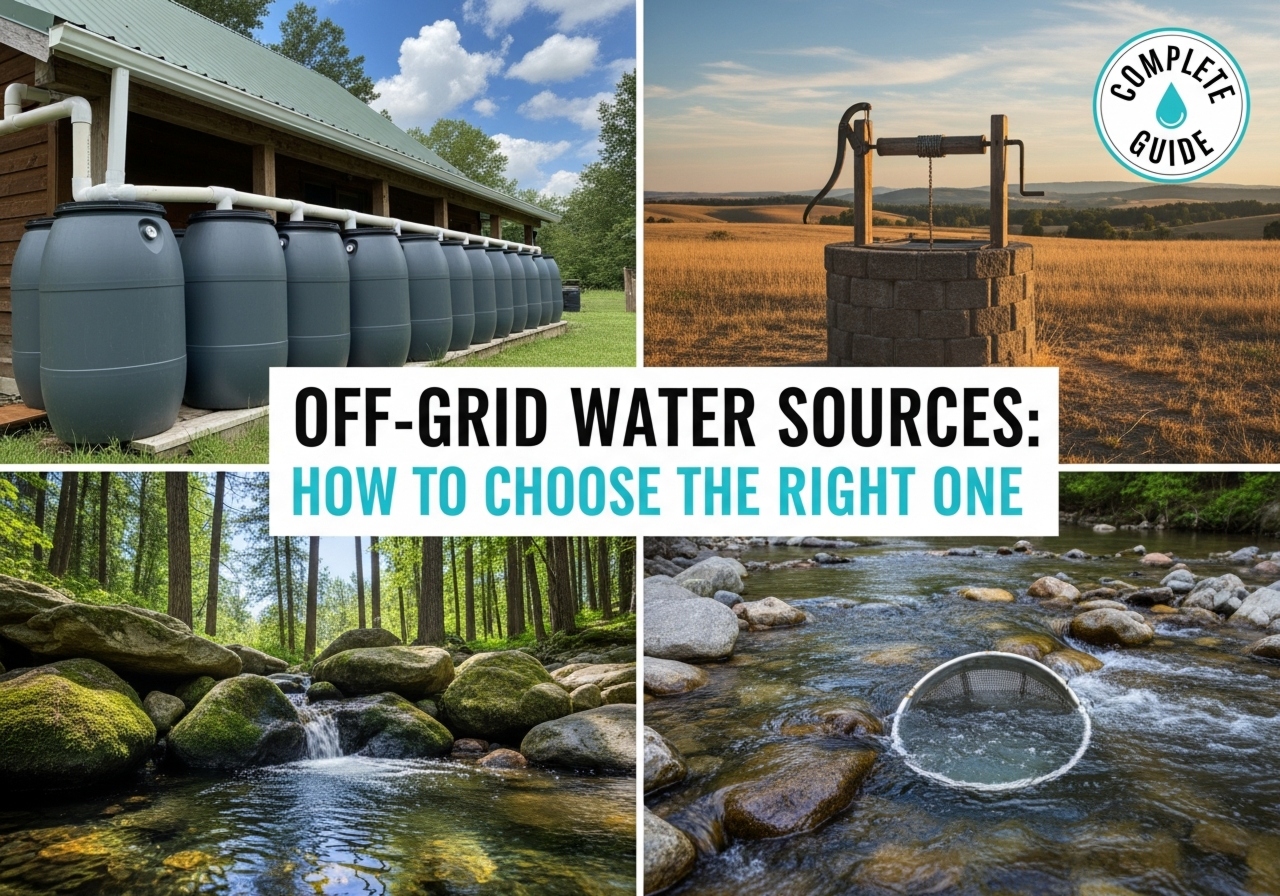
Have you thought through how reliable your water supply will be when you move off the grid or develop an off‑grid property?
How To Choose A Reliable Water Source for Your Off‑Grid Property
Choosing the right water source is one of the most important decisions you’ll make for an off‑grid property. Your water source affects your day‑to‑day comfort, health, property value, and long‑term resilience. This guide walks you through practical factors, options, testing, treatment, storage, and maintenance so you can select a system that meets your needs and fits your budget.
Why the right water source matters
The water source you pick determines whether you have enough water year‑round, the level of treatment required, and how much infrastructure and maintenance you’ll need. Opting for an unreliable or untreated source can create ongoing problems, while choosing appropriately reduces stress, saves money, and keeps your family safe.
Overview of common off‑grid water sources
Below are the mains options you’ll consider. Each has pros and cons depending on your climate, geography, and water needs.
Groundwater (wells)
Groundwater from drilled or bored wells is often the most reliable source for off‑grid properties. It is usually protected from surface contamination and provides consistent flow year‑round if aquifers are adequate.
- Drilled wells (deep, cased) tap deeper aquifers and tend to be more reliable.
- Shallow dug or bored wells can be inexpensive but are more vulnerable to contamination and seasonal dry‑out.
Springs
A spring is groundwater that flows to the surface naturally. If your property has a spring, you can have high quality, gravity‑fed water with minimal pumping.
- Springs are excellent when they have stable flow and are protected or developed (spring box, sedimentation, disinfection).
- Flow can vary with season and heavy droughts.
Surface water (streams, rivers, ponds, lakes)
Surface water is accessible and may provide abundant quantities, but it generally requires more treatment because of microbial and chemical contaminants.
- Streams and rivers fluctuate widely with rainfall and season.
- Ponds and lakes can support storage and passive treatment but may have algal blooms or contamination risks.
Rainwater harvesting
Rainwater catchment collects roof runoff and stores it. It’s an increasingly popular supplement or primary source where precipitation is reliable.
- Requires large storage for dry seasons.
- Quality is good if you follow good tank and roof practices, but treatment is still recommended for potable use.
Water hauling and community water
When on‑site sources are unavailable, you might haul water or join a community water system. These are feasible as interim or backup solutions.
- Hauling increases labor and cost.
- Community systems provide convenience but may have reliability or legal constraints.
Compare water sources at a glance
| Source | Typical Yield | Usual Quality | Seasonal Reliability | Infrastructure Needs | Best If |
|---|---|---|---|---|---|
| Drilled well | High (gpm varies) | Good to excellent | High | Pump, power, casing | You need dependable year‑round supply |
| Dug/shallow well | Low–moderate | Variable | Low–moderate | Pump, protection | Cost constraints; shallow aquifer present |
| Spring | Moderate | Usually good | Moderate–high | Minimal pump if gravity; spring box | You have natural spring on property |
| Stream/river | Variable; can be high | Variable; often poor | Low–high | Intake, treatment, possible pumping | Abundant surface flow available |
| Pond/lake | Variable; can store | Variable | Moderate | Intake, treatment, pumping, fencing | You want on‑site storage & multiple uses |
| Rainwater | Variable; seasonal | Generally good | Low–moderate (seasonal) | Collection area, gutters, tanks, filtration | Adequate rainfall & storage capacity |
| Hauling | As needed | Depends on source | Dependent on supplier | Tank, transport | Temporary or backup option |
Assess your property and local conditions
You’ll want to gather data before committing to any path. A thorough site assessment helps you understand availability, cost, and long‑term viability.
Topographic and geological survey
Knowing your terrain and geology helps identify groundwater potential, spring locations, and drainages. You can review soil maps and bedrock information from government agencies or hire a consultant for a borehole log search.
- Rocky areas with good aquifers support drilled wells.
- Fractured rock can mean variable well yields; you’ll need to test.
Climate and precipitation patterns
Annual rainfall, how it’s distributed, and drought frequency determine whether rainwater catchment or surface water will be feasible. Review long‑term climate data for your region.
Water table depth and seasonal fluctuations
The depth to groundwater affects drilling cost and pump selection. Seasonal lows may cause shallow wells and springs to dry up; confirm lowest historical water levels.
Land use and contamination risks
Assess nearby agricultural, industrial, and septic activity that could influence groundwater or surface water quality. Avoid sources downhill from contamination sources if possible.
Accessibility and infrastructure
Consider access for drilling rigs, hauling, and building intake or storage structures. Difficult access can increase installation costs significantly.
Legal and regulatory considerations
Off‑grid water is subject to rules depending on where you live. You must verify rights and permits to stay compliant.
Water rights and permits
In many jurisdictions, groundwater and surface water use is regulated. You might need permits for drilling, diverting surface water, or constructing large storage tanks.
- Prior appropriation states: water rights may limit your ability to divert surface water.
- Riparian areas: different rules may apply.
Environmental protection and setbacks
Regulations may require setbacks from wells to septic systems, livestock areas, and chemical storage. Springs and stream diversions may require environmental review.
Well construction and contractor licensing
Many regions have standards for well drilling, casing, and grout. Use licensed contractors and obtain required inspections and documentation.
Estimating your water needs
Calculate daily and seasonal use so your system has enough capacity.
Household demand
Typical per‑person household water use can vary greatly depending on conservation measures:
- Conservative off‑grid lifestyle: 5–20 gallons per person per day (gpd).
- Average household with some modern amenities: 50–100 gpd per person.
- Full modern usage (washing machines, showers, irrigation): 100–200+ gpd per person.
Make a realistic plan: prioritize essential uses (drinking, cooking, sanitation) and decide what luxury appliances you’ll include.
Livestock and irrigation
Animals and gardens increase demand. Cattle, horses, and poultry all have specific daily water needs. Irrigation needs depend on crop type and climate.
Storage and buffer sizing
Determine storage that covers days of autonomy you want: common choices are 3 days, 7 days, or seasonal buffers (weeks to months). For rainwater systems, you’ll often size tanks to carry through dry months.
Testing water quality
Never assume a source is safe. Comprehensive testing guides treatment decisions.
Basic tests you should run
- Bacteriological tests (total coliforms, E. coli) — essential for safety.
- Nitrate/nitrite — especially near agricultural areas or septic systems.
- pH, hardness (calcium/magnesium) — affects plumbing and treatment choice.
- Metals — iron, manganese, lead, arsenic — depending on local geology and old plumbing.
- TDS (total dissolved solids) — indicates general mineral load.
- Volatile organic compounds (VOCs) and pesticides — if near industrial or agricultural contamination.
- Turbidity — important for surface waters and springs.
Test labs often provide sampling kits and instructions. Repeat tests seasonally and after any changes in land use or well repair.
Interpreting results
- Any E. coli detection = unsafe for drinking until treated.
- High nitrate (>10 mg/L as N) is a risk for infants and requires treatment/alternative.
- Elevated metals or VOCs may require specific filtration or avoidance.
Work with certified labs and local health departments if you need interpretation help.
Treatment options and when to use them
Treatment depends on contaminants. Often you’ll use multiple barriers: pretreatment, primary disinfection, and polishing.
Disinfection
- Chlorination: effective for bacteria and viruses. Requires careful dosing and contact time; leaves residual protection in storage.
- UV light: excellent for microbial inactivation but no residual protection and ineffective with turbidity.
- Ozone: strong oxidant, handles microbes and some chemicals; more complex and energy intensive.
- Boiling: emergency use only.
Filtration
- Sediment filters (5–50 micron): protect pumps and downstream equipment; remove particulates.
- Activated carbon: removes organic compounds, chlorine, odor, and improves taste.
- Iron filters: for removing ferrous/ferric iron and manganese via oxidation and filtration.
- Sand/gravel filters: inexpensive for gross solids removal.
- Ceramic filters: useful in small systems, effective for microbes with pore sizes.
Advanced treatment
- Reverse osmosis (RO): reduces salts, nitrates, many contaminants; produces waste brine and requires pressure and prefiltration.
- Ion exchange: removes hardness and specific ions like nitrate/arsenic when configured properly.
- Distillation: ensures purity but uses significant energy.
Treatment selection guide
| Problem | Common Treatment(s) | Notes |
|---|---|---|
| Bacteria/viruses | Chlorination, UV, ozone | UV needs clear water; chlorine provides residual |
| Turbidity/sediment | Sediment filters, settling tanks | Important before UV/RO |
| Iron/manganese | Oxidation + filtration, greensand | Test oxidation state (ferrous vs ferric) |
| Hard water | Water softener (ion exchange) | Adds sodium; consider saltless alternatives |
| Nitrate | RO, ion exchange, distillation | Important for pregnant women/infants |
| Arsenic/lead | Specialized media, RO | Media selection depends on speciation |
| VOCs/pesticides | Activated carbon, RO | Carbon contact time matters |
Storage, supply reliability, and redundancy
Even a reliable source benefits from storage and backups.
Storage sizing
- Short‑term (household): tanks sized for several days to a few weeks.
- Seasonal/rainwater: tanks sized to store dry‑season needs — often thousands of gallons.
- Fire suppression: if you want on‑site firefighting water, add larger tanks sized per local needs.
Tank materials and placement
- Materials: polyethylene (plastic), fiberglass, concrete, steel — each has pros/cons for cost, contamination risk, freezing, and durability.
- Placement: above‑ground tanks are easier to service; underground tanks reduce freeze risk and visual impact.
Redundancy
- Multiple sources: combine well + rainwater + hauled water or stream + spring for greater resilience.
- Backup power for pumps: manual pump, generator, solar with battery backup.
- Spare parts and a basic repair kit: valves, fittings, cartridge filters, chlorine tablets, pump seals.

Pumps and energy choices
Your pump selection depends on source type, head (vertical lift), and available power.
Pump types
- Submersible well pumps: drop into well; efficient for deep wells.
- Jet pumps: above ground, used for shallow wells; can be less efficient and more maintenance.
- Surface pumps (centrifugal): for ponds, springs, or tanks; require priming unless self‑priming.
- Hand pumps: manual backups or primary for very low demand.
Power options
- Grid power: reliable where available; consider outages.
- Generator: flexible but requires fuel and maintenance.
- Solar: excellent for off‑grid if you size panels and batteries appropriately; DC pumps or AC inverter setups possible.
- Wind: feasible in windy sites but less common.
Pump selection checklist
- Determine flow rate (gallons per minute) required.
- Calculate total dynamic head (vertical lift + friction losses).
- Match pump curve to your needs.
- Choose voltage and energy source compatible with site infrastructure.
System design considerations
A well‑designed system minimizes maintenance and maximizes reliability.
Protect source and intake
- Well: proper casing, sanitary seal, and distance from contamination sources.
- Spring: spring box with sealed cover, first‑flush diversion, and sedimentation area.
- Surface intake: screened intake, settling pond, raw water pump separated from storage.
Pre‑treatment and isolation
- Use sediment traps, skimmers, or settling basins before main treatment.
- First‑flush devices for rainwater divert initial rooftop runoff to reduce contaminants.
Distribution and pressure
- Pressure tanks reduce pump cycling and extend pump life.
- Use backflow prevention on garden irrigation or connections.
Monitoring and alarms
- Install simple gauges for tank levels and pump status.
- Consider telemetry for remote monitoring if you’re off property or in a harsh climate.
Operation, maintenance, and troubleshooting
You’ll keep your system reliable with regular checks and simple maintenance.
Routine tasks
- Test potable water for bacteria at least annually; more often after repairs.
- Change sediment and carbon filters per manufacturer guidelines (often every 3–12 months).
- Check and sanitize tanks annually or after contamination events.
- Inspect well caps, casings, and spring boxes for integrity.
- Monitor pump hours and perform scheduled maintenance.
Maintenance schedule (example)
| Task | Frequency |
|---|---|
| Bacterial test (basic) | Annually / after repairs |
| Sediment filter replacement | 3–12 months |
| Carbon filter replacement | 6–12 months |
| Tank cleaning and inspection | Annually |
| Pump service | As recommended by manufacturer / annual check |
| Shock chlorination of well | After contamination or every few years depending on risk |
| Visual inspection of intake and intakescreens | Monthly during active use |
Common problems and fixes
- Low flow: check filters, pump priming, well yield — may need jetting or pump service.
- Bad taste/odor: replace carbon filter, flush tank, test for VOCs.
- Pump short cycling: check pressure tank bladder, adjust pressure switch.
- Freezing: insulate exposed pipes and tanks or move equipment indoors.
Cost considerations and budgeting
Costs vary widely based on source and site complexity. Below are typical cost drivers to include in your budget.
Cost factors
- Drilling depth and geology: the single biggest variable for well costs.
- Accessibility: remote or steep access increases labor and mobilization costs.
- Treatment complexity: advanced treatment like RO, ion exchange, or arsenic media raises capital and operating costs.
- Storage capacity: larger tanks add material and installation costs.
- Power system: solar + batteries vs generator vs grid affect both capital and ongoing costs.
- Permitting and testing: fees for permits and required labs.
Example ranges (very approximate, will vary regionally)
- Dug/shallow well: $2,000–$10,000.
- Drilled well: $5,000–$25,000+ depending on depth.
- Rainwater system (collection + 5,000 gallons storage + basic treatment): $3,000–$15,000.
- Spring development: $1,000–$10,000.
- Treatment system (basic chlorination + sediment + carbon): $500–$4,000.
- RO or advanced systems: $2,000–$15,000.
- Pumps: $300–$5,000+ depending on type and power system.
- Solar pump system: $2,000–$15,000 depending on size.
Get multiple quotes and confirm what’s included (drilling, testing, disinfecting, permits).
Choosing the right option: decision steps
Follow a stepwise approach to make a confident decision.
- Gather data: geological maps, precipitation records, property topography, neighboring land use.
- Inventory on‑site sources: springs, streams, ponds, roof area for rain catchment, likely well locations.
- Estimate your water needs realistically for present and future.
- Test nearby wells or surface waters if available to infer quality.
- Check legal requirements and permit needs with local authorities.
- Get professional assessments: driller with local experience, hydrogeologist if needed.
- Compare options with a matrix (yield, quality, seasonality, cost, complexity).
- Plan for redundancy and a maintenance budget.
- Implement stepwise: often start with a primary source plus storage and a basic treatment barrier, then add advanced treatment later if needed.
- Document: keep well logs, test results, maintenance records, and permits in an accessible file.
Decision matrix example
| Factor | Drilled Well | Spring | Surface Water | Rainwater |
|---|---|---|---|---|
| Typical reliability | High | Medium–High | Variable | Seasonal |
| Treatment needed | Moderate (some minerals) | Low–Moderate | High | Low–Moderate |
| Installation cost | Medium–High | Low–Medium | Medium | Low–Medium |
| Maintenance | Moderate | Low–Moderate | Moderate–High | Moderate |
| Legal complexity | Moderate | Low–Moderate | High (diversion) | Low |
Use this matrix to weight what matters most for you: reliability, purity, cost, or simplicity.
Case studies (brief examples)
Example 1: Dry highland property, deep aquifer available
You drill a deep well with a submersible pump and solar array. You size a 2,000‑gallon storage and install UV for disinfection and a small RO for drinking water. This gives year‑round supply with low daily operating cost.
Example 2: Temperate forest with heavy rainfall
You rely primarily on a large rainwater catchment with multiple 5,000‑gallon tanks and a sediment + UV treatment for potable use. You keep a small spring as backup and a generator for winter when solar yields drop.
Example 3: Riverside property with seasonal flow
You use a surface intake with a settling pond and a robust treatment train (sediment -> carbon -> UV) and large pump. You add wetland filtration and fencing to reduce contamination and plan to haul water during low‑flow months.
Final checklist before you commit
- Confirm local regulations, permits, and water rights.
- Perform or obtain a site hydrogeologic evaluation.
- Test representative water sources for microbiological and chemical contaminants.
- Estimate daily and seasonal water needs for household, livestock, and irrigation.
- Evaluate power options for pumps and install battery/backup systems as needed.
- Size storage and plan for redundancy and emergency supply.
- Budget for installation, operation, and ongoing maintenance.
- Hire licensed professionals for drilling, significant treatment, and major plumbing.
- Document everything: well logs, test results, warranties, and maintenance records.
Final thoughts
Your off‑grid water strategy should prioritize safety, reliability, and simplicity. Often the best approach combines more than one source — for example, groundwater for daily use with rainwater for nonpotable needs and hauled water as emergency backup. Test early and regularly, design with maintenance in mind, and build redundancy where possible. With careful planning you’ll create a system that keeps your household healthy and independent for years to come.