
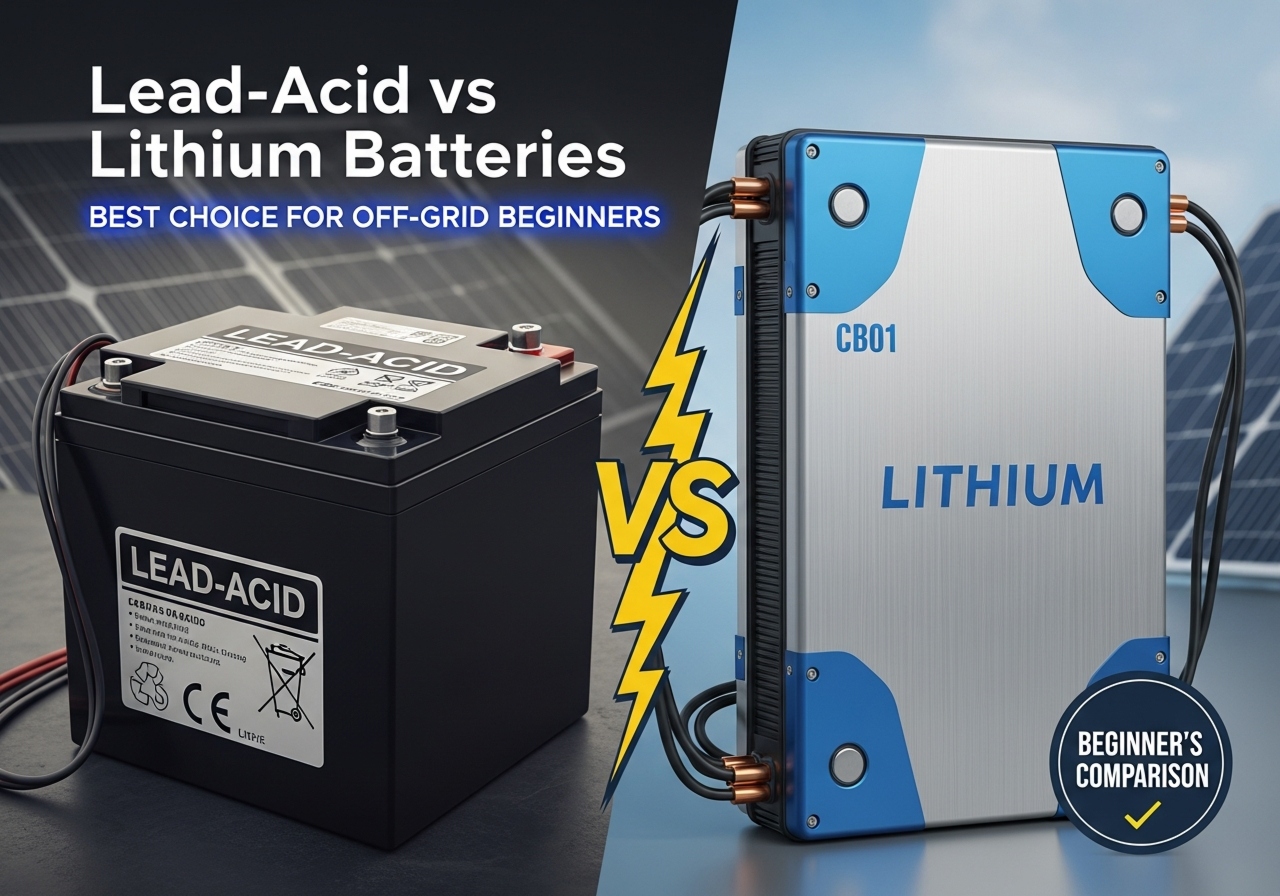
Thinking about going off‑grid and wondering which battery type will make your life easier: lead‑acid or lithium?
Lead‑Acid Vs Lithium Batteries For Off‑Grid: Which Is Best For Beginners?
This article compares lead‑acid and lithium batteries so you can decide which one fits your off‑grid needs. You’ll get clear explanations of how each chemistry works, the pros and cons, cost and lifetime tradeoffs, installation and maintenance expectations, safety considerations, and tips for sizing and buying your first system.
Why this comparison matters
You’ll find many battery options, and choosing the wrong one can cost you time, money, or both. This comparison focuses on practical, beginner‑friendly information so you can pick a system that matches your budget, energy needs, and willingness to maintain equipment.
Basic battery principles (simple and relevant)
You don’t need a degree in electrical engineering to understand the essentials. Batteries store energy as chemical potential and release it as electricity. Important terms you’ll see again and again include capacity (how much energy it stores), depth of discharge (DoD — how much of that capacity you can use safely), cycle life (how many charge/discharge cycles it can handle), and efficiency (how much energy you get back versus what you put in).
Capacity and energy (what the numbers mean)
Capacity is usually given in ampere‑hours (Ah) or kilowatt‑hours (kWh). If a battery is 100 Ah at 12 V, its energy is 1.2 kWh (12 V × 100 Ah = 1200 Wh). You’ll size systems by converting your daily energy usage into kWh and adding margins for cloudy days and inefficiencies.
Depth of discharge (how much you can use)
DoD is critical: some batteries let you use most of their capacity safely, while others require you to leave a buffer. Higher usable DoD means you need fewer batteries for the same usable energy.
Cycle life and calendar life (how long they last)
Cycle life is how many charge/discharge cycles the battery can do before its capacity drops below a given percent of the original (often 80%). Calendar life is how long the battery lasts over time, even if you don’t cycle it much. Both matter for total lifetime cost.
How lead‑acid batteries work (the basics)
Lead‑acid batteries use lead plates immersed in sulfuric acid. During discharge, lead and lead dioxide react with the acid to produce electricity; charging reverses the reaction. They’re a mature, well‑understood technology.
Types of lead‑acid batteries
You’ll see three main types:
- Flooded (wet) lead‑acid: cheapest upfront, require water topping and ventilation.
- Sealed GEL: lower maintenance, better for deeper cycling than flooded in some cases.
- Sealed AGM (Absorbent Glass Mat): common for off‑grid; low maintenance and resistant to vibration.
Each has tradeoffs in cost, maintenance, and performance.
Typical performance characteristics
Lead‑acid batteries usually recommend staying within 50% DoD for long life (though many people use 60–80% with shorter lifespan). Round‑trip efficiency is often 70–85%, meaning you lose more energy during charge/discharge than with lithium.
How lithium batteries work (the basics)
Lithium batteries commonly used off‑grid are lithium‑iron phosphate (LiFePO4 or LFP). They store energy with lithium ions moving between electrodes. LFP is favored for safety, cycle life, and thermal stability.
Types of lithium chemistries (and why LFP is common)
There are several lithium chemistries (NMC, LFP, LCO, etc.), but LFP stands out for off‑grid use because it’s more stable, less prone to thermal runaway, and has excellent cycle life compared with other lithium types.
Typical performance characteristics
Lithium batteries typically allow 80–100% usable DoD, have 90–98% round‑trip efficiency, and deliver hundreds to thousands of cycles before significant capacity loss. They’re lighter and more compact than lead‑acid for the same usable energy.
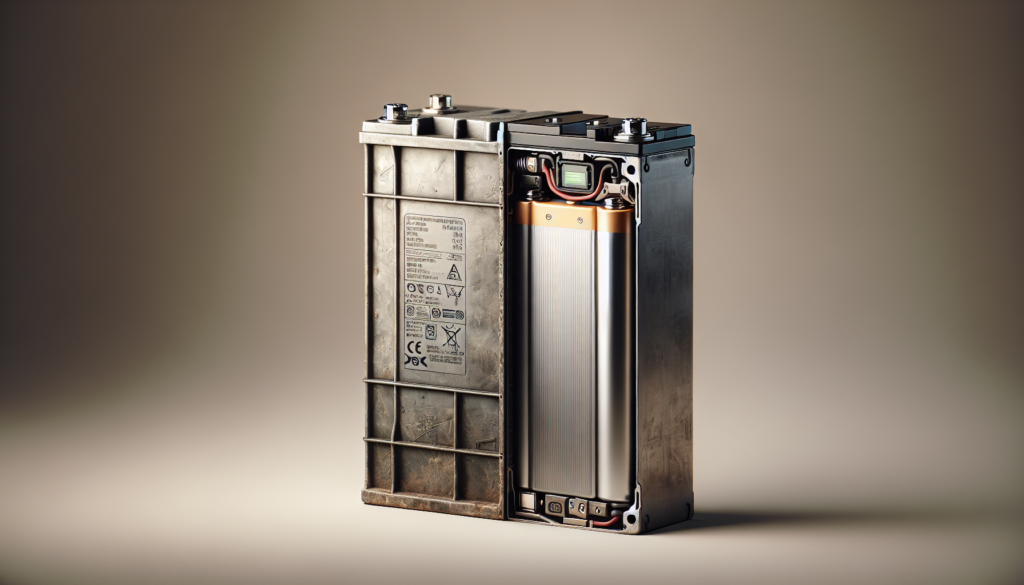
Direct comparison: key differences at a glance
You’ll want a readable comparison to weigh tradeoffs. This table highlights the major practical differences.
| Feature | Lead‑Acid (Flooded/AGM/GEL) | Lithium (LFP) |
|---|---|---|
| Usable DoD | 30–60% recommended (often 50%) | 80–100% |
| Round‑trip efficiency | 70–85% | 90–98% |
| Cycle life | 300–1,200 cycles (depends on type & DoD) | 2,000–5,000+ cycles |
| Weight & size | Heavy and bulky | Lighter, more compact |
| Maintenance | Flooded needs water; AGM/GEL low but still periodic checks | Minimal maintenance |
| Charging speed | Slower charging tolerated; cannot fast charge repeatedly | Faster charging supported |
| Initial cost | Lower upfront cost | Higher upfront cost |
| Lifetime cost | Higher total cost/usable kWh over time | Lower total cost/usable kWh over time |
| Temperature tolerance | Poor at cold temps; can freeze if discharged | Better performance in wider temp range (some limits) |
| Safety | Risk of hydrogen gas (flooded), acid spills | Safer chemistry for LFP; requires BMS for protection |
| Recycling & disposal | Established recycling systems | Recycling evolving but improving |
Cost considerations (upfront vs lifetime)
You’ll often face the “cheaper now vs cheaper over time” decision. Lead‑acid batteries are cheaper initially, but they have shorter lifespans and lower usable capacity. Lithium costs more up front but usually ends up cheaper per usable kWh over the system’s life.
How to compare apples to apples
To compare costs fairly, calculate cost per usable kWh:
- Multiply battery capacity by usable DoD to get usable capacity.
- Divide the battery cost by usable capacity to get cost per usable kWh.
- Factor in cycle life to estimate cost per kWh over lifetime.
Example:
- Lead‑acid 400 Ah at 12 V = 4.8 kWh. Usable at 50% DoD = 2.4 kWh. If it costs $1,200, cost per usable kWh = $500/kWh.
- Lithium 200 Ah at 12 V = 2.4 kWh. Usable at 90% DoD = 2.16 kWh. If it costs $2,400, cost per usable kWh = ~$1,111/kWh. But with much higher cycle life, effective lifetime cost often becomes favorable to lithium. You must include replacement frequency too.
Factor in replacement and maintenance
Lead‑acid may require replacement every 3–8 years depending on use. Lithium can last 10+ years in many systems. Also include labor, water (for flooded), ventilation, and disposal costs in your budget.
Performance and efficiency (what you’ll notice day to day)
If you use small solar systems or low loads, the difference in efficiency and usable capacity can affect how many panels or batteries you need.
Charging behavior and efficiency
Lithium charges faster and accepts higher charge rates without harm. Lead‑acid needs slower charging and typically charges less efficiently toward the end of charge cycles. That can make your solar array size and charge controller settings more critical for lead‑acid.
Peukert’s effect and high‑current loads
Lead‑acid batteries suffer from Peukert losses: at higher discharge rates you effectively get less capacity. Lithium batteries have much lower Peukert effect, so they deliver closer to rated capacity at high loads. If you plan to run heavy loads (microwaves, pumps, inverters), lithium may be a better match.
Safety and thermal behavior (what you should plan for)
Safety is important whether you choose lead‑acid or lithium.
Lead‑acid safety notes
Flooded lead‑acid emits hydrogen gas during charging and needs ventilation. Acid spills are hazardous. AGM/GEL reduce gassing but still can vent under abuse. Proper mounting, ventilation, and corrosion prevention are necessary.
Lithium safety notes
LFP is one of the safest lithium chemistries and has lower thermal runaway risk. However, lithium systems require a battery management system (BMS) to prevent overcharge, overdischarge, and cell imbalance. Quality matters: a poorly made lithium battery without good BMS or certification can be risky.
Temperature effects
Lead‑acid performance drops significantly in cold weather and charging may cause electrolyte freezing if left discharged. Lithium batteries tolerate broader temperature ranges but charging at very low temperatures can damage cells unless the battery has built‑in heating or temperature protection.
Installation and maintenance (what you’ll actually do)
Consider how much time and effort you want to spend on maintenance and setup.
Lead‑acid maintenance
- Flooded: check and top up distilled water regularly, clean terminals, ensure ventilation.
- AGM/GEL: less maintenance but check connections, monitor state of charge regularly.
- Requires periodic equalization charging to balance cells (for flooded).
Lithium maintenance
- Minimal routine maintenance: keep terminals clean, ensure proper charging and BMS operation.
- No watering, no equalization needed.
- Must monitor BMS alerts and follow manufacturer charging specs.
Physical installation details
Lithium is physically lighter and often takes less space. Lead‑acid should be mounted lower to reduce center of gravity and to keep heavy weight down. Flooded batteries need well‑ventilated enclosures; lithium batteries generally do not require ventilation but must have space for cooling and wiring access.

Sizing your battery bank (how to pick capacity)
You’ll size your battery bank based on daily energy usage, desired autonomy (days without sun), inverter efficiency, and DoD.
Basic sizing steps
- Calculate daily energy use in kWh.
- Decide how many days of autonomy you want (1–3 days is common for beginners).
- Account for inverter and system losses (multiply by 1.2–1.3).
- Divide by usable DoD to get required battery capacity.
Example:
- Daily use: 3 kWh
- Autonomy: 2 days → 6 kWh
- System losses: ×1.25 → 7.5 kWh
- If using lithium at 90% DoD: required battery = 7.5 / 0.9 ≈ 8.33 kWh
- If using lead‑acid at 50% DoD: required battery = 7.5 / 0.5 = 15 kWh
You’ll see lead‑acid requires significantly more capacity for the same usable energy.
Practical tips for beginners
- Start with realistic loads: list every appliance and estimate hours of use.
- Favor slightly more capacity than calculated — batteries should not be regularly discharged fully.
- If budget limits you, consider a hybrid approach: lead‑acid for overnight backup, lithium for high‑priority loads — but this adds complexity.
Charging systems and inverters (matching components)
Your batteries must be paired with compatible charge controllers and inverters. Voltage and charging profiles differ.
Charge controller types
- PWM (Pulse Width Modulation): cheaper, less efficient with higher voltage panels.
- MPPT (Maximum Power Point Tracking): more efficient, recommended for solar systems.
Make sure your charge controller has settings compatible with your battery type (bulk, absorption, float voltages).
Inverter compatibility
Match your inverter voltage (12/24/48 V) to battery bank and ensure inverter supports battery chemistry. Many modern inverters allow separate battery profiles for lead‑acid or lithium.
Battery Management System (BMS)
Lithium batteries require a BMS to manage cell balance, over/under voltage, and temperature. Some integrated lithium modules include BMS and communication ports so you can monitor state of charge (SoC). For lead‑acid, you’ll rely on charge controllers and possibly a battery monitor for SoC.
Environmental impact and recycling (what happens later)
You’ll likely care about environmental footprint and end‑of‑life recycling.
Lead‑acid recycling
Lead‑acid batteries are highly recycled in many countries; recycling infrastructure is mature. However, lead is toxic and spills can be hazardous if not handled properly.
Lithium recycling
Lithium battery recycling is improving but less widespread than lead‑acid. Materials recovery is getting better, and industry efforts are increasing. Consider manufacturer take‑back programs or certified recycling facilities in your region.
Manufacturing impact
Lithium production has higher mining/processing energy intensity, but the longer lifespan of lithium often reduces lifecycle environmental impact per usable kWh. Both chemistries have environmental tradeoffs.
Common myths and misconceptions (what you should know)
You’ll hear a lot of claims — some accurate, some misleading.
Myth: Lithium will always save you money instantly
Not necessarily. Upfront cost is higher; you only recoup savings over several years through longer life and higher usable capacity. Do the math for your use case.
Myth: Lead‑acid is obsolete
Lead‑acid is still viable for many applications, especially where upfront budget is limited and weight/space and maintenance are acceptable.
Myth: All lithium batteries are unsafe
Quality varies. LFP is safer than many other lithium chemistries. Use batteries with BMS and certifications, and follow installation guidelines.
Beginner purchasing checklist (practical steps)
Use this checklist when shopping:
- Determine daily kWh usage and desired autonomy.
- Choose battery chemistry based on budget, maintenance tolerance, and space/weight constraints.
- Compare cost per usable kWh and estimated lifetime cost.
- Ensure battery voltage matches inverter/charge controller.
- Check BMS presence and features for lithium.
- Verify warranty terms and expected cycle life.
- Confirm installation requirements: ventilation, mounting, wiring.
- Ask about recycling or return policies for end of life.
- Consider reputable brands with local support and documentation.
Typical beginner scenarios and recommended choices
Here are practical scenarios to help you choose.
Small cabin with low loads, tight budget
If you have minimal power needs (lights, phone charging, small fridge) and limited funds, lead‑acid (AGM) can be a cost‑effective way to start. Expect more maintenance and plan for sooner replacement.
Off‑grid tiny home or RV with moderate loads
If you want better efficiency, lighter weight, and longer life with less maintenance, lithium (LFP) is usually worth the higher upfront cost. It’s especially beneficial if you’ll be moving the system or need fast charging.
Remote, heavy‑use off‑grid system
For significant loads (washing machines, microwaves, pumps) and long‑term commitment, lithium reduces overall cost, offers better efficiency, and handles high discharge rates better. Design the system for proper cooling and heating if in extreme climates.
Safety checklist for installation and operation
Before you operate your new battery bank, go through this quick safety list:
- Read and follow manufacturer instructions.
- Install batteries in a stable, ventilated, dry location.
- Use appropriate wire sizes and fuses/breakers.
- Secure batteries to prevent tipping or vibration.
- For flooded lead‑acid: provide ventilation and keep acid neutralizer on hand.
- For lithium: ensure BMS is functioning and charge control settings match battery specs.
- Keep smoke and CO detectors in nearby living spaces if you have combustion sources.
Troubleshooting common issues
You’ll run into issues sometimes. Here’s how to handle common problems.
Battery won’t accept charge
- Check wiring, fuses, and charge controller settings.
- For lead‑acid: check electrolyte levels (flooded) and state of charge.
- For lithium: check BMS status and temperature protection; some batteries prevent charging below certain temperatures.
Rapid capacity loss
- For lead‑acid: could be sulfation from leaving discharged for long periods; consider equalization or replacement.
- For lithium: check cycle history and BMS logs; avoid deep discharges and charging outside recommended ranges.
Uneven performance across battery bank
- Ensure batteries of the same age and capacity are paired.
- Check connections and balancing; for lead‑acid, equalize if recommended; for lithium, verify cell balance via BMS.
Final recommendation for beginners
If you’re on a strict budget, willing to perform maintenance, and don’t mind heavier systems, AGM or flooded lead‑acid can get you started affordably. If you want lower maintenance, higher usable capacity, better performance for high loads, and lower lifetime cost despite higher upfront price, lithium (LFP) is the smarter long‑term choice. For most beginners who plan to stay off‑grid for several years, lithium often provides the best balance of convenience and value.
Useful resources and next steps
Take small actions that make a big difference:
- Log your daily energy use for at least a week.
- Talk to local installers or online communities about real‑world performance in your climate.
- Get quotes for both lead‑acid and lithium systems sized to your needs and compare total system cost and warranties.
Frequently asked questions (short answers)
Q: Can I mix lead‑acid and lithium batteries in one bank? A: No. Mixing chemistries is unsafe and can damage one or both battery types. Keep banks separate if you must use both for different loads.
Q: How cold is too cold for lithium batteries? A: Many lithium batteries won’t allow charging below 0°C (32°F) unless they have internal heating. Check specs and consider insulation or heating.
Q: How often should I check battery health? A: Monthly visual checks and monitoring charge/discharge data are good practices. Flooded lead‑acid needs water checks every 1–3 months depending on use.
Q: When should I replace my batteries? A: When capacity drops below 70–80% of rated capacity (depending on your needs) or when maintenance becomes too frequent relative to cost of replacement.
You now have a clear, practical comparison of lead‑acid and lithium batteries for off‑grid use. Use the sizing steps, cost calculations, and safety checklists to make a confident choice that fits your budget and lifestyle.