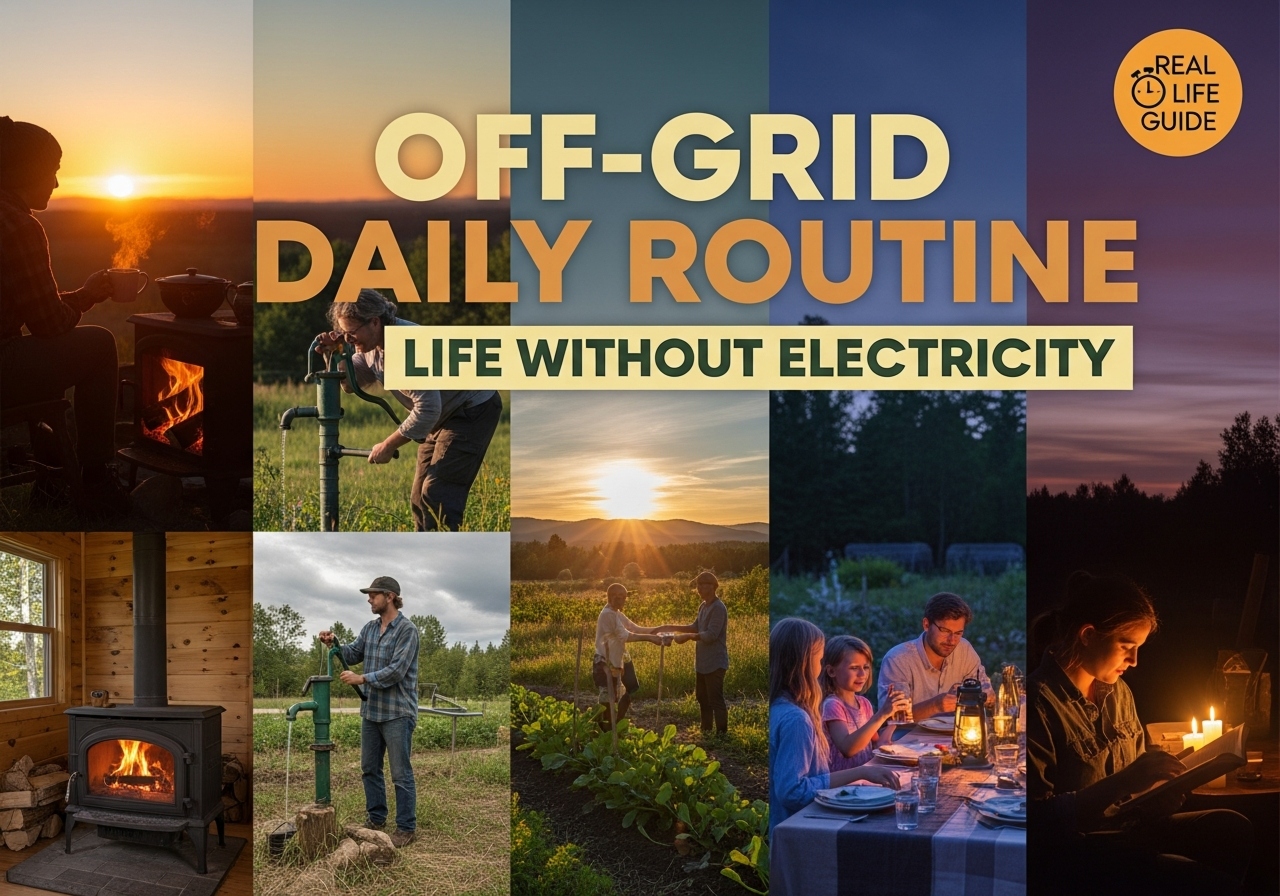
Have you ever wondered what a typical day would look like if you lived completely without plug-in power?

Off‑Grid Daily Routine: What Your Day Actually Looks Like Without Plug‑In Power
This article walks you through a realistic off‑grid daily routine so you can picture how tasks, energy, and time fit together when you aren’t relying on grid electricity. You’ll see practical schedules, energy estimates, and habits that make off‑grid life efficient, comfortable, and sustainable.
What “off‑grid” really means for your daily life
Off‑grid means you’re not connected to the public electrical grid, and you rely on local resources like solar panels, batteries, generators, propane, or wood for energy. Your day-to-day choices are shaped by resource availability, system capacity, and weather, so planning and flexibility become part of your routine.
The core energy systems that shape your day
Your morning, work time, and evenings will be driven by the type and size of the energy systems you use. Knowing the differences helps you set expectations for appliances, heating, and charging needs.
Solar + battery systems
Solar is the most common off‑grid choice because it’s relatively simple and scalable. You’ll use daylight to recharge batteries and schedule high-energy tasks when the sun is strongest. You’ll also manage battery state-of-charge to avoid running out overnight.
Generators (gasoline, diesel, or propane)
Generators provide reliable, on-demand power but require fuel, maintenance, and noise tolerance. You’ll plan generator runs for heavy loads, battery charging, or cloudy stretches when solar falls short.
Micro‑hydro and wind
If you have a consistent water flow or steady wind, these can supply continuous power. Your routine becomes less solar-dependent, and you can comfortably run more appliances without strict scheduling. You’ll still monitor mechanical systems and seasonal variability.
Propane, wood, and passive systems
For heating, cooking, and refrigeration, many off‑grid households use propane stoves, wood stoves, and passive cooling techniques. These reduce electrical demand and change your daily tasks—chopping wood, tending a fire, or managing propane supplies become part of your rhythm.
How energy availability shapes your daily schedule
Energy availability is the invisible scheduler of your day: when energy is plentiful you tackle load-heavy tasks, and when it’s scarce you pivot to low-energy activities. Learning to read your battery gauge or inverter output becomes as natural as checking the weather.
Peak production vs. low production hours
Most solar systems produce most of their energy between late morning and early afternoon. You’ll arrange heavy loads (washing machines, water pumps, well charging, large appliance use) during these hours. When production dips in early morning or evening, you’ll favor lighting, small electronics, and low-power tasks.
Sample daily timeline for a balanced off‑grid day
Below is a typical timetable that balances comfort, chores, and system preservation. Times are approximate and depend on seasonal daylight and your energy system.
| Time of day | Typical activities | Energy focus |
|---|---|---|
| 5:30–7:30 AM | Wake-up, coffee/tea, personal hygiene, short warm-up chores | Minimal power for lights and small kettle; preserve batteries |
| 8:00–11:30 AM | Cooking breakfast, laundry start, water pumping, slow oven or cookstove | Start heavier loads as sunlight picks up |
| 12:00–2:00 PM | Peak solar production: run washer, charge tools, power refrigerator/freezer, workshop tasks | Intensive use of solar output and battery charging |
| 2:00–5:00 PM | Garden, maintenance, errands, lower-power indoor tasks | Transition away from heavy draws as sun wanes |
| 5:00–8:30 PM | Dinner prep, family time, limited lighting, phone/tablet charging | Conserve battery for overnight |
| 9:00 PM–5:30 AM | Sleep; occasional battery-powered lighting or incubators | Minimal draw; rely on stored battery energy |
Every entry above supports the idea that you schedule the most demanding activities while renewable production is highest. You’ll also learn to be flexible when weather interrupts the ideal rhythm.
Morning routine: how you start your off‑grid day
Your morning sets the tone for energy use and physical work. Early hours are often cooler and quieter, and you’ll prioritize activities that don’t drain batteries until daytime production ramps up.
Waking up and lighting
You’ll typically use low-energy LED lights or oil lamps for early morning tasks. Motion-activated or timed LED lighting can prevent accidentally wasting power if you get up at odd hours.
Heating and hot water in the morning
If you rely on a wood stove, you’ll stoke the fire early to warm living spaces and heat water. With solar water heaters or propane, you’ll adjust usage to match system strength to reduce electrical pumping. You’ll learn to time showers and dishwashing to balance comfort and energy use.
Breakfast and kitchen habits
Cooking choices matter. You’ll often favor stovetop, propane, or wood-fired cooking in the morning to keep electrical demand low. If you use an electric kettle or microwave, you’ll time those when solar generation is building.
Morning chores and preparation
Early chores include collecting water, checking battery/inverter status, and prepping projects for peak solar hours. You’ll often prepare laundry or power-hungry tasks for the late morning and early afternoon.
Peak production hours: your power window for big tasks
Late morning through early afternoon is where you get the most “bang for your buck.” This is when you’ll tackle energy-heavy chores and charge equipment.
Running appliances and charging tools
You can run washers, electric pumps, blenders, and workshop tools with less worry during peak generation. You’ll still monitor battery charge to avoid cycling too deeply, but this is your main opportunity to use energy.
Cooking and food preservation
Cooking large meals, canning, or using an electric pressure cooker is best during peak sun. Refrigerators and freezers recharge battery draw during these hours so they cover the evening and night more easily.
Maintenance and mechanical tasks
You’ll schedule tasks that require power—like charging battery banks, running compressors, or powering circular saws—when system output is highest. This efficient scheduling extends the life of your batteries and reduces generator reliance.
Afternoon and early evening: wind-down without losing comfort
As sun drops, you’ll transition to low-energy activities and conserve stored power for the night. This is where good planning and habit matter the most.
Reducing loads and shifting tasks
You’ll move to passive cooling, minimal lighting, and alternating appliance use. Simple habits—like opening windows early and closing shades in the afternoon—reduce cooling needs.
Dinner planning and cooking
You may rely on propane, wood, or timed electric appliances to minimize evening battery draw. Batch-cooking during peak hours or using an insulated cookbox preserves energy and serves meals later with low additional input.
Evening lighting and entertainment
Low-power LED lamps, reading by solar-charged lanterns, and offline entertainment like board games or books suit evenings well. If you use TVs or streaming, you’ll watch only during battery abundance or run them on generator power.
Nighttime: preserving energy for essential systems
At night you’ll focus on maintaining critical systems—refrigeration, minimal lighting, battery preservation—and keeping yourself comfortable without wasting power.
Prioritizing essential loads
Your essential night loads are typically refrigeration, medical equipment (if needed), and small safety lights. You’ll avoid nonessential charging and high-draw appliances to prevent deep battery discharge.
Thermal choices at night
Proper insulation, warm bedding, thermal curtains, and a well-tended wood stove reduce the need for electrical heating. You’ll use thermostatic wood stoves or propane heaters sparingly and monitor indoor air quality.
Overnight checks and security
You’ll develop brief routines: check battery state, confirm critical equipment is functioning, and inspect outdoor areas if necessary. Remote monitoring systems can help, but they must be configured to use minimal power.
A realistic day-in-the-life example
Here’s a detailed example of what a balanced off‑grid daily routine might look like for a small household during a temperate season.
Morning (5:30–9:00)
You wake up to a slowly brightening home. You switch on a small LED to make coffee on a propane stove and take a quick shower heated by a solar-thermal system or propane water heater. While having breakfast, you check the battery monitor and weather forecast, then start a load of laundry timed to finish during peak sun.
Midday (9:00–2:00)
As the sun gains strength, you run the water pump to refill tanks, use the electric washer, and power a few workshop tools to build a simple raised bed. You monitor inverter load and let batteries charge. Lunch is cooked on the wood stove, and you open windows for ventilation.
Afternoon (2:00–6:00)
You finish outdoor work, tend the garden, and prepare food for canning or refrigeration. You charge laptops and hand tools while solar production holds steady. As the sun lowers, you switch to passive cooling and begin lighting essential areas with LEDs.
Evening and night (6:00–10:30)
Dinner is prepared with a mix of propane and solar-cooked food. You gather for board games, charge phones briefly, and finish the final necessary tasks before bed. You fire up the wood stove for evening warmth, check the battery bank, and set lights for night. During the night, refrigeration and minimal lights run, and batteries supply the required loads until the next morning’s sun.
Energy budgeting: how to estimate your daily needs
Understanding and budgeting energy helps you make sound decisions about what you can run and when. You’ll quickly learn the difference between watt-hours and watts, and that energy use adds up fast.
Basic energy math you’ll use every day
You’ll track appliance wattage and estimate usage time. For example, a 500 W washing machine running for 1 hour uses 500 Wh (watt-hours). If your battery stores 4,000 Wh, that single wash is over 10% of usable capacity—so you’ll schedule it when solar is strong.
Typical household energy use examples
Below is a simplified table showing common off‑grid appliance draws and sample usage to help you plan.
| Appliance | Typical power (W) | Typical daily use | Approx. daily energy (Wh) |
|---|---|---|---|
| LED lighting | 10–30 W per fixture | 5 hours | 50–150 Wh |
| Refrigerator (efficient) | 50–150 W (average draw) | 24 hours (intermittent) | 1,200–2,000 Wh |
| Laptop | 30–60 W | 4 hours | 120–240 Wh |
| Water pump | 400–800 W | 0.5–1 hour | 200–800 Wh |
| Washing machine | 300–800 W | 1 hour | 300–800 Wh |
| Electric kettle | 1,200–1,500 W | 0.2 hours | 240–300 Wh |
| Power tools (saw) | 1,000–2,000 W | 0.5 hour | 500–1,000 Wh |
These values vary by model and efficiency, but the table gives you a framework to calculate what you can do without exceeding your system capacity.
Strategies to stretch your available power
You’ll adopt habits and tools that let you do more without adding more generation. Efficiency often yields better returns than adding capacity.
Time-shifting and batching tasks
Group heavy tasks into the peak solar window. You’ll batch cooking and laundry sessions to reduce the number of cycles and benefit from a single, high-output period.
Use efficient appliances and LEDs
Energy-efficient refrigerators, DC pumps, and LED lighting dramatically reduce hourly consumption. You’ll prioritize energy-per-use instead of installed features.
Passive design and microclimate control
Insulation, thermal mass, shading, and window orientation reduce heating and cooling loads. You’ll find that design choices made during construction or retrofit directly reduce daily energy pressure.
Backup fuel wisely
Maintain a small, well-stored reserve of propane, diesel, or gasoline for intermittent generator use. You’ll use fuel sparingly, mainly during prolonged low-generation periods or emergencies.

Water, waste, and sanitation routines without grid support
Off‑grid living involves more hands-on management of water and waste. Your routine will include checks and maintenance that grid users rarely think about.
Water sourcing and treatment
You’ll rely on well pumps, gravity-fed tanks, or collected rainwater. Treatment options include filtration, UV sterilization (requires power), or chemical disinfection. You’ll schedule pumping around peak power and monitor tank levels daily.
Greywater and sewage solutions
Composting toilets, septic systems, and constructed wetlands are common. You’ll perform regular maintenance on septic tanks or compost piles and route greywater for irrigation when safe. These tasks require planning but can reduce water and energy needs.
Waste management and recycling
You’ll sort compostables, recyclables, and landfill items deliberately. Composting food waste reduces volume and produces a valuable soil amendment for your garden.
Cooking, food storage, and meal planning
Food systems profoundly affect your energy pattern. With planning, you’ll reduce reliance on electrical appliances without losing variety.
Cooking methods and energy choices
You’ll mix propane, wood, solar oven, and occasional electric cooking. Solar ovens or reflective cookers can handle slow-cooked meals during sunny days, saving both fuel and electricity.
Refrigeration and food preservation
Efficient refrigerators and chest freezers are key; chest freezers are often more efficient because they retain cold better. You’ll also rely on canned, fermented, and dried foods to minimize refrigeration loads.
Weekly meal planning
Planning meals to use peak solar-cooked items or to minimize evening stove use saves energy. Batch cooking and freezing during peak hours reduces evening energy draw and simplifies evenings.
Health, safety, and emergency preparedness
Your routine must include safety checks and contingency planning. Off‑grid living is often safe, but you’ll prepare for isolation, weather, and medical needs.
Medical devices and medication storage
If you have essential medical equipment or temperature-sensitive medications, you’ll prioritize battery capacity and may keep a backup generator or a separate battery bank. Plan for redundancy and test your emergency power plan regularly.
Fire safety and fuel handling
Wood stoves, propane, and generators require disciplined safety measures: proper ventilation, carbon monoxide detectors, and safe fuel storage. Regularly inspect chimneys, connections, and fuel containers.
Emergency communications
You’ll maintain at least one low-power communication method—satellite messenger, VHF radio, or a charged mobile phone with solar charging routine—to call for help if needed.
Maintenance routines you’ll perform regularly
Living off‑grid means routine system care. You’ll schedule weekly, monthly, and seasonal checks to prevent surprises.
Daily checks
You’ll glance at battery state-of-charge, inverter load, tank levels, and critical appliances. Small issues spotted early prevent big problems later.
Weekly tasks
Clean solar array surfaces, inspect wiring for corrosion or critter damage, and service generators after their run cycles. You’ll also check filters, fuel lines, and seals.
Seasonal and annual maintenance
Battery replacement planning, full generator service, tree trimming around panels, and system performance audits happen seasonally. You’ll budget for part replacements and plan major maintenance outside extreme weather.
Tools, supplies, and an essential checklist
Being off‑grid means having the right tools and spares. Your supply list becomes part of your daily and weekly planning.
| Category | Examples |
|---|---|
| Power system spares | Fuses, inverter/charger spare parts, battery terminals, wiring |
| Fuel & heating | Propane tanks, wood supply, stove parts, chimney brush |
| Water & plumbing | Pump impellers, hoses, filters, fittings, water testing kit |
| Safety & health | CO detectors, fire extinguishers, first-aid kit, headlamps |
| Hand tools | Multitool, pliers, wrenches, basic toolset, spare batteries |
| Food & kitchen | Long-lasting staples, canning supplies, charcoal, fuel for cookstove |
Keeping extras on hand reduces emergency generator runs and keeps daily life steady.
Troubleshooting common off‑grid problems
You’ll encounter predictable issues—flat batteries, cloudy stretches, frozen pipes—and you’ll learn quick fixes and preventative strategies.
Flat or depleted batteries
If batteries go flat, you’ll prioritize starting a generator or reducing loads until solar recharges them. Frequent deep discharges shorten battery life, so you’ll adjust behavior and consider capacity upgrades if this occurs often.
Underperforming solar output
Dirt, shade, or aging panels reduce output. You’ll clean panels, trim shade-causing branches, and monitor string performance to find weak panels.
Fuel or supply disruptions
You’ll use conservative reserves, ration nonessential power, and coordinate with neighbors or community resources when deliveries are delayed. You’ll also maintain a prioritized list of critical loads.
Seasonal adaptations to your routine
Your daily rhythm changes with seasons. You’ll adopt new habits in winter and summer to keep comfort and systems in balance.
Winter routine changes
Shorter days shift more reliance to stored battery energy and other fuels. You’ll prioritize insulation, schedule generator runs efficiently, and increase wood supply for heating.
Summer routine changes
Longer days give you more solar hours and expand the time window for heavy tasks. You’ll manage overheating with shading, ventilation, and timing of heat-generating chores.
Social, work, and lifestyle considerations
Off‑grid life affects work, family, and social time. You’ll plan communication and productivity around energy availability.
Remote work and connectivity
If you work remotely, you’ll need reliable charging and enough battery/internet uptime for meetings. You may schedule video calls during solar peak or use asynchronous communication when power is limited.
Hosting guests and social life
Hosting increases energy and water needs, so you’ll plan meals and sleeping arrangements carefully. Inform guests about energy expectations and simple habits—like charging devices during daylight.
Personal rhythms and wellbeing
Off‑grid routines often encourage earlier bedtimes, outdoor activities, and reduced screen time. You’ll find a different tempo that many people find restorative once you settle into it.
When to expand or change your system
Your routine will tell you when your system is undersized or you’re using more energy than planned. Indicators include frequent generator use, regular battery drains below recommended levels, or unmet needs for heating or refrigeration.
Signs you need more capacity
Regularly hitting low state-of-charge, inability to run essential appliances, or frequent load shedding indicates you need more generation or storage. You’ll evaluate adding panels, better batteries, or a more efficient refrigerator before larger changes.
Upgrading wisely
Often the most cost-effective improvements are efficiency upgrades: better insulation, efficient appliances, and smarter charging habits. When you’re ready to expand generation, size it to cover worst-case scenarios and include growth margin.
Final thoughts: your day, your choices
Living off‑grid reshapes your daily routine, but it also gives you clarity about consumption and resource cycles. You’ll trade some conveniences for autonomy and in return gain a more intentional relationship with energy and time. Over weeks and months your routines will settle into efficient patterns that match your lifestyle and system capacity.
If you want, you can use the sample timelines and energy tables here to create a personalized daily plan for your specific system and household needs. Adapting gradually and keeping good records of daily usage will help you refine your routine and increase resilience without sacrificing comfort.