
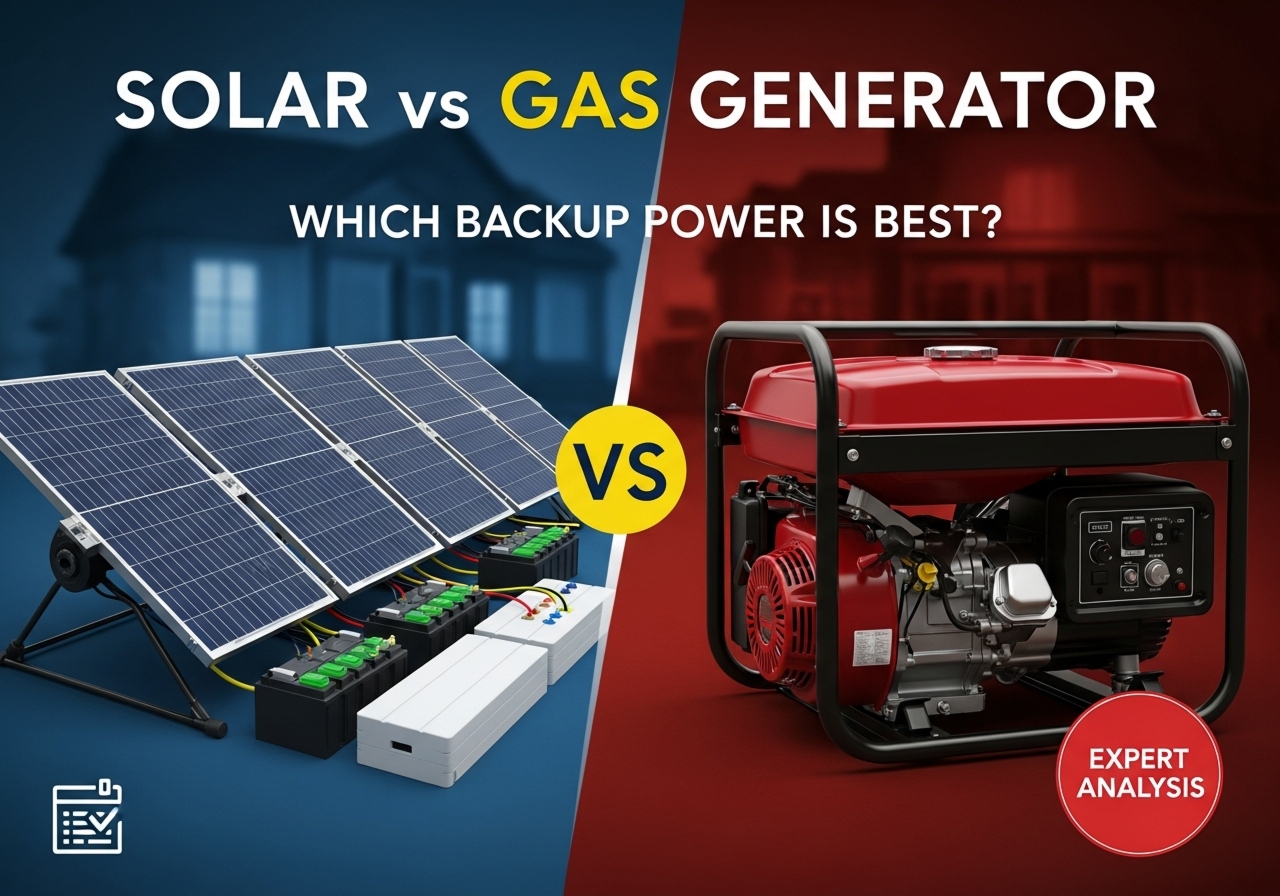
Are you trying to decide whether a solar generator or a gas generator will give you the backup power, reliability, and value you need?
Solar Generator Vs Gas Generator: Which Backup Power Is Better For You?
You’ll find clear comparisons, practical guidance, and real-world use scenarios in this article to help you make the best choice for your situation. The goal is to give you enough detail so you can confidently pick the generator type that meets your needs and budget.
Quick Overview: What You Should Know First
This section gives a short snapshot so you can grasp the major differences at a glance. You’ll get an immediate sense of which technology might suit you before reading the deeper explanations below.
- Solar generators use batteries charged by solar panels (and sometimes grid or AC charging) to supply electricity quietly and without on-site fuel.
- Gas generators burn gasoline, propane, or diesel to produce electricity mechanically, giving long runtime but requiring fuel, maintenance, and creating emissions.
How a Solar Generator Works
You’ll want to understand the components so you can compare capacity, charging, and usage limits. A solar generator typically includes solar panels, a battery bank, an inverter, and a charge controller or management system.
Solar panels convert sunlight to DC electricity, which a charge controller optimizes and sends to the battery. The inverter converts stored DC into AC power for household devices. Many units allow AC charging and regenerative charging from a vehicle or grid.
How a Gas Generator Works
You’ll see why gas generators are often considered the traditional solution for backup power. They use an internal combustion engine to spin an alternator, producing AC electricity directly when running.
You’ll need to supply fuel (gasoline, diesel, or propane) and perform routine oil and filter changes. These generators can produce high power on demand and are suitable for extended runtime if you can refuel.
Side-by-Side Comparison
This concise table helps you compare key attributes quickly. You’ll be able to scan performance, cost, noise, maintenance, and environmental impact at a glance.
| Feature | Solar Generator | Gas Generator |
|---|---|---|
| Fuel source | Sunlight, battery storage, optional AC charging | Gasoline, diesel, propane |
| Noise level | Very quiet (near-silent) | Loud to very loud (engine noise) |
| Emissions | Zero at point of use | Carbon emissions, particulates |
| Runtime | Limited by battery capacity and solar input | Long as you have fuel |
| Maintenance | Low (battery and electronics checks) | Regular oil/filter/engine service |
| Refueling | No fuel; solar charge or AC recharge | Requires on-site fuel storage/refill |
| Startup time | Immediate (battery to inverter) | Immediate but requires warm-up for heavy loads |
| Portability | Generally lighter for comparable peak output | Often heavier due to engine and fuel |
| Cost (initial) | Higher per kW for large capacity | Lower initial cost per kW |
| Operating cost | Low (free sunlight; minimal charging costs) | Higher (ongoing fuel costs) |
Pros and Cons — Solar Generators
You’ll appreciate the strengths and limits of solar systems to see how they match your priorities. Solar generators are ideal when you value quiet, low maintenance, and clean power.
Pros:
- Silent operation, safe for indoor or close-to-home use.
- No fuel storage or fuel costs if relying on sunlight.
- Low maintenance compared with combustion engines.
- Instant power, stable sine-wave output suitable for electronics.
Cons:
- Limited runtime based on battery capacity and solar conditions.
- Higher upfront cost for larger storage capacity.
- Charging speed depends on panel size and sunlight availability.
- Batteries degrade over time and will require eventual replacement.
Pros and Cons — Gas Generators
You’ll understand why gas generators remain popular for heavy-duty and remote applications. Gas units deliver continuous power for long periods as long as fuel is available.
Pros:
- Long continuous runtime if refueled regularly.
- Lower upfront cost per kW for high-power units.
- Reliable in cloudy weather and during prolonged use.
- Wide range of sizes, from portable to whole-home standby units.
Cons:
- Noisy and produce exhaust—unsafe for indoor use without proper ventilation.
- Ongoing fuel costs and logistical challenges of fuel storage.
- Regular maintenance needed (oil changes, spark plugs, filters).
- Emissions and environmental impact.
Cost Breakdown: Upfront and Long-Term
You’ll want to understand both purchase price and lifetime costs when choosing a backup solution. Initial costs, operating costs, maintenance, and replacement parts all affect your total cost of ownership.
- Upfront: Solar generators often have higher initial purchase prices for similar usable capacity because battery storage adds cost. Gas generators are usually cheaper per watt at purchase.
- Operating costs: Solar units have minimal energy cost (sunlight) and modest electricity costs if you top up from the grid. Gas units require ongoing fuel purchases and may burn significant fuel during long outages.
- Maintenance costs: Solar generators are low-cost to maintain. Gas generators need regular engine servicing and spare parts.
- Replacement costs: Batteries in solar systems usually need replacement after 5–15 years depending on chemistry and cycles. Engines in gas generators can last for many years with maintenance, but fuel system parts wear out.

Environmental Impact
You’ll want to weigh the environmental consequences of your choice, especially if sustainability matters to you. Solar generators are significantly cleaner in everyday use; gas generators emit CO2 and other pollutants.
- Solar: Zero emissions on-site, minimal noise pollution, and decreasing lifecycle emissions as battery recycling improves. Manufacturing and battery disposal have environmental considerations, but operational footprint is small.
- Gas: Combustion engines emit CO2, NOx, and particulates. Fuel production and transport add upstream emissions. Long-term use of fossil-fuel generators contributes to air pollution and climate change.
Noise and Living Considerations
You’ll need to consider noise if you live in a neighborhood, own an RV, or are using a generator near sleeping areas. Noise affects comfort and compliance with local noise ordinances.
- Solar: Very quiet; often just the small hum of electronics and cooling fans. Perfect for nighttime use, campsites, and indoor or porch locations.
- Gas: Noisy due to engine and exhaust. You’ll need to place it at a distance, use sound shields, or plan operation times to reduce disturbance.
Safety and Indoor Use
You’ll want to know what’s safe to run inside or close to your home. Safety matters for carbon monoxide (CO), fire hazard, and fuel storage.
- Solar: Safe to use indoors because there is no combustion. You won’t have CO concerns and fire risk is limited to battery faults, which are mitigated by modern battery management systems.
- Gas: Never use indoors or in enclosed spaces. Carbon monoxide poisoning and fire risk are serious concerns. You must place the unit outdoors, far from windows and ventilation intakes.
Fuel Availability and Logistics
You’ll need to consider how easy it is to keep your generator running during extended outages. Fuel logistics can be a dealbreaker during emergencies.
- Solar: As long as there’s sun (or you can recharge from the grid or generator), you won’t need to store fuel. This is convenient during prolonged grid outages when fuel might be scarce.
- Gas: You’ll need to store fuel safely or arrange deliveries. Gasoline can become difficult to source during disasters, and fuel degrades over time. Propane stores longer, but still requires safe storage.
Runtime and Performance
You’ll want to check how long the generator will power your essential loads. This depends on battery capacity and power draw for solar systems, and on fuel tank size and engine efficiency for gas systems.
- Solar: Runtime = battery capacity (kWh) / load (kW) adjusted for inverter efficiency and depth of discharge. Solar input can extend runtime during daytime.
- Gas: Runtime = fuel tank capacity / fuel consumption rate under load. Consumption increases with load, so realistic runtime requires matching generator size to typical use.
Charging Times and Recharging Options
You’ll need to know how quickly a solar generator can recharge after depletion and what options exist for fast recharging. This affects usability during long outages.
- Solar: Charging speed depends on solar panel wattage and sunlight. A 1,000 Wh battery with 200 W panels might take 6–8 hours in good sun. Many solar generators accept AC charging and car charging for faster recharge.
- Gas: You don’t charge a gas generator; you refuel it. If you have a hybrid setup (gas generator plus inverter-charger), the gas unit can run to charge batteries, combining the advantages of both.
Portability and Installation
You’ll want to think about where you’ll use the generator and how often you need to move it. Portability matters for campers, tailgaters, and small-home backup.
- Solar: Many solar generators are portable and easy to move. Larger battery banks for whole-home backup become heavy and need professional installation.
- Gas: Portable gas generators exist and are built for transport, but they’re heavier for the same power output and require safe placement and fuel transport. Whole-home standby gas generators are permanently installed.
Types of Solar Generators and Batteries
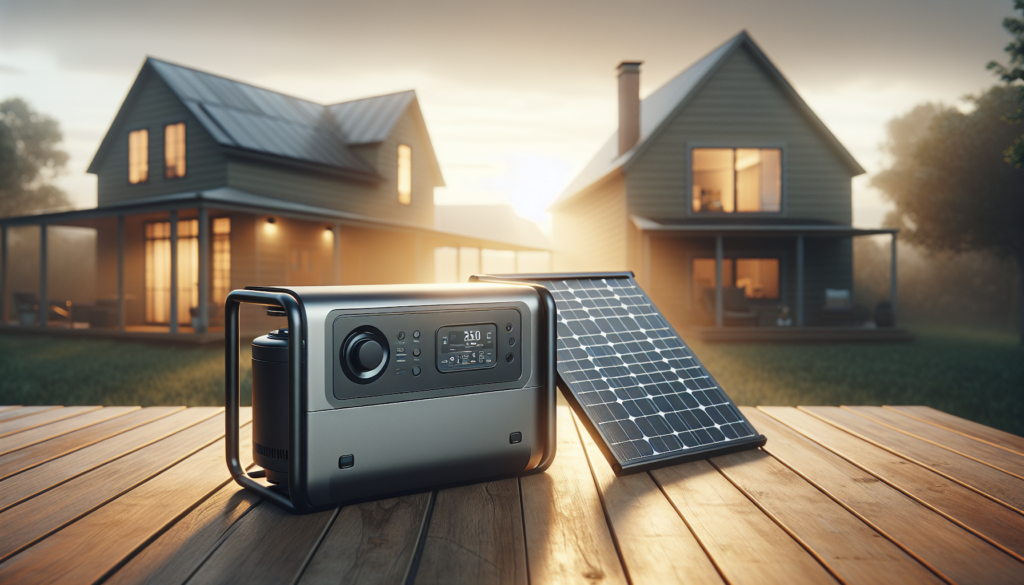
You’ll want to know battery types, because they determine lifespan, cost, and performance. There are lead-acid, lithium-ion, and newer chemistries.
- Lead-acid: Lower cost but heavier, lower cycle life, and lower usable depth of discharge.
- Lithium-ion (LiFePO4, NMC): Higher upfront cost, longer cycle life, greater usable capacity, and lighter weight. LiFePO4 is commonly recommended for backup due to safety and longevity.
Types of Gas Generators
You’ll need to select the right fuel and type depending on availability and use. Options include portable gasoline units, propane-fueled models, and whole-house diesel or natural gas standby units.
- Gasoline: Widely available and inexpensive upfront, but gasoline degrades and is volatile to store.
- Propane: More stable, stores longer, and burns cleaner than gasoline. Propane is popular for standby generators.
- Diesel: Fuel-efficient for large loads and common for heavy-duty standby units. Diesel handling requires safety measures and often professional servicing.
Sizing Your Backup System: How Much Power Do You Need?
You’ll want a simple method to estimate requirements so you don’t overpay or underprepare. Calculate your essential load list and use it to size battery and generator capacity.
- Step 1: List essentials (refrigerator, lights, medical equipment, sump pump, Wi-Fi, phone chargers).
- Step 2: Note starting and running watts for each device. Devices with motors (refrigerators, pumps) have higher startup draws.
- Step 3: Add running watts to get continuous draw, and compare to inverter or generator continuous rating.
- Step 4: For solar, determine battery kWh needed by multiplying daily kWh consumption by desired days of autonomy.
- Step 5: For gas, calculate fuel consumption based on the generator’s consumption curves under load.
Table: Sample sizing guide for common essentials
| Device | Running Watts | Starting Watts |
|---|---|---|
| Refrigerator (modern) | 150–600 | 600–1,800 |
| Sump pump (small) | 500–1,000 | 1,000–2,000 |
| Well pump (larger) | 1,000–2,500 | 2,500–5,000 |
| Electric furnace/AC (not recommended) | 3,000–5,000+ | 6,000–15,000+ |
| Lights (LED) | 5–15 per bulb | — |
| Router/modem | 10–30 | — |
| Laptop | 50–100 | — |
| Medical equipment (e.g., CPAP) | 30–100 | — |
You’ll want to size conservatively and consider surge requirements, especially for motor-driven appliances.
Typical Use Cases and Recommendations
You’ll find practical matchups between user types and generator choices so you can quickly see what fits you best.
- Occasional home outages, low power needs (lights, fridge, electronics): A solar generator with 1–3 kWh battery can be convenient and quiet.
- Extended power outages or higher loads (well pump, electric range, HVAC backup): A gas standby generator or hybrid system will generally be more practical.
- RV and camping: Solar generators excel because they’re quiet and safe for close quarters. Small gas portable units can still be used but are noisier and need ventilation.
- Professional/remote work sites or construction: Gas generators are preferred for heavy loads and continuous operation.
- Mixed needs / worst-case planning: Consider a hybrid system—a gas standby generator paired with battery storage—so you get continuous power and quieter/sometimes-gridless operation.
Hybrid Setup: Best of Both Worlds
You’ll want to know how to combine systems for resilience. Hybrid systems use a gas generator to charge batteries when solar or grid are insufficient, giving longer runtime with lower net fuel use.
A hybrid allows batteries to handle short outages and peak shaving while the gas generator kicks in for prolonged outages or heavy loads. This reduces fuel consumption, lowers noise during first hours, and provides flexible charging options.
Practical Examples and Calculation Scenarios
You’ll get a couple of simple calculations to estimate runtimes and costs for both system types. These examples will help you apply the sizing steps to your situation.
Example 1 — Solar generator sizing for essential loads:
- Essential daily load: 3 kWh (refrigerator, lights, router)
- Desired autonomy: 2 days
- Battery capacity needed = 3 kWh/day × 2 days = 6 kWh
- Accounting for usable depth of discharge (80% for Li-ion): gross battery size ≈ 7.5 kWh
- Solar input needed to recharge daily in good sun (4 sun hours): Required PV = 3 kWh / 4 h = 750 W of solar panels (plus inefficiencies → ~1 kW panels)
Example 2 — Gas generator runtime:
- Generator consumption: 1 gal/hr at 50% load
- Fuel tank: 6 gallons
- Runtime = 6 gal / 1 gal/hr = 6 hours continuous
- If you need 24-hour operation you’ll need fuel resupply or a larger tank.
You’ll use these frameworks to scale up or down based on your real numbers.
Maintenance and Lifespan Considerations
You’ll want to plan for long-term care and replacement. Proper maintenance extends service life and keeps the system safe.
Solar generator maintenance:
- Inspect panels for dirt and damage and clean occasionally.
- Monitor battery health through the battery management system.
- Replace batteries based on cycle life and capacity decline—modern LiFePO4 often lasts 5,000+ cycles, while other chemistries are lower.
Gas generator maintenance:
- Regular oil and filter changes, spark plug replacement, fuel stabilizer usage, and periodic load testing are required.
- Engines may last many years with consistent service, but neglect accelerates wear and failure.
Safety Checklist Before Use
You’ll want to follow essential safety steps to prevent accidents and damage. Generators of both types pose risks if misused.
Solar generator safety tips:
- Place batteries in a ventilated, cool space.
- Use manufacturer-approved cables and connectors.
- Protect against water exposure and direct sunlight on electronics.
Gas generator safety tips:
- Run outdoors, away from doors and windows.
- Use CO detectors if you’re running one near living spaces.
- Store fuel in approved containers and rotate fuel stock to prevent degradation.
- Never refuel while the unit is running or hot.
Permits, Codes, and Local Regulations
You’ll need to check local codes for installation, especially for permanent standby installations and fuel storage. Regulations vary widely by municipality and homeowner association.
- Solar portable units: usually no permits required.
- Whole-home standby gas generators: often require electrical permits, permit for natural gas or propane connections, and if permanently installed with a transfer switch, inspections are common.
- Fuel storage: may be limited or regulated for safety reasons in some jurisdictions.
Resale Value and Portability Considerations
You’ll consider whether the generator adds resale value to your home or if you prefer portable assets you can take with you. Portable solar units have good resale potential for RV owners and travelers. Permanent standby gas generators can increase home value by providing whole-house backup, but they’re tied to the property.
Real-World Factors During Emergencies
You’ll want to consider supply chain and infrastructure realities that affect generator usability in disasters. Fuel supply, sunlight availability, and repair access matter in emergencies.
- During widespread outages, fuel shortages and long lines can occur. Solar gives you independence from fuel logistics but doesn’t remove the need for adequate battery sizing.
- Severe weather (heavy snow, storms) can limit solar input temporarily, so you’ll need a larger battery bank or hybrid charging options.
Decision Guide: Which One Is Better for You?
You’ll want a short decision path to match your priorities to a recommended solution.
- Choose solar generator if: you prioritize quiet operation, minimal maintenance, indoor-safe systems, and environmental friendliness. It’s great for everyday convenience, camping, and moderate home backup.
- Choose gas generator if: you need extended runtime for heavy loads, continuous power for life-safety equipment, or you require a lower initial cost per watt for high-power needs.
- Choose hybrid system if: you want the quiet, clean daytime operation of solar with the ability to run continuously using a gas generator to charge batteries during extended outages.
Checklist: Questions to Ask Before Buying
You’ll save time and money by asking the right questions before purchase. Use this checklist to evaluate models and sellers.
- What is the continuous and surge power rating?
- What is the usable battery capacity (kWh) and battery chemistry?
- How long to recharge via solar and AC?
- What are the warranty terms (battery and inverter)?
- What maintenance is required and what spare parts are available?
- For gas: what fuel type, tank size, and consumption rate?
- Is the inverter pure sine wave (safe for electronics)?
- Are transfer switches or panels included for whole-house use?
- What are the noise and emission levels at typical operation?
Frequently Asked Questions (FAQs)
You’ll find quick answers to common concerns to clear up typical confusion.
Q: Can a solar generator run a whole house? A: It depends on your home’s load and battery capacity. For limited essential loads, yes. For full HVAC and electric stove loads, you’d need very large battery capacity and inverter sizing or a hybrid/standby generator.
Q: How long do batteries last in solar generators? A: Battery life depends on chemistry and cycle depth. LiFePO4 batteries often last 3,000–5,000 cycles or more, while lead-acid batteries last a few hundred to a thousand cycles.
Q: Can you run a gas generator while charging batteries for a hybrid setup? A: Yes. Many inverter/charger systems allow a gas generator to charge battery banks, giving flexibility and longer runtime.
Q: Are solar generators worth it financially? A: They can be, especially if you value low operating costs, minimal maintenance, and reduced emissions. Financial ROI improves if you use solar for regular off-grid activities or if fuel costs and access are expected to be problematic.
Final Recommendation and Practical Next Steps
You’ll be ready to act after you follow these steps tailored to your situation. Start by listing your essential loads, estimating daily kWh needs, and then compare units based on three factors: capacity, recharge options, and cost.
- If quiet, low-maintenance, and indoor-safe backup is your main priority, pick a solar generator sized to your essential loads and add panels for faster recharge.
- If continuous, heavy loads are required or cost per watt is your constraint, choose a gas unit and plan safe fuel storage and maintenance.
- If you want resilience and flexibility, invest in a hybrid system or pair a solar generator with a small gas unit to recharge batteries during prolonged outages.
You’ll make the best choice by matching your energy needs, budget, noise tolerance, and environmental preferences. With proper sizing and preparation, either type can offer reliable backup power when you most need it.