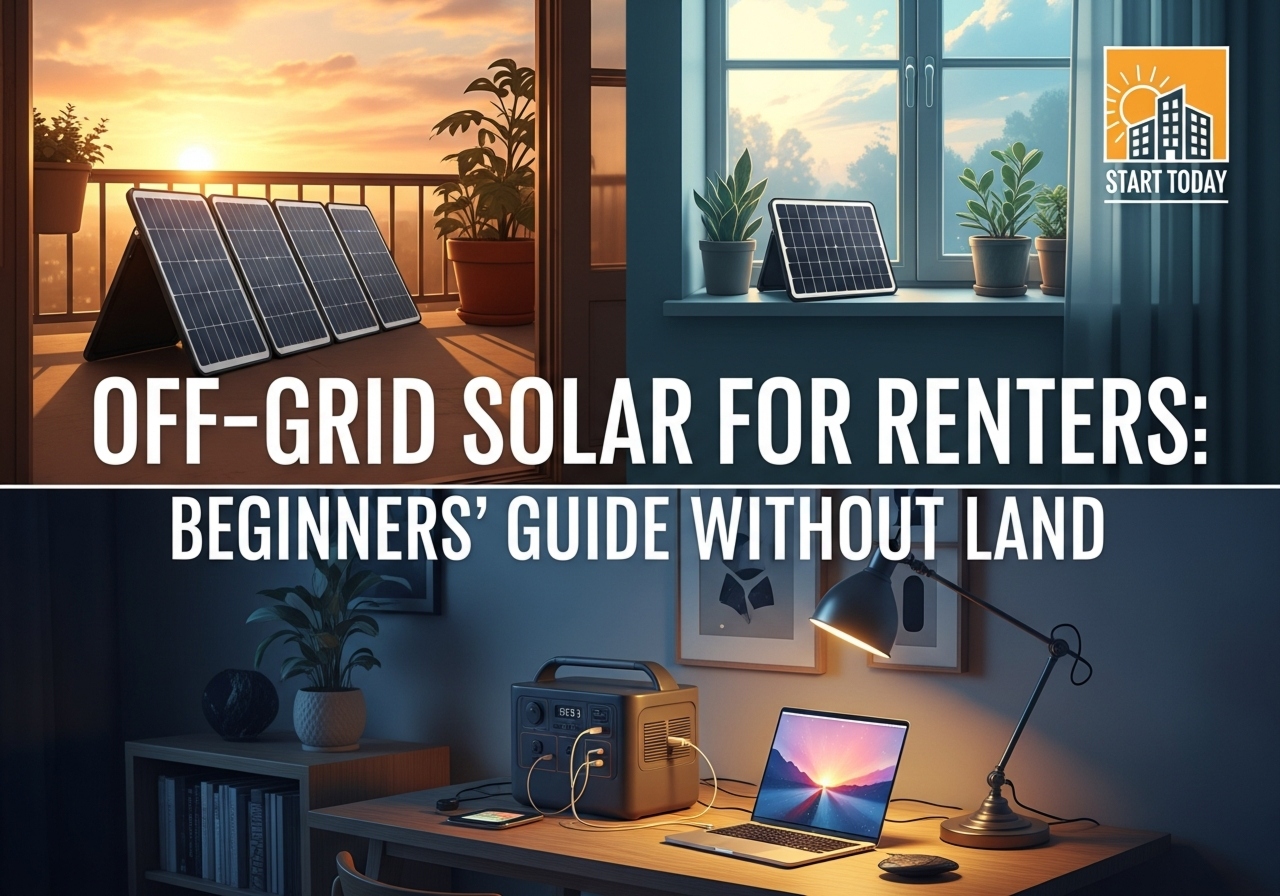
Would you like to have reliable, independent solar power even if you rent or don’t own land?
Off‑Grid Solar For Renters And Beginners: What You Can Do Without Owning Land
You can set up off-grid solar solutions without owning land, and you can do it safely, affordably, and with minimal permanence. This article walks you through practical options, sizing, components, legal considerations, and example builds so you can choose the right path for your lifestyle.
Who this guide is for
This guide is written for renters, apartment dwellers, van lifers, tiny-home occupants, and beginners who want to add solar capability without permanent land ownership. You’ll get actionable steps and realistic expectations for portable, removable, and low-impact systems.
What “off‑grid” means when you don’t own land
Off‑grid generally means operating without continuous connection to a utility. For renters, off‑grid often means having a self-contained power system — solar panels, a charge controller, batteries, and an inverter — that you can install, remove, or move without major structural changes. You can go fully off-grid for a single device or partially off-grid to reduce grid dependence.
Full off‑grid vs partial grid independence
Full off‑grid powers all your needs from solar and batteries, requiring careful sizing and potentially high cost. Partial independence targets specific loads (lights, phone, laptop, fridge) and uses smaller, more affordable systems. As a renter, partial approaches are usually more practical and negotiable with landlords.
Benefits and limitations for renters
You’ll gain energy independence, emergency backup, lower utility bills for targeted loads, and mobility. Limitations include landlord permission requirements for fixed installations, reduced maximum system size, battery storage constraints for indoor installations, and sometimes lower solar generation due to orientation or shading.
Quick pros and cons
- Pros: Mobility, no permanent alterations, scalable, emergency-ready.
- Cons: Limited generation area, battery indoor safety concerns, potential landlord restrictions, and potentially higher per-watt cost than rooftop residential systems.
Portable solar systems you can legally use
Portable systems are the most renter-friendly. They’re plug-and-play, don’t require roof drilling, and can be moved with you. Below are the main portable categories.
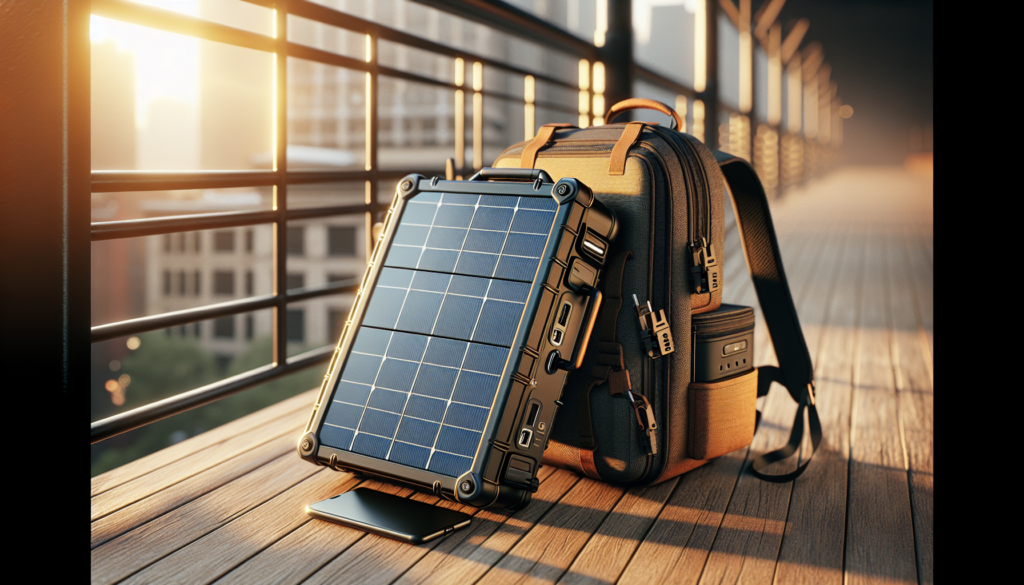
Solar suitcases and foldable panels
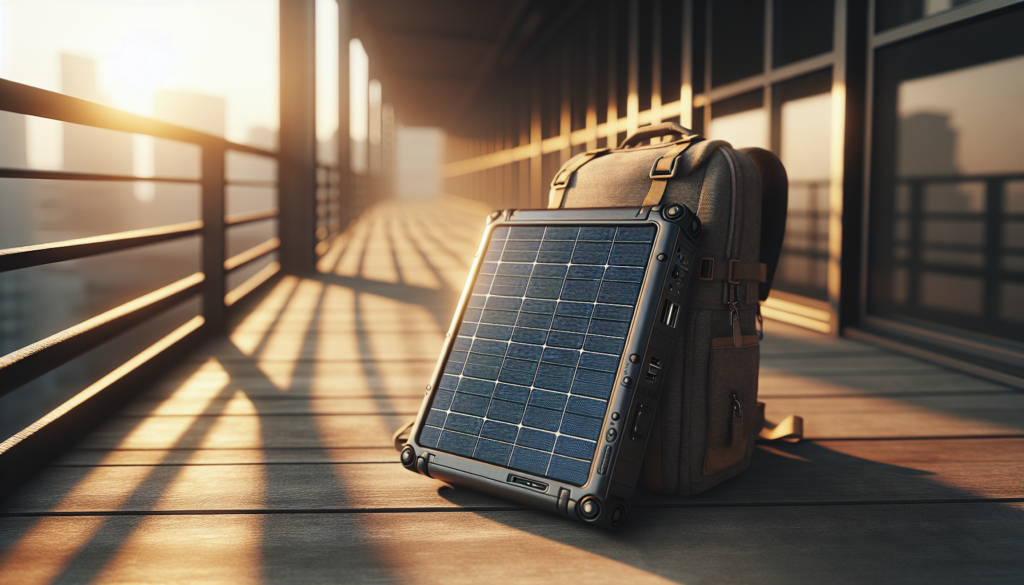
These are lightweight panels that fold into a suitcase or roll up. They usually come with an MC4 or Anderson connector and standard voltages (12V, 24V, or 48V). You can place them on balconies, patios, or ground near windows.
- Best for: Short-term setups, charging batteries, camping, balcony use.
- Advantages: Easy setup, inexpensive, lightweight.
- Drawbacks: Lower total power, requires manual positioning.
Portable power stations (solar generators)
These are integrated units combining battery storage, inverter, charge controller, and AC/DC outputs. You pair them with solar panels to charge the battery and power appliances.
- Best for: Emergency backup, small off-grid loads, quick setup.
- Advantages: All-in-one, safe, easy to move.
- Drawbacks: Cost per watt-hour higher than DIY battery packs; limited long-term cycle expectancy depending on battery chemistry.
Vehicle and RV solar
If you own or have access to a vehicle, roof or cargo solar installations on vans, RVs, or trailers give you more panels and greater storage potential. They require mounting but are not tied to a rental property.
- Best for: Mobile living, overland travel.
- Advantages: Higher capacity, integrated with battery systems.
- Drawbacks: Requires vehicle compatibility and possibly professional mounting.
Window-mounted solar
Rigid or flexible panels mounted inside or outside windows can provide trickle or modest power. Some companies sell sliding-window mounts for panels to place outside without drilling. Performance is lower due to glass and angle limitations.
- Best for: Apartment windows with good sun exposure.
- Advantages: Low-impact, indoor placement possible.
- Drawbacks: Reduced output and sometimes aesthetic/landlord concerns.
Comparison table: portable options
| Option | Typical Power (W) | Typical Storage (Wh) | Ease of Setup | Best Use |
|---|---|---|---|---|
| Foldable panels + battery | 50–400 W | 100–2000 Wh | Very easy | Camping, balcony, emergency |
| Portable power station | 100–2000 W | 200–3000 Wh | Plug-and-play | Emergency backup, small appliances |
| Vehicle/RV solar | 200–2000+ W | 500–5000+ Wh | Moderate (roof mounts) | Mobile living |
| Window-mounted panels | 30–200 W | Paired with battery | Easy | Apartments with sunny windows |
Fixed-but-removable systems
If you want higher power than portable solutions but still avoid permanent changes, consider fixed-but-removable systems. These are secured without roof-penetration or use temporary ballast. They often require more space but can provide significant energy.
Ballasted roof mounts
Ballasted mounts use weight (concrete blocks) to hold panels on flat roofs. They usually avoid drilling into the roof membrane.
- Best for: Flat roofs with landlord approval.
- Advantages: High generation potential, non-penetrating.
- Drawbacks: Heavy, need roof load confirmation, landlord permission required.
Balcony rail mounts
These brackets clamp or hook onto balcony rails to hold panels. They’re common in Europe and increasingly in other regions.
- Best for: Apartments with balcony space and suitable rails.
- Advantages: Easy to install and remove, good sun exposure potential.
- Drawbacks: Limited panel count, potential aesthetic issues with landlords.
Ground-stands and temporary frames
If you have access to a ground area (community garden plot, shared yard), you can use a mono-pole or A-frame that bolts into a temporary base.
- Best for: Shared yards, short-term plots.
- Advantages: Greater tilt options and shading avoidance.
- Drawbacks: Requires space and usually permission.
Adhesive-mounted or clamp panels
Flexible panels can be mounted with adhesives or suction clamps to non-structural surfaces. They’re useful for rental windows or temporary holiday installations.
- Best for: Glazed windows, smooth surfaces.
- Advantages: Non-invasive, removable.
- Drawbacks: Lower durability and output.
Comparison table: fixed-but-removable systems
| Mount Type | Permanent? | Installation Complexity | Power Potential | Landlord-Friendly |
|---|---|---|---|---|
| Ballasted roof | No (non-penetrating) | Moderate | High | Usually needs approval |
| Balcony rail | Removable | Easy | Low–Medium | Often acceptable if non-damaging |
| Ground-stand | Removable | Moderate | Medium–High | Depends on access rights |
| Adhesive/clamp | Removable | Easy | Low | Generally acceptable if non-damaging |
Batteries: options and sizing
Batteries are the heart of off-grid systems. You’ll balance capacity, safety, lifespan, and cost.
Lithium (LiFePO4) batteries
LiFePO4 offers long cycle life, high usable depth-of-discharge (DoD), and compact size. They are safer than older lithium chemistries and increasingly affordable.
- Best for: Indoor installations, high-cycle use.
- Advantages: Long life, lightweight, deep discharge.
- Drawbacks: Higher upfront cost; needs battery management and safe charging.
Lithium-ion NMC
These have higher energy density but somewhat lower cycle life and thermal stability than LiFePO4. They’re often found in consumer power stations.
- Best for: Portable power stations.
- Advantages: Higher energy density, compact.
- Drawbacks: More sensitive to heat; shorter cycle life.
Lead-acid (AGM, flooded)
Lead-acid batteries are cheaper per kWh up front but heavier, bulkier, and require limited DoD to extend life. Flooded lead-acid requires ventilation and maintenance.
- Best for: Budget setups with outdoor battery boxes.
- Advantages: Lower upfront cost.
- Drawbacks: Heavier, shorter lifespan, limited indoor use.
Battery comparison table
| Type | Usable DoD | Cycle Life | Indoor Safe? | Typical Cost/kWh |
|---|---|---|---|---|
| LiFePO4 | 80–95% | 2000–5000+ | Yes (with BMS) | High |
| NMC Li-ion | 60–80% | 1000–3000 | Yes (with BMS) | High |
| AGM | 30–50% | 300–700 | Yes (vent-free) | Low–Medium |
| Flooded Lead | 30–50% | 500–1000 | No (ventilation) | Low |
How to size a battery: a simple method
- List essential loads and their daily energy use (Wh).
- Add a margin (20–30%) for inefficiencies and future needs.
- Divide by usable DoD to find total battery capacity needed.
Example:
- Laptop 60W × 6 hours = 360 Wh
- Phone charges and lights = 140 Wh
- Total = 500 Wh
- Add 30% margin = 650 Wh
- Using LiFePO4 at 90% DoD → required capacity = 650 / 0.9 ≈ 722 Wh
- So a 1000 Wh (1 kWh) battery gives comfortable buffer.
Charging and controllers: MPPT vs PWM
The charge controller matches panel output to battery charging needs. MPPT controllers are more efficient, especially in cold or variable light.
(Maximum Power Point Tracking)
MPPT controllers extract more power, often 20–40% more than PWM in real-world conditions. They’re efficient when panel voltage is higher than battery voltage.
- Best for: Most systems, especially where panel configuration gives higher voltage.
- Advantages: Better performance, longer charge windows.
- Drawbacks: Higher cost.
PWM (Pulse Width Modulation)
PWM is cheaper and simpler but less efficient. It’s suitable for small, low-cost systems where panel voltage matches battery voltage.
- Best for: Tiny systems (single panel, small battery) where budget is tight.
- Advantages: Low cost, simple.
- Drawbacks: Less efficient, wastes potential energy.
Inverter types: pure sine vs modified sine
If you plan to run sensitive electronics, choose a pure sine inverter. Modified sine can run simple motors and resistive loads but may cause noise or compatibility issues.
- Pure sine: Clean power for laptops, medical devices, microwaves; recommended.
- Modified sine: Cheaper but limited; best for simple appliances and lights.
Load budgeting and system sizing
Start by listing your devices, power draw, and daily hours. Convert to watt-hours, add losses, and size panels and battery accordingly.
Step-by-step sizing example for a renter
- List devices:
- Laptop: 60W × 6h = 360 Wh
- LED lights: 10W × 4h = 40 Wh
- Phone charging: 10W × 2h = 20 Wh
- Mini-fridge (12V DC optimized or small 45W compressor): 45W × 10h (on-cycle average ~33%) ≈ 148 Wh
- Total daily = 568 Wh
- Add system inefficiency (30%): 568 × 1.3 = 738 Wh
- Battery sizing (LiFePO4 at 90% DoD): 738 / 0.9 ≈ 820 Wh — round up to a 1 kWh battery.
- Solar generation: If you get 4 peak sun hours daily, required panel power = 738 Wh / 4h ≈ 185 W. Factor for shading/sites → choose 250–300 W.
This gives you a basic 250–300 W panel with a 1 kWh battery and MPPT controller.
Installation and safety
Even removable systems require safe setup. If you store batteries indoors, follow manufacturer’s safety rules and local fire codes. Use proper fusing, wiring sized for current, and secure mounts to prevent wind damage.
Wiring and grounding
Use correct wire gauge for current, install fuses or breakers at battery outputs and between panels and controllers, and ground metal frames if local code requires it. Consider hiring an electrician if you’re unfamiliar with DC wiring.
Fire safety and indoor battery placement
- LiFePO4 is safer than lead-acid but can still pose risks if misused.
- Keep batteries in ventilated spaces if using lead-acid.
- Avoid placing large batteries in bedrooms or exit routes.
- Use certified enclosures and follow manufacturer installation guides.
Permits and code
Small, portable systems rarely need permits. Ballasted or balcony installations may need landlord approval or building management notification. Check local rules for fire egress and electrical work. If you plan to interconnect with the grid, there are additional regulations and utility interconnection agreements.
Landlord and legal considerations
Communication and documentation help. Approach your landlord with a clear plan: describe non-penetrating mounts, low-weight solutions, or removable panels. Offer to sign an agreement that you’ll remove equipment and restore any surface to its original condition.
Negotiating tips
- Show photos or diagrams.
- Present evidence that installation won’t damage property.
- Offer to remove everything at lease end and patch minor marks.
- Suggest trial periods (e.g., six months) with clear responsibilities.
DIY vs prebuilt solar generators
You can assemble components yourself or buy integrated solar generators. Each path has trade-offs.
DIY pros and cons
- Pros: Lower cost per kWh, customizable, repairable, scalable.
- Cons: Requires technical knowledge, time, sourcing parts, and building safe enclosures.
Prebuilt solar generator pros and cons
- Pros: Plug-and-play, compact, warranty support, integrated safety.
- Cons: Higher per-kWh cost, limited upgradeability.
Cost estimates and budgeting
Costs vary by scale, battery chemistry, and brand. Here are rough ranges for typical renter-friendly systems:
- Small emergency kit (100–300 Wh battery + 100 W panel): $300–$800
- Medium system for off-grid basics (1 kWh battery + 250–500 W panels + MPPT): $1,500–$4,000
- Larger mobile system (2–5 kWh + 500–1500 W panels): $4,000–$12,000
These estimates include panels, a battery bank, charge controller, inverter, mounts, and wiring but exclude professional installation.
Maintenance and troubleshooting
Routine maintenance keeps systems healthy. Clean panels periodically, especially in dusty areas. Check battery terminals for corrosion, monitor battery state-of-charge, and watch for inverter error codes.
Simple troubleshooting steps
- If batteries don’t charge, check panel orientation and connectors first.
- Verify fuses and breakers.
- Check charge controller error LEDs or messages.
- Inspect wiring for loose or corroded connections.
Real-world example setups
Here are two practical plans you can copy or adapt.
Example A — Basic Emergency & Commute Kit (for renters)
- Panels: One 200 W foldable panel
- Battery: 500–1000 Wh LiFePO4 portable power station
- Controller: Built into power station or add MPPT for large panels
- Inverter: Built-in (if using a power station) or 1500 W pure sine
- Use: Phone/laptop charging, light, small refrigerator for short outages
- Cost: $400–$1,200
This system is easy to set on a balcony or window-facing area and removes without trace. It’s ideal if you want emergency backup and essential power.
Example B — Balcony Micro Off‑Grid for Remote Work
- Panels: 2 × 300 W panels mounted on balcony rail or ground A-frame (600 W total)
- Battery: 2 kWh LiFePO4 (modular batteries that fit in a closet with BMS)
- Controller: 40–60 A MPPT
- Inverter: 3000 W pure sine (for occasional boom in demand)
- Use: Laptop, small heater (limited), mini-fridge, lighting, Wi‑Fi router
- Cost: $3,000–$6,000
This setup supports remote work and household basics. Make sure to get landlord consent for balcony mounts.
Frequently asked questions
Can you run a refrigerator as a renter?
Yes, but running a full-size fridge continuously off a small system can be challenging. Choose a high-efficiency, low-power refrigerator or a DC compressor fridge designed for off-grid use. Size battery and panels appropriately and consider adding comms to switch to grid when solar is insufficient.
Are batteries safe indoors?
LiFePO4 batteries are generally safe indoors when used with proper BMS and manufacturer guidelines. Flooded lead-acid batteries should be outdoors or in ventilated locations due to hydrogen off-gassing. Always follow fire codes and local regulations.
Do you need a permit?
Portable systems typically don’t require permits. Larger or interconnected systems might. Check local building and electrical codes and your lease agreements.
Can you sell power back to the grid as a renter?
Selling power (net metering) typically requires interconnection and a meter arrangement controlled by the utility, and the grid-tie equipment is usually tied to the property’s main service. As a renter, coordinating with the landlord and utility makes this complex but not impossible if the landlord agrees.
Next steps: a practical checklist
- Decide your goals: emergency backup, partial load, or full off-grid.
- Audit your loads: list devices and daily watt-hours.
- Choose a platform: portable solar generator, DIY battery + panels, or balcony mounts.
- Check landlord rules and local codes; get written permission when needed.
- Purchase appropriate components: panels, MPPT, battery, inverter, mounts, wiring.
- Plan safe indoor battery placement or external cage for batteries.
- Install, test, and monitor performance for several weeks.
- Keep documentation for warranty and lease agreements.
Final thoughts
You don’t need to own land to gain meaningful off-grid solar power. By selecting portable systems, non-penetrating mounts, and sensible battery setups, you can power important devices, improve resilience, and reduce reliance on the grid. Start small if you’re new, learn the basics of sizing and safety, and scale your system as your needs and permissions grow. With careful planning and the right equipment, you’ll have flexible, removable solar that fits your rented lifestyle and gives you confidence during outages or while on the move.