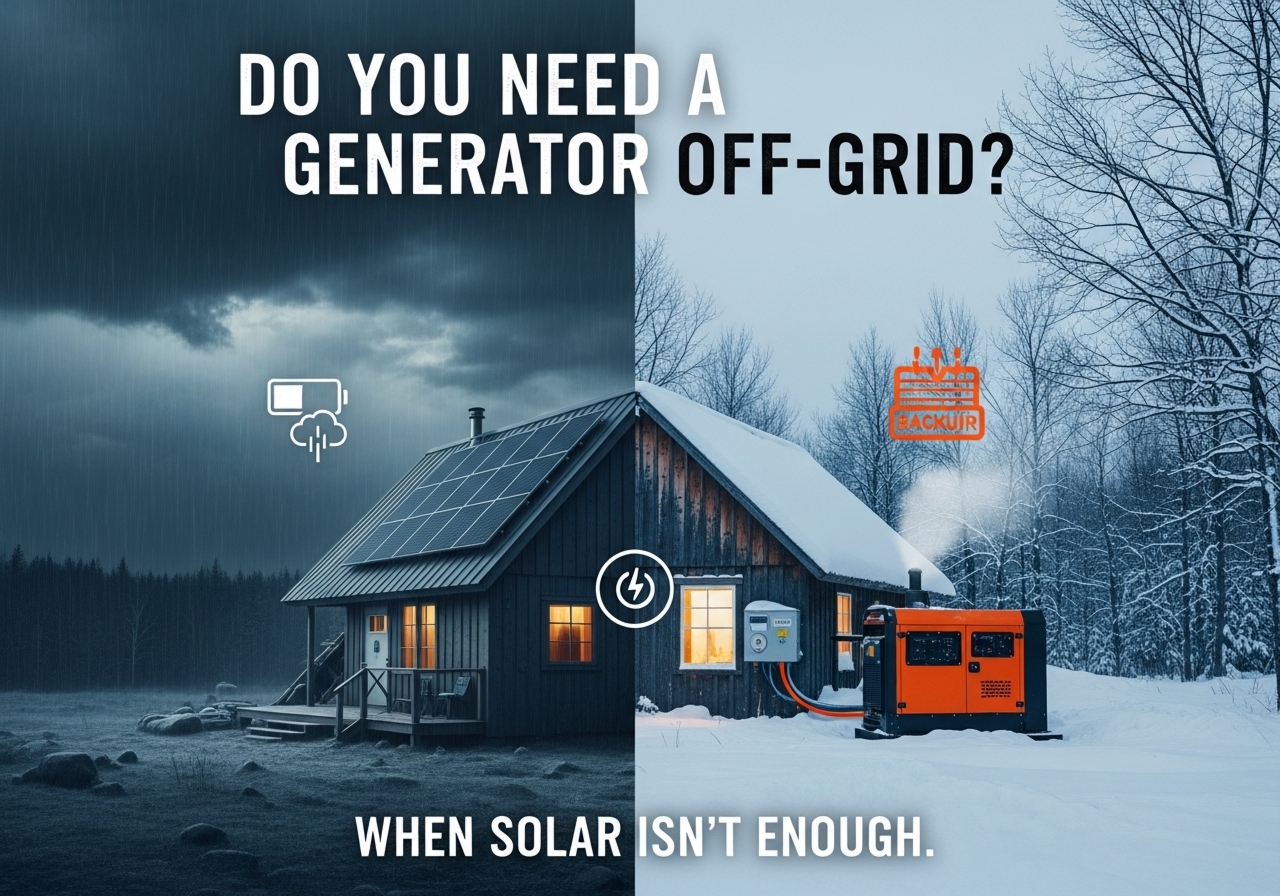
Are you weighing the trade-offs between a solar-only system and adding a backup generator for your off‑grid cabin or tiny home?
Do You Really Need A Generator Off‑Grid? When Solar Alone Isn’t Enough
Introduction: Why this question matters
You’ve probably seen pristine solar setups powering tiny homes and cabins, and you like the idea of clean, quiet electricity. Solar can handle a lot, but there are clear situations where it falls short — long stretches of cloudy weather, winter months with short daylight, high-startup loads like pumps, or periods when you need to recharge batteries quickly. This article walks you through when a generator becomes more than a convenience — when it’s a practical necessity — and gives you step‑by‑step guidance on sizing a backup generator for small cabins and tiny homes.
What a generator actually buys you off‑grid
A generator gives you reliable AC power on demand, independent of sun or wind. It can:
- Replenish your battery bank when solar can’t keep up.
- Run high‑draw appliances (microwave, electric stove, well pump) without oversizing the solar array and batteries.
- Provide peace of mind during extended low‑production periods.
You should view a generator not necessarily as a replacement for solar, but as a partner — a hybrid approach that uses solar for routine energy needs and a generator for extremes.
When solar alone is usually enough
Solar alone often works if your lifestyle and site conditions meet these criteria:
- You have modest daily energy use (lights, small fridge, phone/ laptop charging).
- The site gets reliable sun most of the year with few multi-day storms.
- You avoid high‑power electric heating and kitchen loads.
- You accept longer recharge times for batteries and the possibility of load shedding during bad weather.
If those apply to you, solar with a properly sized battery bank and energy management can work well. But if any of those points don’t fit, read on.
When solar alone isn’t enough
Here are the common scenarios where you’ll want a generator:
- Prolonged cloudy/wet weather that drops solar production for several days.
- Winter sites with short daylight and snow cover.
- Heavy motor loads like well pumps, septic pumps, or space heaters.
- Need to recharge batteries quickly (e.g., after a weekend of heavy use).
- Desire for automatic backup and minimal manual intervention.
If you rely on electric heat, an electric cooktop, or have a well pump that runs frequently, solar-only systems become much more expensive because you need oversized arrays and batteries to cover those peak and surge loads.
Hybrid systems: how generators and solar work together
A hybrid off‑grid system typically includes solar panels, a battery bank, an inverter/charger, charge controllers, and a generator. The generator can be integrated to:
- Charge batteries through the inverter‑charger.
- Directly power AC loads through a transfer switch.
- Run automatically (with an ATS) when batteries drop below a set state of charge.
This setup lets you maximize solar use while using the generator only when needed, which keeps fuel costs and maintenance low.
Basic generator types and fuel choices
Choosing the right fuel type impacts runtime, storage, and maintenance.
| Fuel type | Pros | Cons |
|---|---|---|
| Gasoline | Readily available; cheaper upfront gensets | Short shelf life for stored fuel; more maintenance; fumes |
| Propane (LPG) | Clean burning; long‑term storage; reliable | Lower energy density so longer run times needed; less common for small gensets |
| Diesel | Efficient for continuous heavy loads; durable | Requires diesel engine gensets; can be noisy; cold-weather issues |
| Natural gas (NG) | Continuous supply if connected to a line | Not available at remote sites; requires line connection |
| Biodiesel/alternative fuels | Can be used in some diesel engines | Fuel availability and storage can be problematic |
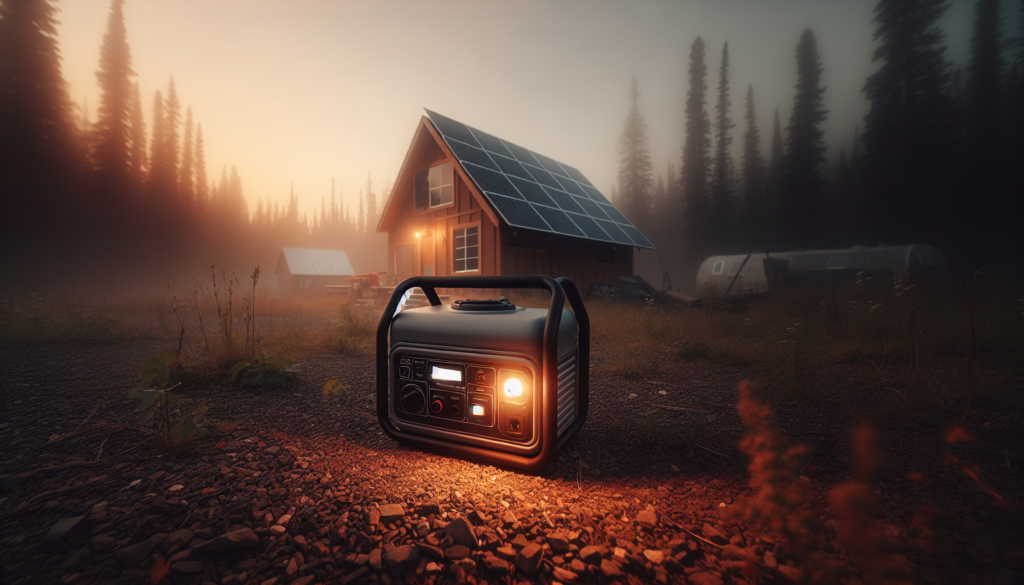
You’ll need to pick based on availability, how you store fuel, noise concerns, and engine type. For tiny cabins with portable use, gasoline or propane inverter generators are common. For larger, built-in setups expect to see propane or diesel.
Safety and code considerations
You must follow safety rules:
- Never run a generator inside an enclosed space. Carbon monoxide is deadly — maintain proper ventilation and placement.
- Install CO and smoke detectors in living spaces.
- Use proper transfer switching to prevent backfeeding into the utility or your inverter/charger.
- Follow local codes and permitting requirements for installation and fuel storage.
- Ground the generator per manufacturer instructions and electrical code.
Understanding loads: running watts vs starting (surge) watts
You need to account for both continuous running watts (the steady draw of the appliance) and starting watts (a short surge when motors or compressors start).
- Resistive loads (lights, heaters, toasters) use essentially steady watts.
- Inductive loads (fridges, pumps, AC compressors) can require 2–6x running watts for a brief moment.
Sizing a generator incorrectly by ignoring surge loads is a common mistake. Always check the appliance nameplate or manual for starting watt specs, or assume a motor may need 2–3x starting power if specs aren’t available.
Step‑by‑step: How to size a backup generator for your cabin or tiny home
Follow this methodical process to get a practical generator size.
Step 1 — Make a list of every appliance and device you’ll run
Include their rated watts or amps at 120V/240V and whether they have motors. Common items:
- Refrigerator (1200W running; 2400W starting, example)
- Well pump (1000W running; 3000W starting)
- Microwave (1000–1200W)
- Lights (sum of bulbs)
- Sump pump (varies)
- Electric heater (1500W)
- EV charger (if used, often 3.3kW–7.6kW+)
Write these down deliberately; small things like chargers can add up.
Step 2 — Identify which loads need to run simultaneously
Decide which items you’ll run at the same time during backup. You don’t need to size your generator to run everything at once if you plan to stagger loads, but you must plan realistically for convenience.
Step 3 — Total the running watts
Add up the running wattages for all items you expect to operate simultaneously. That’s your base continuous load.
Step 4 — Find the highest starting (surge) wattage
From your simultaneous-use list, identify the device with the highest starting watts. You do not add together starting watts; you add the highest start watt to the running total of all other devices if multiple motors might start simultaneously.
Step 5 — Add safety margin
Multiply your result by 1.25–1.3 (25–30% headroom) to avoid running at absolute max. Generator efficiency and aging mean you want some buffer.
Step 6 — Match with generator ratings
Look at generator specs: continuous (rated) watts and surge watts. Choose a model whose running watts exceed your adjusted total and whose surge capacity covers your highest start surge.
Example calculation
Assume these simultaneous loads:
- Refrigerator: 700W running, 2100W starting
- Lights/chargers: 200W running
- Microwave: 1000W running (resistive, no surge)
- Water pump (if used): 800W running, 2400W starting
If you plan to run fridge, lights, and microwave together, and avoid starting pump at the same time, then:
- Running total = 700 + 200 + 1000 = 1900W
- Highest starting surge = 2100W (fridge)
- Total needed during start = 1900 − 700 + 2100 = 3300W
Add 25% margin: 3300 * 1.25 = 4125W → choose a 4.5–5kW generator (or a 5.5–6kW to be safer).
If you need to start the pump and fridge simultaneously, you’d calculate with the highest combined surge: 2100 + 2400? No — you only need to handle the highest single surge unless two motors start exactly at the same instant; if simultaneous starts are likely, plan for combined surges.
Quick sizing guidelines table
| Use case | Typical continuous watts | Suggested generator size (kW) |
|---|---|---|
| Minimal (lights, phone, small fridge) | 500 – 1,500 W | 2 – 3 kW |
| Basic comfort (fridge, lights, TV, microwave) | 1,500 – 3,500 W | 3.5 – 5.5 kW |
| Moderate (fridge, pump, microwave, some heating) | 3,500 – 7,000 W | 5.5 – 8 kW |
| Heavy (well pump, electric stove, space heating, EV) | 7,000 – 15,000 W+ | 8 – 15+ kW |
These are general ranges. You might choose a slightly larger generator if you want to add comfort loads or faster battery charging.
Sizing a generator for charging batteries
If your generator’s main job is to recharge batteries rather than run AC loads, calculate by energy (kWh) and desired recharge time.
Example:
- Battery bank usable capacity = 10 kWh.
- You want to recharge from 20% to 90% (70% of bank) = 7 kWh.
- Allow for inverter/charger and charging inefficiency (~85–90% overall).
- Energy required from generator = 7 kWh / 0.9 ≈ 7.8 kWh.
If you want to finish charging in 4 hours:
- Required generator output = 7.8 kWh / 4 h ≈ 1.95 kW continuous.
If you also plan to power a load of 1.5 kW while charging, add that on top: 1.95 + 1.5 = 3.45 kW → choose a 4–5 kW generator.
Keep in mind inverter/charger has a maximum charge current — ensure the generator can provide the continuous power and the inverter accepts generator input cleanly.
Inverter/charger and transfer switch considerations
- Use a quality inverter/charger rated for your battery bank voltage (12/24/48V) with a generator input rated for the generator’s output.
- Transfer switch choice:
- Manual transfer switch: cheaper; you must switch loads yourself.
- Automatic transfer switch (ATS): starts generator when battery/AC fails and transfers automatically; more expensive but seamless.
- Make sure the inverter and transfer equipment are compatible with generator waveform. Pure sine wave output from battery inverters should be clean; many modern inverter/chargers can handle generator power and re-synchronize.
Noise, placement, and neighbor considerations
Generators can be noisy. If you value quiet, look for inverter generators or sound‑rated enclosures. Place the generator on a solid, level pad, and follow clearances required for exhaust and cooling. Check local noise ordinances and set up muffling or distance measures to minimize disturbance.
Fuel consumption and runtime estimates
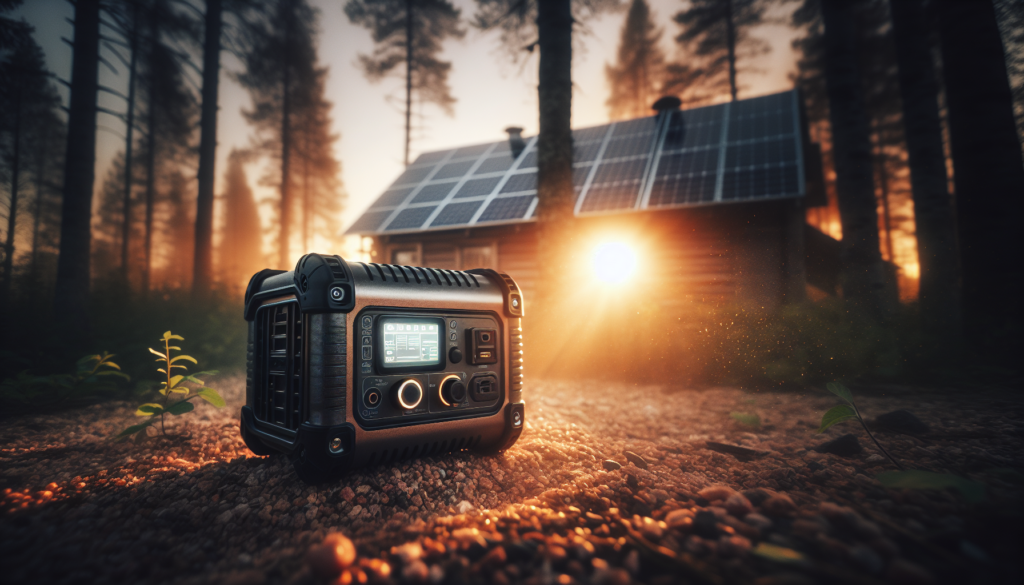
Fuel consumption varies with generator size, load percentage, and engine type. Manufacturer specs are the authoritative source, but here are ballpark estimates for typical portable and standby generators under moderate loads:
| Generator size (rated kW) | Approx. fuel type | Typical fuel use at 50% load (gal/hr) | Typical hours per 5 gal |
|---|---|---|---|
| 2–3 kW | Gasoline | 0.15 – 0.35 | 14–33 hrs |
| 4–6 kW | Gasoline/propane | 0.4 – 1.0 | 5–12 hrs |
| 7–10 kW | Propane/gasoline | 0.6 – 1.5 | 3–8 hrs |
| 12–15 kW | Propane/diesel | 0.9 – 2.0 | 2.5–5.5 hrs |
Notes:
- These are approximate. Check spec sheets.
- Propane tends to use more volume for the same energy compared with gasoline.
- Diesel engines are more fuel efficient at heavy loads, but require different gensets.
- Fuel tanks can be sized for extended runtimes for standby generators.
Plan your fuel storage to match expected runtime plus some reserve for safety; be mindful of shelf life for gasoline and stabilization needs.
Maintenance and run‑in practices
Generators require regular maintenance:
- Run your generator monthly under load for 30–60 minutes to prevent fuel degradation and keep seals lubricated.
- Change oil per the manufacturer schedule — often after initial break‑in and then every 50–100 hours for portable units, or per spec for standby units.
- Replace air filters and spark plugs as recommended.
- Inspect fuel lines, hoses, and connections annually.
- Stabilize fuel if you plan to store fuel long term, and rotate stock.
A neglected generator can fail right when you need it most, so treat maintenance as essential.
Cold weather and altitude considerations
- Cold weather: engines are harder to start and batteries have reduced capacity. Consider block heaters, fuel heater kits, or choosing a fuel type that performs well in cold (propane/diesel with additives).
- Altitude: high elevations reduce engine power (about 3% power loss per 1,000 feet above sea level for naturally aspirated engines). You may need a larger generator in high altitudes.
Cost trade‑offs: more solar vs generator + smaller solar
You’ll face a financial choice: oversize a solar + battery system to handle worst-case loads vs install modest solar + battery and add a generator. Consider:
- Cost of PV panels, batteries (especially lithium), and larger inverters can be high compared to a generator.
- Generators have fuel and maintenance costs, and environmental downsides.
- For occasional heavy demands, a generator can be the most cost‑effective solution.
- For frequent or continuous heavy usage, increasing solar and battery capacity may be better long term.
Run a simple break‑even analysis: calculate installation cost and maintenance/fuel costs over expected life for both options.
Environmental and emissions considerations
Generators burn fuel and emit CO2 and other pollutants. Consider:
- Using the generator only when necessary to minimize emissions.
- Choosing cleaner-burning fuels (propane) or modern low-emission engines.
- If emissions are a major concern and solar is abundant, invest more in solar/battery.
Practical examples of generator sizing for common tiny‑home scenarios
Example A — Minimal weekend cabin
You need to power:
- 12V fridge converted to 120V: 120W running, 600W start
- LED lights and chargers: 100W
- Small microwave (used rarely): 1,000W You will not run microwave while fridge starts.
Running total = 120 + 100 + (microw. when used 1000) ≈ 1,220 W (without microwave), or up to 2,220 W with microwave on.
Highest start = 600W for fridge
Sizing: 2,220 − 120 + 600 = 2,700 W; with margin ≈ 3,400 W → choose 3.5–4 kW generator.
Example B — Off‑grid with well pump and freezer
You need:
- Freezer: 900W running, 2,700W starting
- Well pump: 1,000W running, 3,000W starting
- Lights & misc: 300W If pump and freezer engine starts could overlap, plan for combined surge.
Running total = 900 + 1000 + 300 = 2,200W Worst-case start if both start simultaneously = 2,700 + 3,000 = 5,700W add to running of non‑starting loads — this can get large.
Practical choice: Either sequence starts to avoid simultaneous surges or select a 7–8 kW generator with sufficient surge capacity.
Example C — Comfortable tiny home with battery charging
You want:
- 10 kWh usable battery bank, recharge 7 kWh overnight in 4 hours
- Continuous comfort loads while charging: 1.5 kW Charge required from generator ≈ 7.8 kWh over 4 hours = 1.95 kW Add loads = 1.95 + 1.5 = 3.45 kW → choose 4–5 kW generator to allow headroom.
Accessories and integration tips
- Use a fuel gauge or automatic tank level sensor if you have an external propane or diesel tank.
- Install a transfer switch and properly rated inlet and connectors.
- Consider a generator enclosure or soundproof box, but ensure cooling and exhaust clearance.
- Use surge-protected outlets or whole-home surge protectors for sensitive gear.
- Consider parallel capable inverter systems and generator paralleled setups only with correct controllers and professional wiring.
Common mistakes to avoid
- Underestimating starting watts — always check motor surge.
- Assuming batteries can be recharged quickly without adequate generator capacity.
- Ignoring fuel storage and safety rules.
- Buying the cheapest generator without adequate continuous rating; inverter generators provide cleaner power for sensitive electronics.
- Not testing the generator under expected loads before you need it.
Final decision framework: do you need a generator?
Ask yourself:
- How often will solar fail to meet needs? (Occasional vs frequent)
- What are your largest and highest‑surge loads?
- Can you realistically manage staggered use to avoid big surges?
- How much are you willing to spend on solar and batteries versus a generator?
- How comfortable are you with fuel storage, maintenance, and emissions?
If solar shortfalls are occasional and you want comfort and autonomy, a small inverter generator (3–5 kW) is usually sufficient. If you have heavy or unpredictable loads like pumps, electric heating, or you need fast battery replenishment, consider a bigger, permanently installed generator (5–10+ kW) with an ATS.
Checklist before you buy
- Create a detailed load list (running and starting watts).
- Decide which loads are essential during outages and which can be deferred.
- Choose fuel type based on availability and storage.
- Verify generator continuous and surge ratings, not just peak numbers.
- Consider inverter/charger compatibility and transfer switch options.
- Check noise ratings and plan placement.
- Budget for fuel, maintenance, and installation costs.
- Plan a maintenance schedule and safe fuel storage.
Closing thoughts
Generators aren’t inherently “old‑school” — they’re pragmatic backups that extend the usefulness and reliability of an off‑grid solar system. By sizing carefully, integrating properly, and using the generator mainly as a supplement to solar, you can enjoy the best of both worlds: clean daily electricity from solar and dependable backup whenever conditions or loads exceed your system’s capacity.
If you want, you can share your appliance list and battery specs and I’ll walk through the exact sizing math for a recommended generator size and type for your cabin or tiny home.