Are you trying to figure out the simplest, most realistic off‑grid solar setup for a small cabin without getting overwhelmed by technical jargon or oversized systems?
Best Beginner Off‑Grid Solar Kits For Small Cabins (Pros, Cons, And Realistic Output)
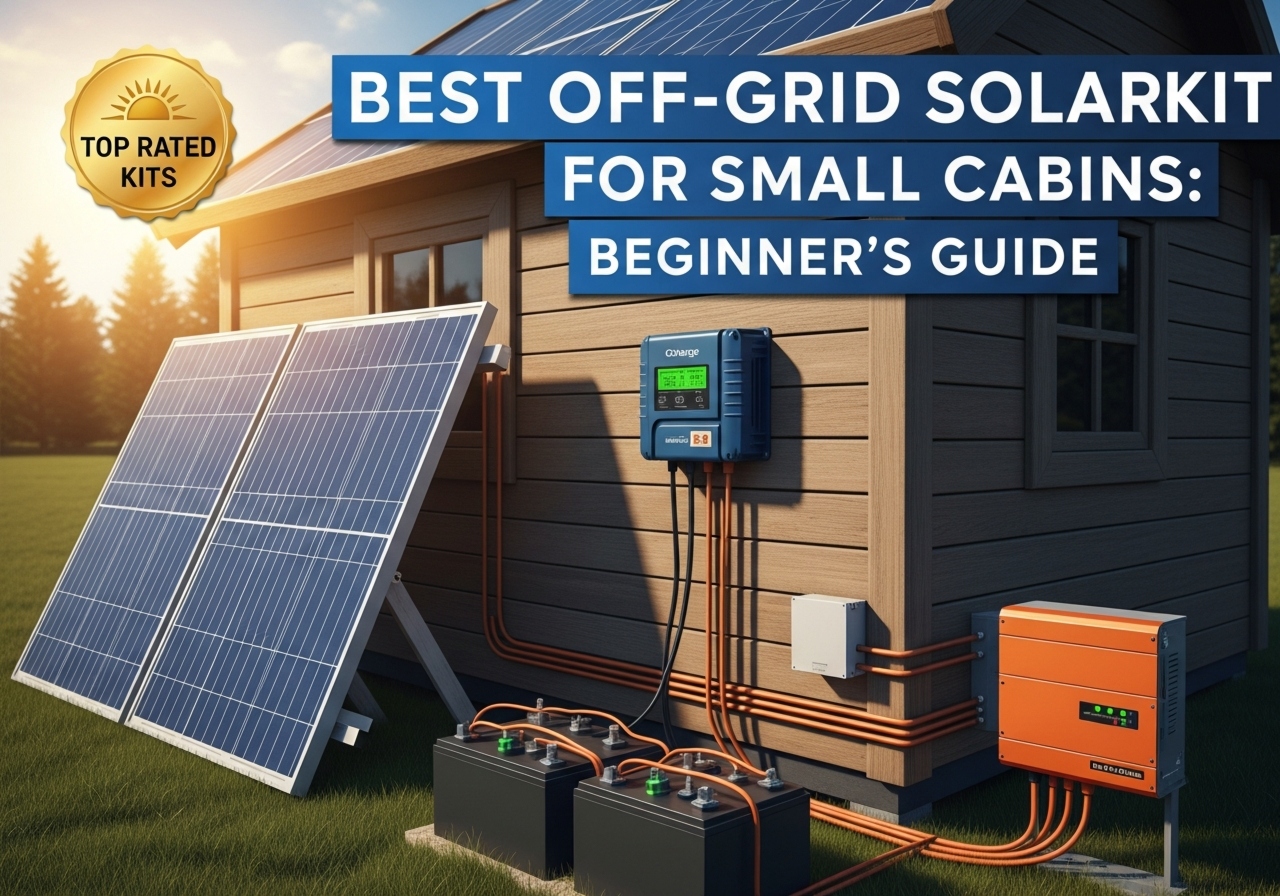
This guide helps you pick a starter off‑grid solar kit for a small cabin, explains what each kit includes, and shows realistic daily output you can expect. You’ll get practical pros and cons for common beginner kits and clear steps to size and install a system that meets your real needs.
What is a beginner off‑grid solar kit?
A beginner off‑grid solar kit bundles the basic components you need to generate and use solar energy away from the grid. Kits range from portable power station packages to full 12V/24V systems built for a permanent cabin. As a beginner, you want something reliable, easy to install, and sized to match the modest loads a small cabin typically uses.
Why realistic output matters
Manufacturers quote ideal panel wattage under perfect conditions, but your cabin won’t always get perfect sun. You need realistic kWh/day estimates that account for sun hours, inefficiencies, battery charging losses, and seasonal changes. That gives you confidence that the lights, fridge, and other essentials will run when you need them.
Key components explained
You’ll want to understand the parts so you can evaluate kits confidently. Each component plays a role in performance, safety, and longevity.
Solar panels
Solar panels convert sunlight into DC electricity. The rated wattage (e.g., 100W) is peak power in optimal lab conditions. In practice you’ll see less due to orientation, shading, temperature, and soiling. For cabins, monocrystalline panels are common because of higher efficiency and smaller footprint.
Charge controller (MPPT vs PWM)
A charge controller regulates the flow of solar current into your battery. PWM controllers are cheaper but waste energy when panel voltage is much higher than battery voltage. MPPT controllers are more efficient and especially valuable when you have multiple panels or aim to maximize output in variable conditions.
Battery storage
Battery capacity is measured in amp‑hours (Ah) at a given voltage or watt‑hours (Wh). Batteries store energy for nighttime use or cloudy days. Lead‑acid (flooded, AGM, gel) are cheaper upfront but heavier and require maintenance; lithium (LiFePO4) costs more but lasts longer, runs deeper (higher usable capacity), and is lighter.
Inverter
An inverter converts DC battery power to AC for household appliances. You’ll match a continuous inverter rating to the largest loads you plan to run (fridge compressor, microwave, power tools). For many cabins, an inverter sized 500–2000W will suffice. Pure sine wave inverters are recommended for sensitive electronics.
Mounting, wiring, and safety gear
Mounts secure panels to roofs or racks, while proper wire sizing, fuses, breakers, and disconnects keep the system safe. A basic kit often includes mounting hardware and cables, but quality and compatibility vary.
How to estimate your cabin’s energy needs
You should start by listing typical devices and their daily use. This helps you choose panel wattage and battery capacity that meet real consumption.
Example daily load scenarios
Below are three realistic small‑cabin usage profiles. Use these to match kits:
- Basic ( ~400–700 Wh/day): LED lighting, phone charging, small DC radio, occasional laptop use. Good for weekend or minimalist cabins.
- Moderate ( ~1,000–2,000 Wh/day): LED lights, phone/computer, small chest fridge (12V efficient), water pump, occasional electric cooktop or portable induction for short bursts.
- Ambitious off‑grid ( ~2,500–4,000 Wh/day): Full‑time living with fridge/freezer, more hours on laptop, occasional microwave, small space heater (but note resistive heating draws a lot of power and is usually impractical on small systems).
How to calculate realistic solar output
A panel’s real daily energy = panel wattage × peak sun hours × system derate factor.
- Peak sun hours: average full‑sun equivalent hours per day (varies by location and season). Many parts of the U.S. average 3–6 hours.
- System derate factor: account for inefficiencies (typical 0.65–0.85). Use ~0.75 as a conservative general estimate.
Example: A 200W panel with 4 peak sun hours and 0.75 derate: 200W × 4 h × 0.75 = 600 Wh/day.
Quick comparison of common beginner kits
The table below compares representative beginner kits you’ll commonly find. These cover portable power stations and more traditional fixed systems. The “Estimated Realistic Daily Output” uses a 4 peak sun hour assumption and a 0.75 derate for solar production; battery usable capacity reflects conservative usable energy (e.g., lithium allowed deeper discharge than lead‑acid).
| Kit (example) | Type | Panel Watts | Battery Capacity (Wh) | Inverter (W) | Est. Realistic Solar Output/day (Wh) | Best for | Pros | Cons |
|---|---|---|---|---|---|---|---|---|
| Jackery Explorer 1000 + 2×100W panels | Portable power station | 200W | ~1002 Wh | 1000W | ~600 Wh/day (from 2×100W) | Weekend or minimalist cabin | Plug‑and‑play, portable, no wiring | Limited expansion, pricey per Wh |
| EcoFlow Delta 1300 + 2×160W panels | Portable power station | 320W | ~1260 Wh | 1800W | ~960 Wh/day | Small cabin running appliances briefly | Fast charging, high inverter capacity | Still limited battery capacity for multi‑day |
| Goal Zero Yeti 3000X + 2×200W | Portable + panels | 400W | ~3032 Wh | 2000W | ~1,200 Wh/day | Off‑grid for several days with conservative use | Large battery, modular expansion possible | Heavy and expensive |
| Renogy 400W 12V System (panels + 40A MPPT + 12V battery option) | Traditional 12V system | 400W | depends on battery choice | user‑selected | ~1,200 Wh/day (panels) | DIY cabin system | Scalable, MPPT included, cost effective | Requires installation, wiring know‑how |
| WindyNation 400W 500Ah (Lead) kit | Traditional 12V system | 400W | ~6,000 Wh (500Ah @12V) nominal | user‑selected | ~1,200 Wh/day (panels) | Long weekend cabin, heavy battery bank | Large battery bank for low cost | Lead acid requires maintenance and ventilation |
| Rich Solar 1000W off‑grid kit (600W panels + 12V battery option) | Traditional 12V/24V | 600W | user‑selected | 1000W | ~1,800 Wh/day | Semi‑permanent cabins | Scalable, more production | Larger footprint, more complex |
Note: Check current manufacturer specs before buying. The kits above are examples of popular styles and typical configurations, not exhaustive models.
Detailed kit breakdowns and realistic outputs
Below you’ll find practical notes for the representative kits from the table, with realistic outputs and what you can run.
Jackery Explorer 1000 + 2×100W panels (portable)
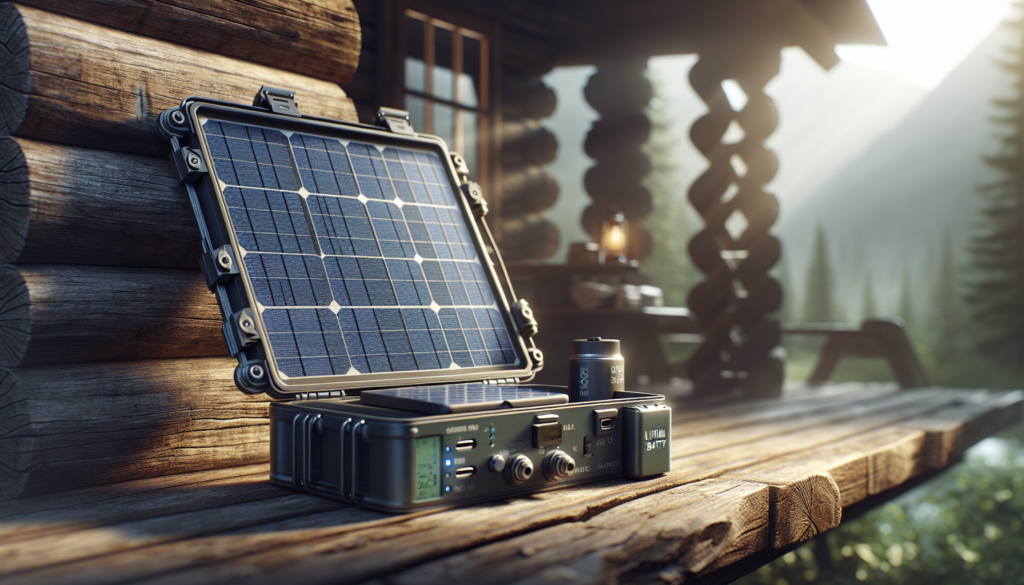
This is a common portable entry point for cabins where you want easy setup and mobility. You get about 1,000 Wh of storage and can recharge from the included panels.
- Realistic solar recharge: Two 100W panels ≈ 200W total. With 4 sun hours and 0.75 derate: 200 × 4 × 0.75 ≈ 600 Wh/day returned to the battery.
- Usable battery: ~1,000 Wh (manufacturer usable), so one full battery charge can run:
- LED lighting (6 × 6W for 5 hours) ≈ 180 Wh
- Laptop for 4–8 hours ≈ ~200–300 Wh
- Small 12V fridge (efficient models) ~400–800 Wh/day (may be marginal)
- Pros: Plug‑and‑play, easy to add panels, integrated inverter and charge controller.
- Cons: Battery limits multi‑day autonomy. Not great for continuous heavy loads like full‑size refrigerators, electric heaters, or lengthy microwave use.
EcoFlow Delta 1300 + 2×160W panels
EcoFlow models often include faster battery charging and robust inverter capacity. This kind of kit gives you higher inverter power for appliances.
- Realistic solar recharge: 320W panels ≈ 320 × 4 × 0.75 ≈ 960 Wh/day.
- Usable battery: ~1,260 Wh, which can run moderate loads and handle short spike loads well (e.g., small microwave cycles).
- Pros: Faster solar charging and powerful inverter for high surge loads.
- Cons: Still limited battery for full‑time living; higher price.
Goal Zero Yeti 3000X + 2×200W panels
Goal Zero is known for high‑capacity portable systems that are easier to integrate than building a full 12V system.
- Realistic solar recharge: 400W panels ≈ 400 × 4 × 0.75 = 1200 Wh/day.
- Usable battery: ~3,000 Wh allows several days of light use or moderate one‑day loads.
- Pros: Large battery, strong inverter, modular add‑ons.
- Cons: Weight and cost. Charging speed may be slow if relying only on limited panels.
Renogy 400W 12V System (MPPT controller) — DIY
Renogy-style kits give you flexibility to pick battery capacity. They’re ideal when you want a semi‑permanent installation with upgrades.
- Realistic solar recharge: 400W × 4 × 0.75 = 1,200 Wh/day.
- Battery choice impact: If you choose a 12V 200Ah battery (2,400 Wh nominal), usable (50% DOD for lead acid) ≈ 1,200 Wh; for LiFePO4 200Ah @12V (2,400 Wh) usable ≈ 1,920 Wh (80% DOD).
- Pros: Expandable, MPPT maximizes panel output, cost efficient.
- Cons: Installation and wiring knowledge needed. Battery selection and ventilation matter.
WindyNation 400W 500Ah lead kit
Large lead batteries give you buffer for cloudy days at lower upfront cost but increase weight and maintenance.
- Realistic solar recharge: 400W × 4 × 0.75 = 1,200 Wh/day.
- Battery storage: 500Ah @12V = 6,000 Wh nominal; with 50% DOD usable ~3,000 Wh — ample buffer.
- Pros: Cheap per Wh storage, large buffer for multi‑day autonomy.
- Cons: Heavy, requires maintenance, shorter lifespan than lithium.
Rich Solar / 600W multi‑panel kits
Bigger panel banks (600W+) are good if you plan more electrification or live year‑round.
- Realistic solar recharge: 600W × 4 × 0.75 = 1,800 Wh/day.
- Good for: Small full‑time households that use efficient refrigerators, lighting, water pumps, and some intermittent AC loads.
- Caveat: You’ll need battery bank and inverter sized to the load, and likely MPPT controllers.
What each setup can realistically run
Rather than listing every device, compare typical daily energy draws and whether a kit can support them.
Typical device energy usage (approximate)
- LED light (10W) × 6 lights × 5 hours = 300 Wh/day
- Phone charge = 10–20 Wh/day
- Laptop (40–60W) × 4 hours = 160–240 Wh/day
- Efficient DC mini fridge = 200–600 Wh/day (depends on size and ambient temp)
- Full‑size AC refrigerator = 600–1,500 Wh/day (efficient models lower)
- Microwave (1200W) × 10 minutes = 200 Wh per use
- Electric kettle (1500W) × 5 minutes = 125 Wh per use
- Space heater (1500W) 1 hour = 1,500 Wh — typically impractical on small systems
Match these against the kit’s realistic daily solar generation plus battery storage to see if you have gaps.
Sizing your system step‑by‑step
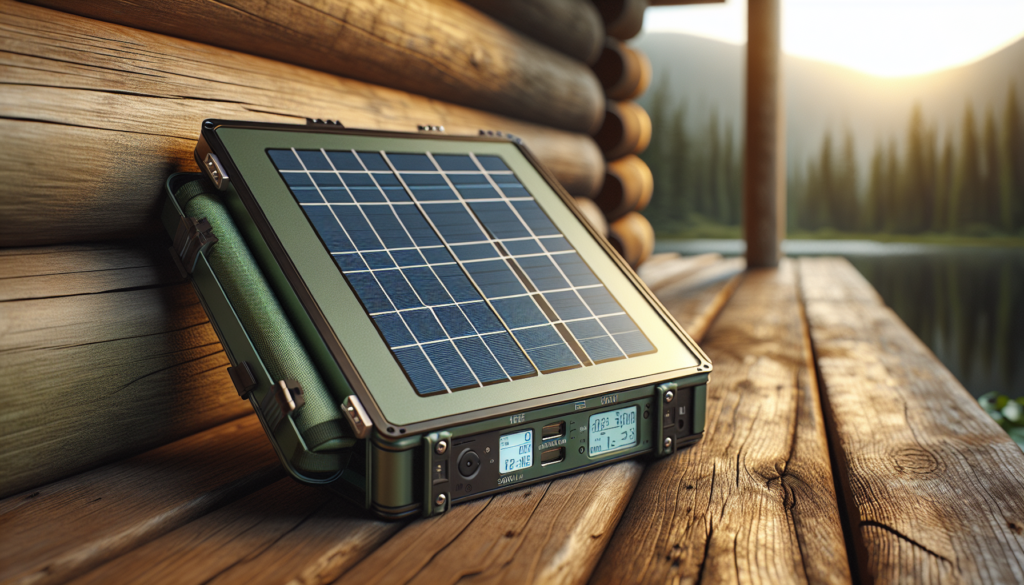
Follow these steps when sizing a kit or choosing between kits.
1. Calculate your daily load (Wh/day)
List devices, wattage, and hours of use. Sum to get a daily Wh target. Add 10–20% for unexpected use.
2. Choose days of autonomy
Decide how many cloudy days you want to cover without sun. Common choices: 1 day (minimum), 2–3 days (more comfortable), 4+ (large battery bank).
3. Size the battery
Battery usable Wh = Daily Load × days of autonomy.
If using lead‑acid, divide by 0.5 (50% DOD); if LiFePO4, divide by 0.8 (80% DOD). Add an extra 10% to account for aging.
4. Size panels
Required panel wattage = (Daily Load ÷ peak sun hours) ÷ system derate.
Example: 1,000 Wh/day with 4 sun hours: 1,000 ÷ 4 = 250W raw. ÷ 0.75 derate ≈ 333W panels. Round up and add 10–20% for safety.
5. Size inverter
Choose an inverter with continuous rating at or above the highest continuous AC load, and a surge rating to handle motor starts (fridge compressors often need 2–3× starting surge). Consider 25–30% headroom.
6. Choose charge controller
If your panel array produces more than ~200W in a 12V system or you expect varied voltages, an MPPT controller sized for panel current and voltage is recommended. For example, a 400W array at 12V produces ~33A; a 40–60A MPPT gives margin.
Installation and wiring basics
Even as a beginner, you can install a kit safely if you prepare. If unsure, hire a professional.
Placement and tilt
Panels should face true south (in Northern Hemisphere) with an angle close to your latitude for year‑round performance. For seasonal optimization, adjust tilt or use adjustable mounts.
Wiring and safety
Always use proper gauge wire, fuses at battery terminals, and a DC disconnect. Keep cable runs short to reduce losses. Use a battery fuse sized to the inverter and cable rating.
Ventilation and battery safety
Lead‑acid batteries need venting due to hydrogen gas during charging; lithiums don’t but still need proper temperature management and a battery management system (BMS).
Maintenance and seasonal considerations
You’ll get the best long‑term performance by planning maintenance and seasonal changes.
- Clean panels periodically; even a thin layer of dirt can cost you 5–10% output.
- Snow sheds off panels faster if tilted steeply; clear heavy snow carefully.
- Monitor battery health; winter changes cold temperatures reduce battery capacity—consider insulating battery boxes.
- Shade tolerance: even partial shade on one panel in a string can reduce output; use MPPT and panel layout to minimize shading impact.
Common beginner mistakes and how to avoid them
- Undersizing battery or panels: calculate realistic loads and add margin.
- Relying on device nameplate values without measuring real use: use a kill‑a‑watt or smart plug to measure real consumption.
- Cutting corners on wiring and safety: voltage drop and undersized fuses create fire and performance issues.
- Expecting portable station to behave like a full system: portability trades off storage and expandability.
Safety, permitting, and legal considerations
Check local codes. Off‑grid systems usually require fewer interconnection formalities than grid‑tied, but some cabins in subdivisions or conservation areas may have restrictions. Always follow electrical codes and secure permits where required. Use labeled disconnects, proper grounding, and certified components.
Cost considerations and budgeting
Costs vary widely based on battery chemistry, panel quality, and whether you install it yourself. Expect:
- Portable power station kits (Jackery, EcoFlow): $700–$4,000 depending on battery size and panel bundle.
- DIY small traditional systems (Renogy/WindyNation style): $1,000–$4,000 depending on battery and inverter.
- Larger semi‑permanent cabin systems (600W+ panels, lithium battery bank): $4,000–$12,000.
Factor in long‑term costs: lithium has higher upfront price but fewer replacements and less maintenance, while lead‑acid will need replacement sooner with ongoing upkeep.
Quick shopping checklist
Use this checklist when comparing kits:
- Battery capacity in Wh and usable capacity (not just Ah).
- Inverter continuous and surge rating; pure sine wave preferred.
- Type and wattage of included panels; are extra panels supported?
- Charge controller type and rating; MPPT preferred.
- Included wiring, mounting hardware, and connectors.
- Warranty terms for panels, battery, inverter, and controller.
- Expandability: can you add more panels or battery modules later?
Final recommendations — which kit fits you?
- If you want the absolute simplest setup for occasional weekend use: choose a portable power station (Jackery, EcoFlow) with a couple of solar panels. It’s effortless and portable.
- If you plan to stay longer or live seasonally: go with a traditional MPPT‑based kit (Renogy, Rich Solar) and choose a lithium battery if budget allows. This gives flexibility and better long‑term value.
- If you need multi‑day autonomy on a budget: consider larger lead‑acid banks but plan for maintenance and eventual replacement.
- If you need to run heavy loads occasionally (power tools, large inverters): prioritize inverter capacity and a robust battery bank—portable stations with high surge rating or a larger stationary inverter with a battery bank will work better.
Closing tips
- Start by monitoring your current energy use for a week to build realistic load numbers.
- Aim to spend more on battery and a quality MPPT controller than on small conveniences—these give the biggest performance gains.
- Always design for the worst realistic day in your climate (shorter sun hours) and plan battery buffer accordingly.
- If you’re unsure or wiring is beyond your comfort zone, hire an installer for the system’s electrical portions.
If you want, you can give me a list of the devices you expect to run and the climate/location of your cabin, and I’ll create a specific kit recommendation and a realistic system size tailored to your needs.