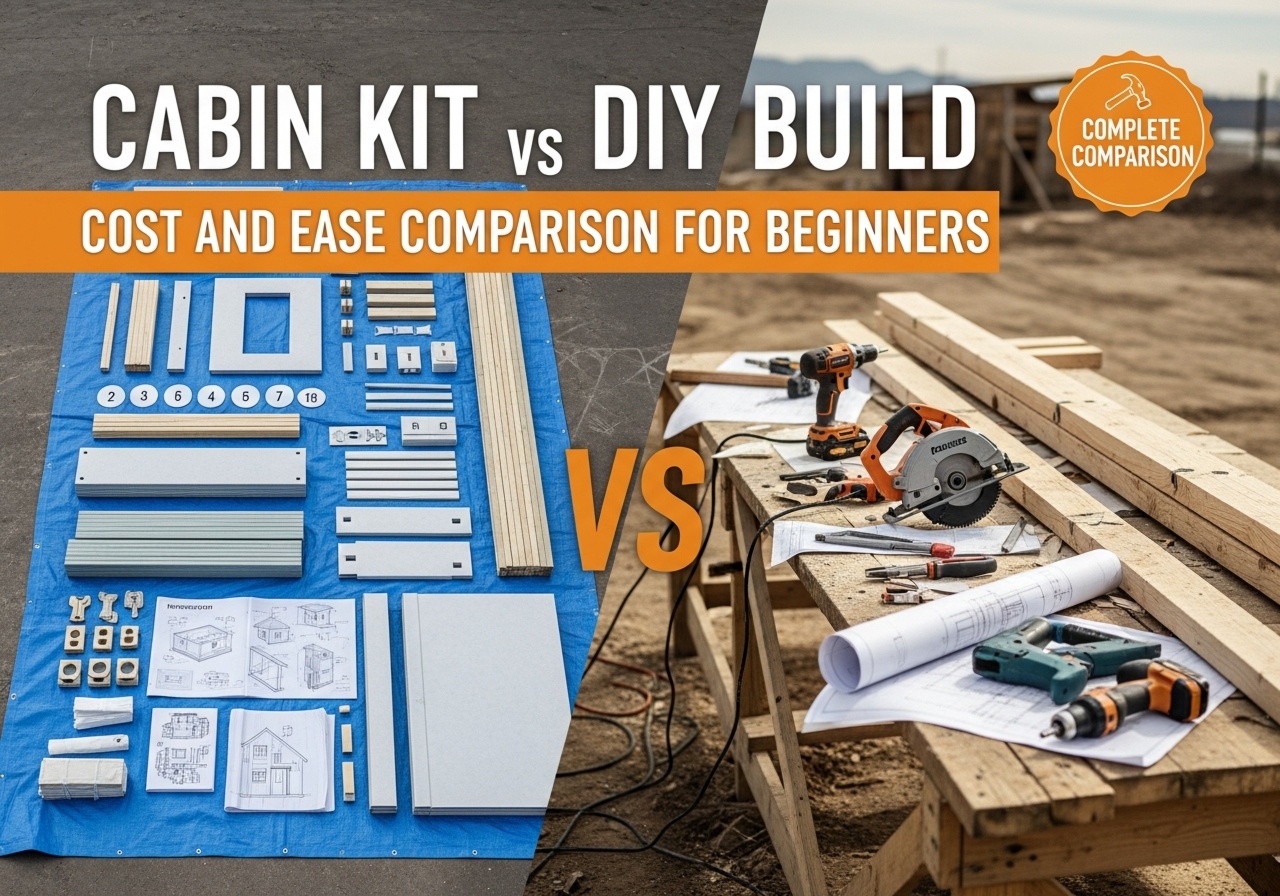
Are you trying to decide whether a cabin kit or a full DIY build will get you off-grid faster, cheaper, and with less stress?
Cabin Kit Vs DIY Build: Which Is Cheaper And Easier For Off‑Grid Beginners?
This article breaks down costs, skills, time, and practical considerations so you can choose the route that fits your budget, skill level, and lifestyle goals. You will get comparative tables, realistic timelines, step lists, and decision criteria tailored to off-grid beginners.
What do we mean by “cabin kit” and “DIY build”?
A cabin kit is a pre-packaged set of components—walls, roof panels, floor systems, and hardware—designed to be assembled on site. Kits range from basic shell packages to nearly complete cabins that require only interior finishing.
A DIY build means you source plans, materials, tools, and labor (often mostly your own) and construct the cabin from raw components on site. This can mean stick-building from lumber, using SIPs (structural insulated panels), or other custom methods.
Who benefits from a cabin kit and who benefits from a DIY build?
You will benefit from a cabin kit if you want predictable costs, reduced complexity, and a quicker path to shelter. A kit is usually better when you have limited building experience or limited time.
You will benefit from a DIY build if you want maximum customization, the potential for cost savings on materials and labor, or the satisfaction of building your home yourself. DIY is often the option if you already have construction skills or access to skilled helpers.
Quick cost overview
Costs vary widely by region, size, materials, and how finished you want the cabin to be. Below is a simplified comparison to give you an initial sense of relative expenses.
| Component | Typical cabin kit cost | Typical DIY build cost |
|---|---|---|
| Basic shell (10×12 to 12×16) | $5,000–$20,000 | $3,000–$12,000 (materials only) |
| Mid-size cabin (16×20 to 20×24) | $20,000–$60,000 | $12,000–$40,000 (materials only) |
| Completed small cabin (plumbed/electrified) | $40,000–$100,000 | $30,000–$80,000 (materials + subcontractor labor) |
| Labor (professional) | Minimal if DIY assembly included | Significant unless self-built |
| Time to habitable | Weeks to a few months | Months to over a year, depending on experience |
These ranges are broad because your choices about foundations, insulation, off-grid systems, and finishes will change prices dramatically.
Cost breakdown: Where your money goes
Understanding cost categories helps you control the budget. You will want to account for these items whether you choose a kit or DIY.
- Materials: framing, sheathing, roofing, windows, doors, fasteners.
- Foundation: concrete pads, piers, helical piles, or simple concrete footings.
- Exterior finish: siding, trim, paint.
- Interior finish: drywall, paneling, flooring, cabinetry.
- Utilities: solar, battery, inverter, propane, water system, septic or composting toilet.
- Labor: your time, hired trades, or turnkey contractors.
- Permits and inspections: varies by location and local code.
- Delivery and site access: shipping a kit can be expensive in remote areas.
Time and labor: How long does each option take?
You will find time estimates vary with complexity and experience. Below is a simple timeline comparison.
| Task | Cabin kit (typical) | DIY build (typical) |
|---|---|---|
| Site prep & foundation | 1–3 weeks | 2–6 weeks |
| Shell assembly | 1–4 weeks | 4–12+ weeks |
| Roofing & exterior finish | 1–3 weeks | 2–8 weeks |
| Utilities & systems | 1–4 weeks | 4–16+ weeks |
| Interior finish | 1–4 weeks | 4–20+ weeks |
| Total to basic habitability | 4–12 weeks | 3–12+ months |
Kits shorten the shell and roofing phases because many components are pre-cut and pre-drilled. DIY builds often take longer as you source and cut materials and problem-solve on site.
Skill requirements and the learning curve
With a cabin kit, you will need basic carpentry skills: measuring, fastening, following instructions, and safe ladder use. Some kits are explicitly designed for beginners and include detailed manuals, labeled parts, and customer support.
With a DIY build, you will need a broader and deeper set of skills: framing, roofing, window and door installation, insulation methods, some electrical and plumbing knowledge (or the ability to hire subcontractors). The learning curve is steeper but the skill acquisition can be rewarding.
Permits, codes, and legal considerations
You will need to check local building codes, zoning rules, and permit requirements before you commit. Some jurisdictions are more lenient for small accessory structures, while others require the same permitting as a typical house.
- Kits: often easier to permit because manufacturers provide engineered drawings and structural calculations. This documentation speeds plan approval in many areas.
- DIY: you will need your own plans and potentially engineer stamps for foundations, especially in seismic or high-wind zones.
You should also check septic and water rules for off-grid systems, and whether your intended site allows non-traditional systems (composting toilets, greywater recycling).
Foundation options for off-grid cabins
Choosing the right foundation affects cost, durability, and ease of construction. Your site conditions will guide the choice.
- Concrete slab: expensive, permanent, good for year-round occupancy.
- Pier and beam: elevated, less material, easier on sloped terrain.
- Concrete piers or sonotubes: common for small cabins, moderate cost.
- Helical piles: fast installation, good when access is limited, higher cost per unit.
- Skid-mounted: cabin built on skids and moved into place; useful for leasehold or temporary setups.
Kits typically specify a recommended foundation and may include plans for piers or slab attachments. DIY builds let you select the foundation that best suits your budget and terrain.
Insulation and energy efficiency
Off-grid living relies heavily on minimizing energy use. Insulation and airtightness matter for heating and cooling.
- Kits: many kits now offer SIPs or advanced framing options that increase efficiency and reduce labor time. Manufacturer guidance on insulation values is often available.
- DIY: you can use fiberglass, mineral wool, cellulose, or SIPs if you buy panels. DIY gives flexibility but requires knowledge to avoid thermal bridging and air leaks.
Pay attention to window quality, door seals, and proper roof ventilation. These small items can greatly influence energy needs and battery/solar system size.
Off-grid utilities: water, power, and waste
You will need to plan for water supply, electricity, and waste treatment based on your chosen degree of self-sufficiency.
- Power: solar + battery is common. Kits do not always include solar components. Factor the cost of panels, inverter, batteries, and charge controller.
- Water: options include wells, rainwater catchment, hauled water, or onsite springs. Each has installation costs and maintenance needs.
- Waste: options include septic systems, composting toilets, or outhouses. Local code may mandate specific solutions.
Planning these systems early prevents costly rework. Whether you choose a kit or DIY, allocate time to design systems that match your expected consumption.
Tools and equipment needed
A cabin kit reduces the number of specialty tools required, but you still will need a set of basics.
Essential tools you will likely need:
- Circular saw, drill/driver, impact driver.
- Level, tape measure, framing square.
- Hammer, pry bar, chisels.
- Ladder and sawhorses.
- Safety gear: gloves, eye protection, hearing protection.
For a full DIY build you may add:
- Table saw or miter saw.
- Nail gun and compressor.
- Concrete tools for foundations.
- Scaffolding, skid steer, or excavator depending on site work.
Kits sometimes recommend or require certain tools and may offer rental suggestions.
Quality and durability: what you can expect
Kits are manufactured to consistent standards and often have warranties on materials. This predictability helps ensure structural integrity when assembled correctly.
DIY builds can be just as durable, but quality depends on your materials and craftsmanship. Sourcing reclaimed or discounted materials can save money but may introduce variability in performance.
For off-grid cabins, prioritize durability where it matters: roof systems, windows, framing members, and foundation. A cheap roof or poor flashing is expensive in the long run when leaks occur.
Customization and flexibility
If you want a highly customized layout, a DIY build gives you full control. You can optimize for site orientation, passive solar gain, loft spaces, or unique rooflines.
Kits offer limited but growing customization options. Many manufacturers allow window placement changes, door swaps, and size adjustments for an additional fee. For most beginners, kits provide enough flexibility to meet functional needs while saving time.
Typical cabin kit types
Kits come in several forms, each with pros and cons. Understanding them will help you pick the right one.
- Log or timber kits: pieces are milled and fit together. A classic aesthetic but heavier and often more expensive.
- Panelized kits: larger wall or roof panels arrive ready to set. Fast assembly, good for insulation.
- Prefab/modular units: sections are built in a factory and craned into place. Higher delivery costs but faster finish.
- Shell-only kits: exterior completed, interior left for you to finish. Balanced cost and speed.
- Turnkey kits: built entirely by the company on site or delivered finished; most expensive but least work for you.
Common DIY approaches
When you build from scratch, you will choose one of several methods.
- Stick-built framing: conventional, flexible, requires framing and carpentry skills.
- SIPs: quicker to assemble, highly efficient, but panels must be ordered and fit precisely.
- Pole or post-frame: simpler for some sites, elevated designs, and good for open interiors.
- Reclaimed material build: budget-friendly and sustainable, but requires more design and sorting time.
Each method has trade-offs in time, cost, and performance.
Realistic cost example scenarios
Below are three example scenarios to give you concrete numbers. These are illustrative; local prices will vary.
| Scenario | Size | Approach | Estimated total (materials + basic systems) |
|---|---|---|---|
| Minimal weekend cabin | 10×12 (~120 sq ft) | Kit shell + self-finish | $8,000–$15,000 |
| Off-grid starter | 16×20 (~320 sq ft) | Panelized kit + solar + composting toilet | $30,000–$60,000 |
| Custom DIY small home | 20×24 (~480 sq ft) | Stick-built + hired trades for systems | $40,000–$90,000 |
Kits typically reduce the lower bound of these ranges by speeding assembly and limiting waste.
Step-by-step estimated timeline for a kit vs DIY
It helps to visualize steps and timing so you can plan wisely.
Cabin Kit Timeline (typical)
- Site selection & permit approval: 2–8 weeks.
- Foundation installation: 1–3 weeks.
- Kit delivery & shell assembly: 1–4 weeks.
- Roofing, windows, doors: 1–3 weeks.
- Utilities and systems installation: 2–6 weeks.
- Interior finishing: 1–4 weeks. Total: 6–20 weeks, depending on complexity.
DIY Build Timeline (typical)
- Design/planning & permits: 4–12 weeks.
- Foundation work: 2–6 weeks.
- Framing and shell: 4–12+ weeks.
- Roofing and exterior finish: 2–8 weeks.
- Mechanical systems (electric, plumbing, HVAC): 4–16+ weeks.
- Interior finish and final inspections: 4–20+ weeks. Total: 6 months to over a year for many beginners.
Pros and cons summary
A concise table will help you weigh options quickly.
| Factor | Cabin kit | DIY build |
|---|---|---|
| Cost predictability | High | Variable |
| Upfront cost | Moderate to high | Potentially lower (materials), higher if hiring trades |
| Time to shelter | Shorter | Longer |
| Required skill level | Lower | Higher |
| Customization | Moderate | High |
| Permit documentation | Often provided | You must provide |
| Learning opportunity | Moderate | High |
| Long-term value | Good if quality kit | Good if well-built |
How to choose: decision criteria for beginners
Ask yourself a few questions to guide your choice:
- What is your budget and how flexible is it?
- How quickly do you need a livable space?
- Do you have construction experience or access to skilled helpers?
- How important is customization and future expansion?
- What do local building codes and site conditions require?
- Are you comfortable troubleshooting on site?
If you want predictability, speed, and lower technical risk, a kit often fits better. If you want control, lower material costs, and personal involvement, DIY may be the better route.
Budgeting tips to save money without sacrificing quality
You will keep costs under control by using these strategies:
- Buy only what you need initially—finish non-essential elements later.
- Compare multiple kit manufacturers and ask about bulk discounts.
- Source some materials locally to save on shipping.
- Volunteer-swap labor with friends or community members.
- Use energy-efficient appliances to reduce off-grid system size and costs.
- Plan for storage and staging so you minimize material damage and waste.
Balancing savings with durability will preserve your investment and reduce maintenance headaches.
Common mistakes to avoid
Many beginners make the same avoidable errors. Avoid these to save time and money:
- Underestimating foundation requirements or soil conditions.
- Ignoring local codes for septic and water systems.
- Skipping a proper site plan or failing to account for access and delivery.
- Selecting inadequate insulation leading to oversized power systems.
- Not verifying kit contents and measurements before assembly.
- Over-customizing kits without considering structural impacts.
Preparation and due diligence are the best ways to avoid costly rework.
Financing and insurance considerations
Financing off-grid projects can be different from conventional home loans. Lenders often have stricter requirements for non-permanent structures.
- Kits: easier to document and value because manufacturers provide invoices and specs.
- DIY: harder to finance until the project is complete and value can be appraised.
Insurance for remote cabins can be more expensive and may require specific coverage for solar systems, wells, or alternative waste systems. You should contact insurers early so you know what will be necessary to maintain coverage.
Resale and long-term value
A well-built cabin—kit or DIY—can hold or increase its value if it meets code and is well-documented. Turnkey finishes and reliable off-grid systems improve resale prospects. Conversely, undocumented DIY work can hurt value and complicate a sale.
Keep detailed records, receipts, and as-built drawings. If possible, get important work inspected and signed off by local authorities or licensed tradespeople.
Practical checklist before you start
Use this short checklist to ensure you are ready:
- Confirm zoning and permitting requirements.
- Conduct a site survey for drainage, sun exposure, access, and soil.
- Decide on foundation type and budget for it.
- Choose between kit types or DIY method and get several quotes.
- Plan for delivery logistics and on-site storage.
- Design basic off-grid systems (power, water, waste).
- Assemble necessary tools and safety gear.
- Line up any subcontractors you will need (electrician, plumber).
- Create a realistic timeline and contingency plan.
A checklist helps you avoid last-minute surprises that increase costs and delays.
Where to get help and learning resources
If you choose DIY, you will benefit from resources that build confidence:
- Manufacturer support lines and assembly videos for kits.
- Local community colleges or trade schools for carpentry and electrical basics.
- Online forums and social media groups dedicated to cabin building and off-grid living.
- Books and step-by-step guides on tiny homes, SIPs, and passive solar design.
- Local builder consultations or hiring an experienced lead hand for the trickiest stages.
You will save time and reduce mistakes by investing in focused learning or hiring skill-limited labor for specialized tasks.
Final recommendation: which should you choose?
If you want the cheaper and easier path as a beginner, a cabin kit is often the best first choice because it reduces complexity, speeds construction, and provides documentation useful for permits and financing. For many off-grid starters, the predictability of cost and time is invaluable.
If you are looking to maximize savings, want complete customization, and enjoy hands-on learning, a DIY build can be cheaper on a strict materials-only basis, but it usually takes longer and requires more risk tolerance and time investment.
Example decision scenarios
- You want a seasonal hunting or weekend cabin and have limited time: pick a kit shell and finish interiors slowly.
- You have carpentry experience and want a personalized off-grid homestead: consider DIY with SIPs or stick-frame and hire specialists for plumbing and electrical.
- You want a fast, reliable tiny home for full-time living: choose a high-quality kit and invest in good insulation and off-grid systems upfront.
Closing thoughts
You will benefit most by matching your choice to your priorities: predictability and speed favor kits; control and potential material savings favor DIY. Take your time to plan, research local requirements, and get quotes from multiple kit suppliers and material vendors. With preparation, you can enjoy a comfortable off-grid beginning that fits both your budget and your lifestyle goals.