Have you been thinking about switching to solar but feel overwhelmed by the choices, jargon, and tiny print that comes with every quote?
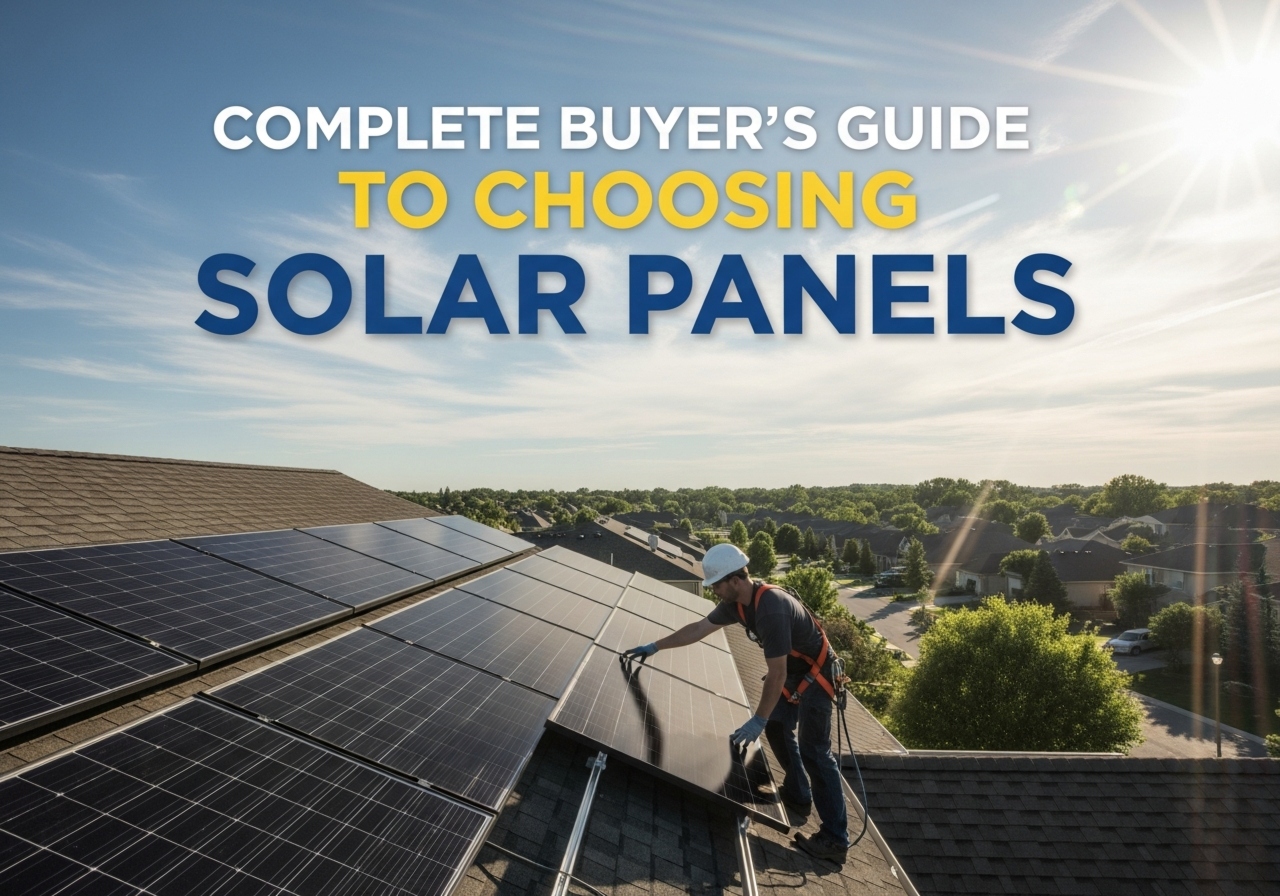
Complete Buyer’s Guide To Choosing Solar Panels
You’ll find this guide written in a tone that feels like a patient neighbor telling you what to expect, and you’ll get practical steps you can act on. The aim is to help you choose solar panels with confidence, as if you were sorting through a stack of family recipes and deciding which one to try first.
Why you might choose solar now
You want predictable energy costs and a smaller environmental footprint, and solar can provide both while increasing your home’s resilience. Solar also changes the rhythm of household decisions—you start thinking about energy differently, like when you run appliances or plan a weekend at home.
Solar can lower your monthly electricity bill, add value to your property, and qualify you for financial incentives. You’ll also appreciate the quiet, low-maintenance nature of a rooftop system compared with other home upgrades.
How solar power works, in simple terms
A solar panel converts sunlight into direct current (DC) electricity, and an inverter changes that to the alternating current (AC) electricity your home uses. Your utility meter, inverter, and sometimes a battery round out the system so electricity can flow where you need it.
When your panels produce more electricity than you use, the excess can be routed back to the grid (if local rules allow) or stored in a battery for later. Understanding that flow is key to deciding system size, inverter type, and whether you’ll invest in storage.
Types of solar panels and how they differ
You’ll see several types on the market, and each has trade-offs in cost, efficiency, appearance, and suitability for different roofs. Choosing the right type is about balancing your roof space, budget, aesthetic preferences, and energy needs.
| Panel Type | Typical Efficiency Range | Pros | Cons | Best for |
|---|---|---|---|---|
| Monocrystalline | 18% – 23% | High efficiency, space-efficient, sleek black look | Higher cost | Limited roof area, higher energy needs |
| Polycrystalline (Multicrystalline) | 15% – 18% | Lower cost, decent performance | Slightly lower efficiency, bluish appearance | Budget-conscious buyers with ample roof space |
| Thin-film (CdTe, CIGS, a-Si) | 10% – 12% (some newer tech higher) | Lightweight, flexible options, lower cost per panel | Lower efficiency, larger area needed, faster degradation | Non-traditional roofs, ground-mounted arrays |
| PERC / Half-cut / Bifacial (advanced mono) | 19% – 24% | Higher output, better shade tolerance, bifacial can harvest reflected light | Can be pricier, requires compatible racking | High-performance setups, systems with reflective ground surfaces |
You’ll find the market moving toward mono PERC and bifacial technologies for residential and commercial systems because they push efficiency up without dramatically increasing size.
Key specifications you must understand
Every spec on the datasheet matters because it affects performance over time and in real-world conditions. You’ll want to look beyond the advertised wattage and notice things like temperature coefficient, degradation rate, and warranty terms.
- Nameplate wattage: The maximum power under standard test conditions. This gives you an idea of panel size but not real-world output.
- Efficiency: How much of the sunlight hitting the panel is converted to electricity. Higher efficiency means more energy per square foot.
- Temperature coefficient: Performance decreases as panels heat up; a lower (more negative) coefficient is better.
- Degradation rate: How much power the panel loses each year; lower percentages mean better long-term performance.
- Power tolerance: The range around the nameplate wattage; higher tolerance can mean panels often produce better than labeled.
- Certifications: UL, IEC, and local standards show compliance and safety.
Each of these specs helps you predict long-term output, not just the initial production numbers that installers quote.
Efficiency and what it means for your roof
You’ll use efficiency to determine how much roof area you’ll need for a system sized to your energy use. A higher-efficiency panel costs more per unit but lets you fit a larger system on a small roof.
For example, if you need a 6 kW system and you have limited roof area, choosing 22% efficient panels will save space compared with panels at 16%.
Temperature coefficient and local climate
You’ll get more realistic expectations if you consider local temperatures; high heat reduces panel output. Panels are tested at 25°C, but on a hot summer day your panels may be 40°C or more, which matters because some panels lose output faster with heat.
If your roof gets very hot, prioritize panels with a better (less negative) temperature coefficient.
Degradation and life expectancy
A panel that degrades 0.5% per year will yield more energy over 25 years than one that degrades 1% per year. You’ll want to multiply the initial output by expected degradation to model performance over decades.
Manufacturers often offer product warranties (for defects) and performance warranties (guarantees of output). Both matter—product warranty protects against failure, while performance warranty protects expected energy production.
Sizing your solar system: how much capacity do you really need?
Sizing begins with your energy use: the average kWh you consume each month and seasonality of that consumption. You’ll perform a simple energy audit, check historical electric bills, and decide whether you want to offset 100% of usage or only part of it.
- Gather your last 12 months of electricity bills to learn average monthly kWh.
- Estimate available roof area and orientation (south-facing in the northern hemisphere is ideal).
- Use average peak sun hours for your location—this converts panel watts to kWh per day.
Example calculation:
- Average monthly consumption: 900 kWh → daily = 30 kWh
- Available sunlight: 4.5 peak sun hours/day
- System losses (inverter, wiring, shading): assume 20% (efficiency factor 0.8)
- Required system size = daily kWh / (peak sun hours × system efficiency)
- = 30 / (4.5 × 0.8) = 8.33 kW
You’ll round up to the nearest practical system size and consider whether you want extra capacity for future increases.
Estimating peak sun hours and seasonal variation
Peak sun hours are an average measure and change with seasons; you’ll want conservative estimates to avoid undersizing. Use local solar insolation maps or a reputable online calculator to find peak sun hours for each month.
If your winter energy needs spike, you might choose a slightly larger system or add battery storage.
Example sizing table
| Input | Your Example |
|---|---|
| Average monthly consumption | 900 kWh |
| Daily consumption | 30 kWh |
| Peak sun hours/day | 4.5 |
| System efficiency factor (losses) | 0.8 |
| Required system size | 8.33 kW |
| Panels needed (300 W each) | 28 panels |
You’ll adapt the example to your numbers, but the method stays the same: start with kWh, divide by sun hours and efficiency.
Inverters: central, string, microinverters, and optimizers
The inverter is your heart and translator—without it, DC from panels won’t run your AC appliances or feed the grid. Choosing the right inverter affects efficiency, shade tolerance, monitoring, and repair costs.
- String inverters: Cost-effective and reliable; one inverter for many panels. If a panel is shaded or fails, the whole string’s output may drop.
- Microinverters: One inverter per panel; better shade performance and panel-level monitoring. They cost more but offer redundancy (one panel fails, others keep producing).
- Power optimizers: Combine with a string inverter to get some benefits of microinverters at lower cost. They condition panel outputs, improving shade performance.
You’ll examine warranties and monitoring features, because modern inverters can tell you exactly what each panel is doing.
Mounting, racking, and roof considerations
Your roof’s age, slope, orientation, and material will shape the mounting method and feasibility. You’ll need a roof inspection to confirm it can support panels and to time upgrades appropriately.
- Roof-mounted systems are common and cost-effective on pitched roofs.
- Ground-mounted systems offer flexibility and easier maintenance but require space and possible permits.
- Ballasted or rails systems are options for flat roofs; structural implications differ.
If your roof needs replacement within five years, it’s generally smarter to replace it before installation to avoid the cost of removing and reinstalling panels.
Battery storage: what to consider
Adding batteries changes system economics and resilience—you’ll gain backup power and more control over time-of-use, but you’ll also add cost, complexity, and lifecycle considerations. You’ll ask whether batteries are for emergency backup, bill savings via time-of-use arbitrage, or complete energy independence.
Common battery types:
- Lithium-ion (LiFePO4): High energy density, good cycle life, popular for home systems.
- Lead-acid (AGM, flooded): Lower cost but shorter life and more maintenance.
- Flow batteries: Long life, scalable, but expensive and less common for homes.
You’ll size batteries by desired backup hours and critical loads: list the appliances you want covered and their combined wattage, then compute battery kWh needed.
Example battery sizing
If you want to run a fridge (150 W), a few lights (200 W), and a router and essentials (100 W) for 12 hours:
- Total power = 450 W
- Energy for 12 hours = 450 W × 12 = 5,400 Wh = 5.4 kWh
- Add inverter and depth-of-discharge buffer (20%–30% extra), so select ~7 kWh usable battery.
You’ll also consider round-trip efficiency and expected cycling when calculating cost-effectiveness.
Cost breakdown and financing options
You’ll want to understand all direct costs (equipment, installation, permits) and indirect ones (roof upgrades, electrical work). Prices vary by region and market conditions, and you’ll often see quotes that are markedly different because of panel choice, inverter type, and labor.
- Upfront purchase: You own the system and get all incentives, tax credits, and increased home value.
- Solar loans: Let you finance the system while owning it; payments can be offset by energy savings.
- Lease / PPA: Lower upfront cost, but you may not qualify for incentives and the long-term savings can be smaller.
- Cash purchase: Best long-term ROI if you can manage the upfront expense.
Federal, state, and local incentives can significantly reduce net costs—factor them into your payback calculations.
Typical cost components
| Component | What it covers |
|---|---|
| Panels | The modules themselves; large share of material cost |
| Inverter(s) | Converts DC to AC; good warranties are valuable |
| Racking and mounting | Hardware to attach panels to roof or ground |
| Installation labor | Wiring, mounting, system integration, inspections |
| Electrical upgrades | Meter, main panel upgrade, conduit, breakers |
| Permits and inspections | Local fees and compliance costs |
| Batteries (optional) | Storage system and associated battery inverter |
You’ll request itemized quotes to compare installers clearly.
How to evaluate installers and get accurate quotes
You’ll meet two types of salespeople: the enthusiastic generalist and the detail-oriented technician. Ask questions, request site visits, and get at least three quotes that are itemized and comparable.
Checklist for evaluating installers:
- Licenses and insurance: Confirm contractor licensing, insurance, and local compliance.
- References: Ask for recent customer contacts and view completed installations in person if possible.
- Warranties and workmanship: Separate manufacturer warranties from installer workmanship warranties.
- Permitting and financing assistance: Will the installer handle permits, inspections, utility interconnection, and incentives paperwork?
- Performance estimates: Ask for a modeled annual production and the assumptions behind that number (panel orientation, shading, tilt).
You’ll prefer installers who explain assumptions plainly, show real system performance data, and don’t rely solely on glossy sales brochures.
Permits, inspections, and interconnection with the grid
You’ll rarely install solar without local permits; codes and utility policies vary widely. The installer typically handles permitting, but you should confirm timelines and responsibilities.
- Building and electrical permits: Required in most jurisdictions to ensure safety and structural integrity.
- Utility interconnection approval: The utility must approve grid-tied systems for safety and billing arrangements.
- Net metering agreements: Many utilities offer credits for energy exported to the grid; get the rules in writing.
Expect inspections before you’re granted permission to operate; they’re a final safety check and ensure your system meets code.
Warranties, certifications, and what they really mean
A long warranty can feel reassuring, but you’ll read the fine print because terms and limitations matter. Manufacturers commonly offer a 10–12 year product warranty and a 25-year performance warranty, but coverage conditions vary.
- Product warranty: Covers defects and premature failure.
- Performance warranty: Guarantees a minimum percentage of rated output after a set number of years.
- Workmanship warranty: From the installer, covers installation faults and leaks.
Look for third-party certifications like UL and IEC to ensure safety and quality standards. Also, consider bankability: long-standing companies with a history of honoring warranties reduce risk.
Maintenance, troubleshooting, and expected lifespan
You’ll be pleased to hear solar systems are low-maintenance, but they’re not no-maintenance. Periodic visual inspections, cleaning in dusty areas, and inverter checks will keep your system yielding the promised energy.
Routine maintenance checklist:
- Inspect for debris, soiling, and shade from new tree growth.
- Check inverter and monitoring system for error codes.
- Confirm roof penetrations are sealed and flashing is intact.
- Schedule professional inspections every 3–5 years.
With proper care and quality components, systems often deliver useful power for 25–30 years; panels typically outlast inverters and batteries.
Performance monitoring and data you should track
Monitoring helps you see whether the system meets modeled expectations and quickly spot issues. You’ll track daily and monthly kWh, compare to weather, and watch for sudden drops that indicate shading, inverter faults, or wiring problems.
Many inverters and monitoring platforms provide panel-level data, and that visibility can be worth a premium if shading or unusual roof geometry exists.
Common pitfalls and how to avoid them
There are recurring mistakes people make when buying solar; you’ll avoid them if you ask the right questions and look beyond price alone. The cheapest quote often lacks quality components or meaningful warranties.
Common pitfalls:
- Not checking roof condition before installation.
- Accepting vague production estimates without assumptions.
- Overlooking inverter warranty and replacement costs.
- Not understanding interconnection and net metering rules.
- Falling for aggressive sales tactics without time to compare offers.
You’ll take a methodical approach: compare itemized quotes, read warranties, and choose installers with strong references.
Environmental and aesthetic considerations
You’ll want your solar solution to match your values and your house’s look. Panels can be integrated discreetly or installed visibly as a design element; newer panels come in all-black or sleek styles to reduce visual impact.
Think about wildlife and roof shading from vegetation: sometimes small pruning or reflective ground surfaces can boost system output noticeably.
Return on investment and payback period
You’ll calculate payback by dividing net system cost (after incentives) by annual energy savings. Simple payback ignores time value of money and financing costs, but it gives a quick measure of whether the system meets your financial goals.
Factors that extend or shorten payback:
- Local electricity rates: Higher rates shorten payback.
- Incentives and rebates: These shorten payback significantly.
- Financing terms: Low-rate loans can make ownership affordable with positive monthly cash flow.
- System performance: Real-world output must approach modeled estimates.
A conservative approach is to model multiple scenarios: optimistic, expected, and conservative.
FAQs you’ll want answered
You’ll likely have specific concerns about reliability, resale value, and maintenance responsibilities. These short answers give you a quick reference.
- Will solar work on a shaded roof? Small amounts of intermittent shading will reduce output and could make shade-optimized systems (microinverters/optimizers) a better choice.
- Do panels require cleaning? Periodic cleaning helps in dusty environments, but rain cleans them in many climates.
- What happens during a power outage? Standard grid-tied systems shut off for safety unless you have battery backup or a special islanding inverter.
- How long before I see savings? Depending on incentives and electricity costs, payback can range from 4 to 12 years or more.
- Can I expand later? Many systems are modular; you’ll plan for extra roof space or inverter capacity if you expect to add panels or batteries.
Decision checklist before you sign
You’ll feel more confident if you run through a checklist before committing. It prevents surprises and ensures your priorities are reflected in the contract.
- Have you reviewed at least three itemized quotes?
- Is the installer licensed, insured, and local?
- Do warranties cover both product and performance, and is the installer’s workmanship warranty included?
- Does the system meet your production goals in conservative modeling?
- Are permits, inspections, and utility interconnection handled by the installer?
- Is your roof in good condition for the expected lifespan of the system?
- Have you compared financing options and calculated expected payback?
If you can check all these boxes, you’re in a strong position.
Final thoughts: choosing a system that suits your household
You’re not choosing only a product; you’re choosing a relationship with an energy system that will be part of your home for decades. Think in human terms: which option gives you peace of mind, an acceptable payback, and the least fuss for your lifestyle?
Make your decision as you would on any important home investment: gather facts, talk to people who’ve done it, and favor clear warranties and honest installers over glitzy promises. In the end, a well-chosen solar system will feel like a sensible, quiet neighbor—always there, saving you money and watching the weather with an indifferent, steady hum.
Quick reference table: what to prioritize based on your situation
| Your Situation | Priorities |
|---|---|
| Small roof, high consumption | High-efficiency monocrystalline or PERC panels, microinverters or optimizers |
| Large roof, budget-limited | Polycrystalline panels, string inverter |
| Shaded roof or complex orientation | Microinverters or optimizers, panel-level monitoring |
| Desire for backup power | Add batteries (Li-ion preferred), hybrid inverter |
| Flat roof | Ballasted or rail mounting solution, consider microinverters or rugged string inverter |
| Historic or aesthetic home | All-black panels, flush mount or building-integrated options (BIPV) |
You’ll use this table to prioritize the trade-offs that matter most to you.
If you want, I can help you estimate the right system size using your last 12 months of electric bills, local peak sun hours, and roof measurements—just share those details and we’ll work through the numbers together.