
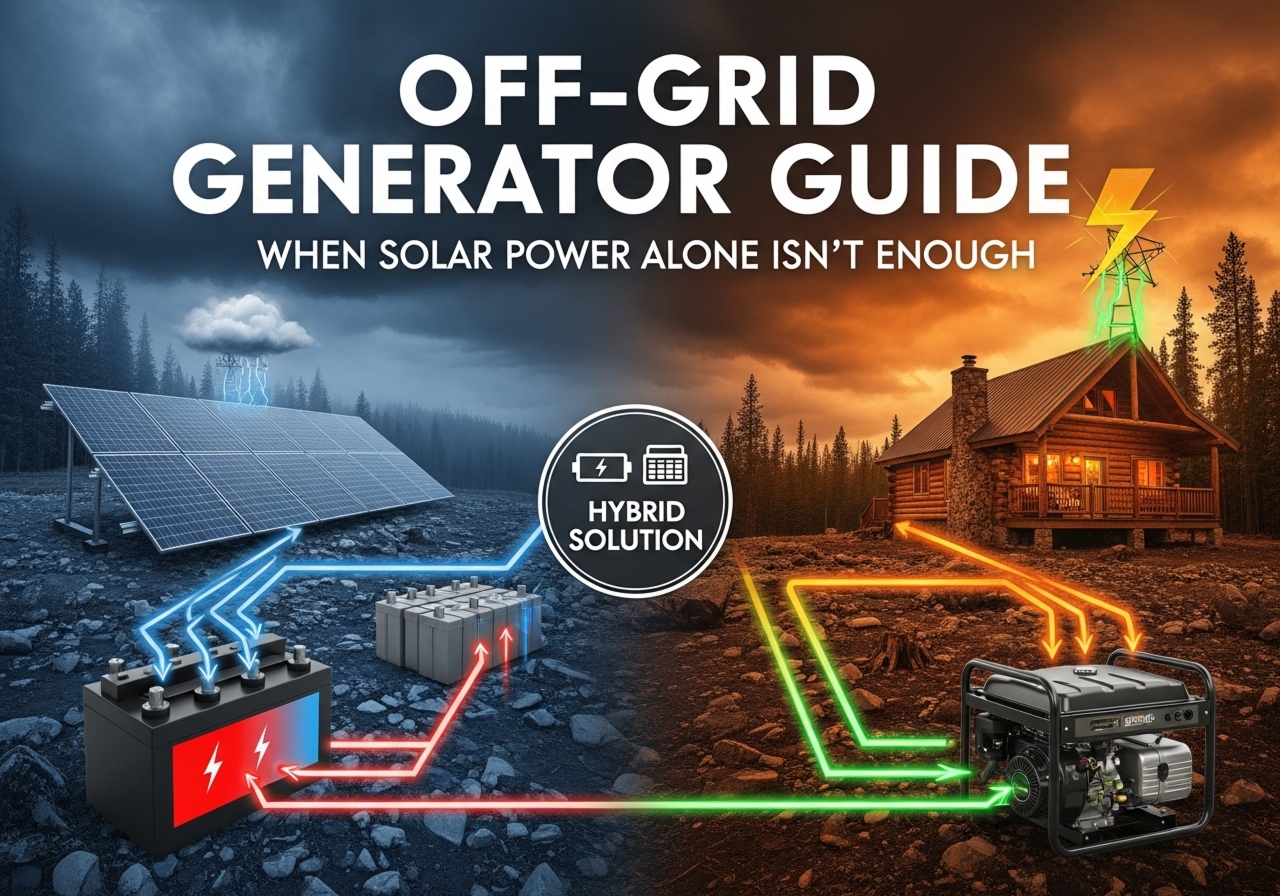
Are you wondering whether solar panels alone will keep your off‑grid life comfortable, or if a generator is a necessary backup?
Do You Really Need A Generator Off‑Grid? When Solar Alone Isn’t Enough
This article helps you decide whether a generator is essential when you live off‑grid and rely primarily on solar power. You’ll learn how solar, batteries, and generators work together, what situations require a generator, how to size one, and practical tips for integration, fuel management, and safety.
Why this question matters
Choosing the right mix of solar, batteries, and generators affects your comfort, safety, budget, and environmental impact. You’ll avoid unpleasant surprises like losing heat during winter nights or exhausting your battery bank after several cloudy days by understanding when solar alone falls short.
Understanding off‑grid power basics
You need to understand the basic components of an off‑grid system so you can see where vulnerabilities exist. Solar, batteries, inverters, and optional generators each play a role in keeping your system reliable.
Solar panels: production depends on conditions
It convert sunlight into electricity, but your production varies with location, season, cloud cover, and panel orientation. You’ll produce significantly less in winter or during prolonged storms, which affects how much energy you can bank.
Batteries: the energy buffer
Batteries store excess solar energy for use when the sun isn’t shining. Your battery capacity and depth of discharge (DoD) determine how long you can run critical loads without recharging. Batteries add cost and complexity, and they have finite life spans influenced by cycles and temperature.
Inverters and charge controllers: the system brain
Charge controllers manage charging of batteries from solar arrays, and inverters convert DC battery power to AC power for household appliances. Hybrid inverters can coordinate solar, batteries, and generators to optimize charging and maintain loads.
Generators: on‑demand power
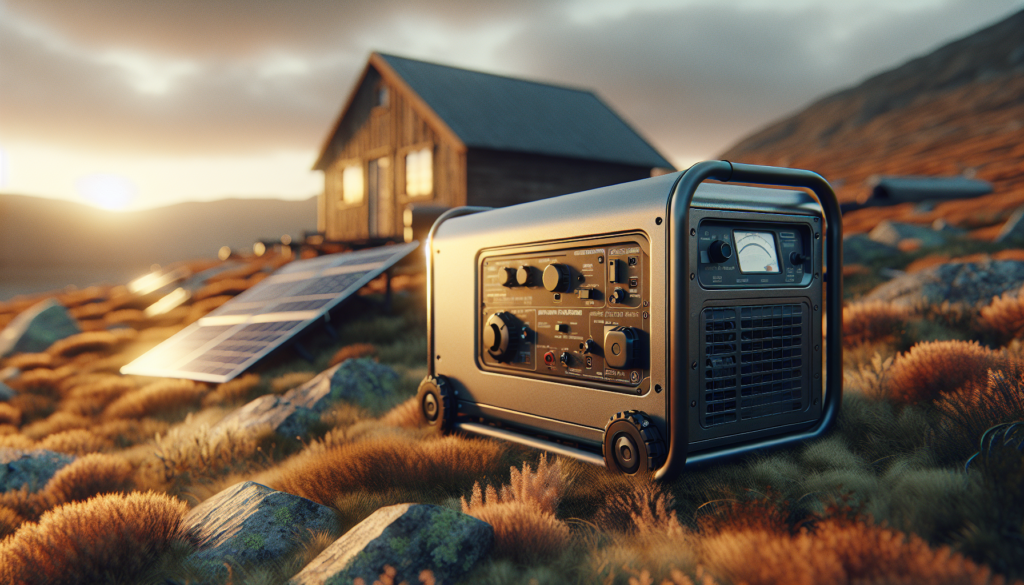
A generator provides on‑demand electricity by burning fuel (gasoline, diesel, propane, or natural gas) to run an alternator. When integrated correctly, a generator can charge batteries and supply loads during prolonged low solar production or sudden large power demands.
When solar alone isn’t enough
There are specific scenarios where solar-only systems struggle and a generator becomes practically necessary. Understanding these scenarios helps you plan your system and avoid reliability issues.
Long stretches of low sunlight
If your location regularly experiences long cloudy or rainy periods, your solar production will fall and your batteries can be depleted. You’ll need an alternative charging source to avoid power outages.
High or unpredictable power demands
When you use power-hungry loads like electric heating, well pumps, large appliances, or heavy tools, solar arrays and battery banks may struggle to meet peak demand. A generator handles short bursts or extended runs of high loads.
Winter heating and seasonal variations
Cold climates create two problems: reduced solar generation due to lower sun angles and higher energy demand for heating. If you use electric heating or heat pumps, you’ll likely need supplemental generation in winter.
Extended winters or long nights
In areas with long winter nights, daily solar production might not be enough to recharge batteries between days. A generator gives you the ability to top up batteries when needed and avoid cycling them too deeply.
Battery maintenance and degradation
If your battery bank is aging or you want to extend battery life by avoiding deep cycles, a generator provides an external charging source. You’ll reduce depth of discharge and extend the usable life of your batteries.
Types of generators and fuel choices
Choosing the right generator depends on your fuel availability, desired runtime, noise tolerance, maintenance ability, and compatibility with your system. You should weigh pros and cons before committing.
Portable gasoline generators
These are typically lower cost and easy to move. You’ll find them handy for short-term use, but gasoline has limited shelf life, and these models require regular refueling and more maintenance if used frequently.
Diesel generators
Diesel units are robust, fuel-efficient at heavy loads, and suitable for long-term operation. You’ll appreciate their durability and easier long-term fuel storage compared to gasoline, but initial cost and noise can be higher.
Propane generators
Propane stores well long-term and burns cleaner than gasoline or diesel. You’ll sacrifice some fuel efficiency and possibly consistent starting performance in very cold climates unless you take precautions.
Natural gas generators
If you have access to a reliable natural gas supply, these generators can run indefinitely without on-site fuel storage. You’ll depend on the utility or local grid infrastructure, which may not be available in all off‑grid locations.
Hybrid and inverter generators
Inverter generators produce cleaner power and are quieter, making them suitable for sensitive electronics and smaller households. Some hybrid systems are designed to work with battery chargers and automatic transfer switches.
Integrating a generator with a solar and battery system
Proper integration ensures your generator charges batteries efficiently and supplies loads safely without damaging equipment. You’ll want to consider controllers, transfer switches, and wiring.
Inverter‑charger and automatic transfer switch (ATS)
An inverter‑charger lets you charge batteries from a generator while acting as an inverter for loads. An ATS automatically starts and stops the generator based on battery state and load demand, giving you hands‑off reliability.
Manual transfer and parallel operation
For simpler setups, you might use a manual transfer switch to isolate the generator from the solar system when needed. If you require large continuous power, parallel generator operation may be necessary, but this requires compatible equipment and expertise.
Charge controllers and generator charging profiles
You’ll want your generator charging to follow the battery charging algorithm your battery manufacturer requires (bulk, absorption, float stages). A smart inverter‑charger implements these profiles to protect battery health.
Safety and anti‑islanding
Ensure the system prevents backfeeding to external lines and isolates the generator when maintenance is performed. Proper interlocks and transfer switches protect your equipment and any technicians.
Sizing a generator for your off‑grid needs
Choosing the right generator size balances initial cost, fuel consumption, and your power needs. Under‑sizing will lead to overload trips; over‑sizing increases cost and idle fuel waste.
Estimating your loads
Start by listing essential and non‑essential loads, their wattage, and typical run hours. Include startup or surge currents for inductive loads like motors and pumps, which can be several times the running wattage.
Calculating continuous vs. surge power
You’ll pick a generator rated for both continuous wattage and surge capacity. For example, a refrigerator with a 200 W running load might need 600–1200 W surge capacity at startup. Ensure your generator’s surge rating covers these peaks.
Sizing table example
Below is a quick reference to match typical setups with recommended generator sizes. Use this as a starting point; always calculate your actual loads.
| Use case | Typical continuous load (W) | Peak / Surge needs (W) | Recommended generator size (W) |
|---|---|---|---|
| Small cabin (lights, small fridge, electronics) | 500–1,200 | 1,200–2,000 | 2,000–3,500 |
| Weekend RV / larger cabin (AC, microwave, fridge) | 1,500–3,000 | 3,500–6,000 | 4,000–8,000 |
| Full‑time off‑grid home (heating, well pump) | 3,000–6,000 | 6,000–12,000 | 8,000–15,000 |
| Small commercial or workshop (welders, heavy tools) | 5,000–10,000 | 10,000–20,000 | 12,000–25,000 |
Matching run time and fuel capacity
Decide how many hours per day you expect to run the generator during low solar periods. Multiply run hours by fuel consumption (gallons/hour) to size on‑site fuel storage. Consider regulations for storing larger fuel quantities.
Fuel logistics and storage
Reliable fuel supply is crucial if your generator will be a core part of your energy plan. You’ll think about storage, shelf life, and consumption patterns.
Fuel shelf life and maintenance
Gasoline degrades in months unless treated; diesel lasts longer but can grow bacteria and glycerin sediments if stored improperly. Propane has excellent shelf life. Regularly rotate stored fuel or use stabilizers to avoid fuel quality issues.
On‑site storage regulations and safety
You’ll need to follow local regulations about fuel tank sizes and containment. Proper ventilation, spill containment, and fire safety reduce risks. Consider secure, weatherproof containers and secondary containment for larger volumes.
Fuel consumption examples
As a rule of thumb, small portable gasoline generators might burn 0.5–1.0 gallons per hour at half load. Diesel generators may burn 0.3–0.6 gallons per hour per kW at moderate loads. Exact numbers vary, so check the manufacturer’s specifications.
Costs: upfront, operating, and lifecycle
You’ll weigh the purchase price against fuel and maintenance costs to calculate the true cost of having a generator in your off‑grid system.
Upfront costs
Generators range from a few hundred dollars for small portables to tens of thousands for large diesel units with enclosures and ATS systems. Inverter‑chargers and professional installation add to the upfront cost.
Operating costs
Fuel, oil changes, filters, and maintenance contracts create ongoing expenses. Higher efficiency at your typical load reduces fuel costs over time. Running a generator frequently multiplies these costs.
Lifecycle and replacement
A well‑maintained diesel generator can last thousands of hours; portable gasoline units have shorter lifespans. You’ll factor in eventual replacement or major overhauls when calculating long‑term budgets.
Cost comparison table
| Item | Solar + Batteries Only | Solar + Batteries + Generator |
|---|---|---|
| Initial system cost | Moderate–High (depends on battery size) | Higher (adds generator, wiring, ATS) |
| Reliability during long low sun | Low | High |
| Operating cost (fuel) | Low | Moderate–High |
| Maintenance complexity | Moderate | Higher |
| Environmental impact | Low | Higher (fuel combustion) |

Environmental and noise considerations
A generator increases noise and emissions, which you’ll want to minimize for comfort and environmental reasons. Your choice of fuel and placement affects both.
Emissions and fuel choice
Diesel and gasoline produce more CO and particulates than propane or natural gas. Propane burns cleaner and reduces particulate emissions. Consider catalytic converters and mufflers to reduce pollutants.
Noise management
Generators can be loud; you’ll plan for soundproof enclosures, distance from living areas, and anti‑vibration mounts. Inverter generators are quieter and suitable for noise‑sensitive sites.
Reducing generator run time
Optimize your solar production, battery capacity, energy efficiency, and load management to minimize generator use. Smart controllers and time‑of‑use strategies reduce environmental impact and fuel spending.
Maintenance, startup, and safety practices
You’ll need a clear maintenance schedule and safe operating procedures to keep your generator reliable and safe.
Routine maintenance checklist
Change oil and filters, inspect spark plugs and fuel lines, exercise the generator under load periodically, test automatic starts, and monitor battery charging consistency. Log hours and maintenance actions.
Cold weather considerations
Cold starts are harder; you’ll need block heaters, fuel additives, or priming procedures in cold climates. Keep batteries warm and use properly rated engine oils for low temperatures.
Safety protocols
Never run a generator in an enclosed space where exhaust can accumulate. Use CO detectors in buildings, proper grounding, and transfer switches to avoid backfeeding hazards. Store fuels safely and label containers.
System design strategies to minimize generator dependence
If you prefer minimal generator use, there are design choices and behavioral strategies that reduce reliance on fossil fuels while maintaining reliability.
Oversize solar and battery capacity
You’ll reduce generator days by adding more solar panels and battery storage, but this increases upfront cost. Evaluate cost per kWh stored and compare it with generator fuel cost over time.
Load prioritization and energy efficiency
Identify critical loads (heating, refrigeration, communications) and non‑critical loads you can shed during low production. Use efficient appliances, LED lighting, and better insulation to reduce demand.
Demand shifting and smart controls
Shift heavy loads to sunny periods when solar production is high. Use timers, smart thermostats, and controllers to align consumption with generation.
Hybrid inverters and automated control
Hybrid systems can seamlessly manage solar, batteries, and generator charging, optimizing runtime and ensuring battery health. You’ll gain hands‑off operation and better fuel economy.
Typical off‑grid scenarios and recommended setups
Realistic scenarios clarify practical choices. The following table gives starting recommendations for different user situations.
| Scenario | Characteristics | Recommended setup |
|---|---|---|
| Weekend cabin | Low daily use, occasional occupancy | Small solar array (500–1,500 W), 200–600 Ah battery, 2–3.5 kW inverter, portable 2–3.5 kW generator |
| Full‑time small home | Moderate daily use, some large loads (well pump) | Solar 3–6 kW, battery 8–20 kWh, 5–8 kW inverter, standby 8–12 kW generator with ATS |
| Off‑grid family home with heating | High demand, electric heating or heat pump | Larger solar 6–12 kW, battery 20–60 kWh, 8–15 kW inverter, diesel or propane 12–25 kW generator |
| Remote workshop | Heavy intermittent loads (tools, welder) | Solar 3–8 kW, battery 5–20 kWh, inverter sized to continuous tool loads, 12–25 kW generator capable of parallel operation |
How to adapt these recommendations
You’ll adjust sizing based on location, climate, seasonal load patterns, and how often you can refuel. Always perform a detailed load analysis for accuracy.
Decision checklist: Do you really need a generator?
Use this checklist to decide whether a generator should be part of your system. Answering yes to several items suggests a generator is advisable.
- Do you experience multi‑day low solar production in your area?
- Do you have high or unpredictable loads (heating, pumps, heavy tools)?
- Do you need 24/7 reliability for medical or critical equipment?
- Is long‑term fuel storage practical and legal on your site?
- Do you want shorter battery bank sizing and lower battery lifecycle costs?
- Do you want hands‑off charging and automatic backup without manual intervention?
If you answered yes to two or more, you should strongly consider including a generator.
Practical tips for selecting and using a generator
A few practical tips help you get the most value and reliability from your generator investment.
Prioritize compatibility
Ensure your inverter‑charger and ATS are compatible with the generator’s output characteristics and starting profile. Consult manufacturers for recommended pairings.
Start small and scale up
If you’re unsure, begin with a portable generator and a modest ATS or manual transfer setup. You can upgrade to a permanent standby system later once you understand actual needs.
Consider fuel logistics early
Design your fuel storage and resupply plan before you rely on a generator for critical power. Without consistent fuel, a generator is useless when you most need it.
Practice generator operation
Run the generator under load occasionally and practice the start/stop procedures, switching loads, and checking battery charge profiles. Familiarity prevents issues during emergencies.
Frequently asked questions (FAQ)
You’ll likely have more detailed questions; here are concise answers to common ones.
Can I run my entire off‑grid home on generator alone?
Yes, but it’s costly. Running a generator full time consumes significant fuel, increases wear, and is less environmentally friendly than a solar‑plus‑battery approach. Generators are better suited as backup or supplemental charging.
How often should I run my generator to keep batteries healthy?
Occasionally running the generator to top up batteries after several days of low solar is usually sufficient. Specific frequency depends on battery chemistry and state of charge; follow manufacturer guidance for scheduled equalization or maintenance charging.
Is propane better than diesel or gasoline?
Propane stores longer and burns cleaner, making it attractive for low‑use or seasonal systems. Diesel is more efficient for continuous heavy loads and has robust engine options. Gasoline is cheaper initially but less suitable for long‑term storage.
Can I use a generator with lithium batteries?
Yes, but ensure the inverter‑charger and generator charging settings match lithium battery charging profiles. Smart chargers and inverter‑chargers designed for lithium are recommended to avoid damaging the battery.
Final considerations and recommendation
You’ll get the best balance of reliability and sustainability by designing a system that uses solar and batteries as the primary source and includes a generator sized for supplemental charging and peak loads. Generators aren’t always mandatory, but in many climates and usage patterns they provide important resilience, protect battery life, and allow for larger or unpredictable loads.
If you want a practical next step, perform a detailed load analysis, model your solar production for your location, and evaluate battery sizing. Then decide if a generator will be used rarely as an insurance policy or frequently as a core energy source. Either way, proper integration, safety practices, and a fuel logistics plan will keep your off‑grid life comfortable and secure.