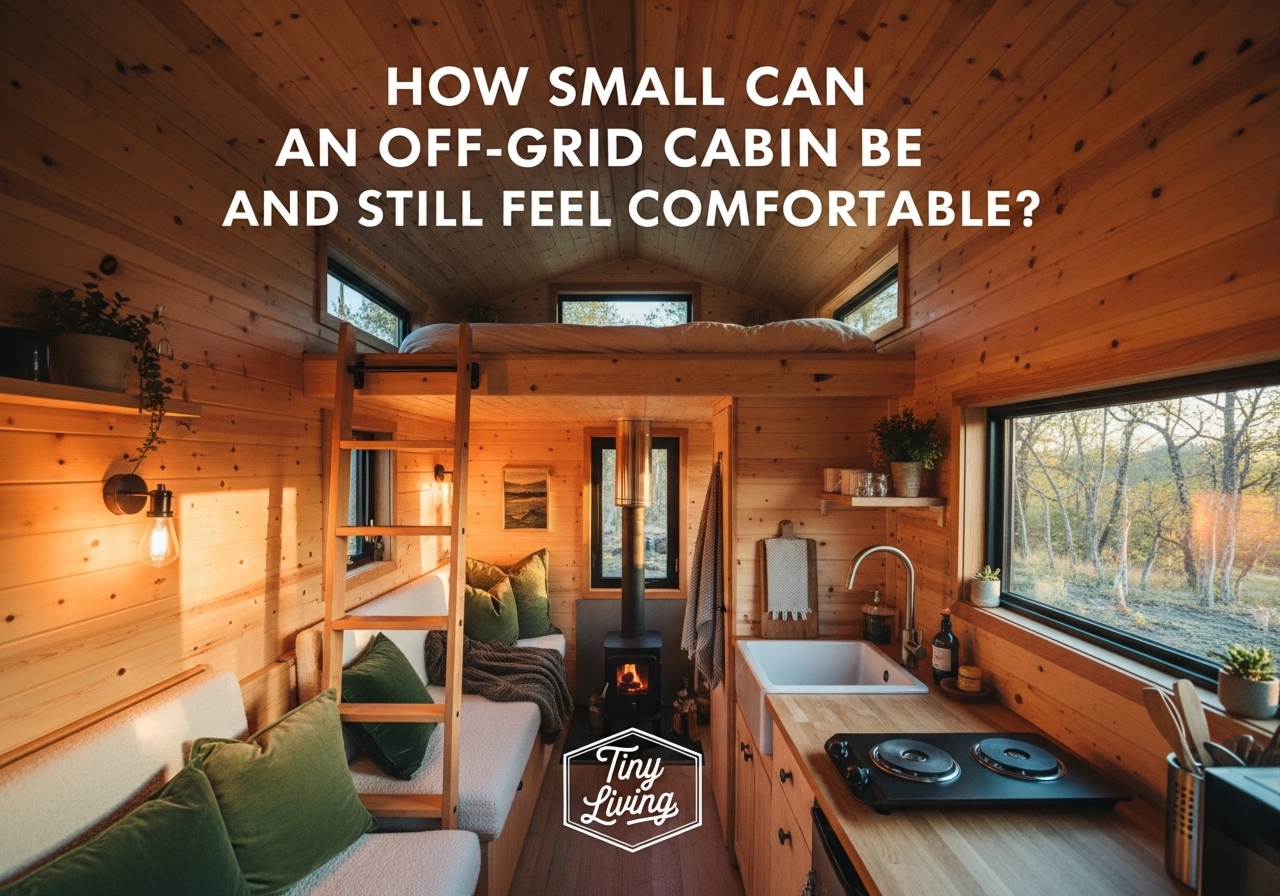
Can you really feel comfortable in an off‑grid cabin that’s under 300 square feet, and what tradeoffs will you make to get there?
How Small Can An Off‑Grid Cabin Be And Still Feel Comfortable?
You want to know the smallest size that still feels like a home rather than just a shelter. This article breaks down the practical minimums, design strategies, systems, and real examples so you can decide how tiny you want to go without sacrificing comfort.
What “comfortable” means for an off‑grid cabin
Comfort varies from person to person, but when you plan an off‑grid cabin you should define a few key comfort criteria: sleeping quality, indoor climate, basic sanitation, food prep, and storage. Thinking clearly about which of these you prioritize will guide how small the cabin can realistically be.
Physical comfort: space to move and sleep
You need enough room to sleep without constant contortion, and to move without feeling claustrophobic. For most people, a dedicated sleeping area or loft of at least 30–40 square feet for a double mattress is a baseline.
Thermal comfort: staying warm and dry
Thermal comfort on an off‑grid site depends heavily on insulation, heating method, and ventilation. If you plan properly, even a very small cabin can stay comfortable year‑round with less energy demand.
Functional comfort: cooking, sanitation, and storage
You want to cook safely, store food and gear, and manage waste without constant trips off-site. Small cabins require efficient, multi‑purpose systems to maintain these functions in a compact footprint.
Minimum practical sizes and what they allow
There is no single correct size, but practical thresholds are useful for planning. Below is a quick guide to common size categories and what you can realistically fit in them.
| Size category | Typical area (sq ft) | What it usually allows |
|---|---|---|
| Micro | 80–150 | Sleeping loft or single bed, small kitchenette, bucket or compost toilet, very limited storage |
| Very small | 150–250 | Full-size bed or loft, compact kitchen, sitting area for 1–2, small composting or cassette toilet |
| Tiny | 250–400 | Comfortable kitchen, siting for 2–4, compact bathroom with shower, decent storage and workspace |
| Small cabin | 400–600 | Separate bedroom or larger loft, full bathroom, comfortable kitchen and living area for guests |
You can use this table to match your expectations to a realistic square footage. If you expect to host guests frequently or work from the cabin, plan for a larger end of the spectrum.
Layout strategies that make small spaces feel larger
How you arrange the interior matters as much as the square footage. You must consider sightlines, multifunctional areas, and vertical space to maximize perceived and actual room.
Open plans and sightlines
An open layout with clear sightlines makes a small cabin feel larger because your eye travels uninterrupted. Keep partitions minimal and use furniture instead of walls to define zones.
Vertical use of space: lofts and storage
Lofts are the go‑to strategy for sleeping space, freeing the footprint for living and cooking below. Build storage into stairs, under benches, and above cabinets to use every cubic foot.
Multi‑purpose furniture and hidden storage
You should choose furniture that performs multiple roles—beds that fold, tables that extend, and seating with built‑in storage. These choices reduce clutter and make the space feel intentionally designed.
Sleeping solutions for tiny cabins
Sleeping arrangements define a big portion of the interior plan. Choose a solution that matches your mobility, comfort needs, and how you use daytime space.
Sleeping lofts: advantages and considerations
Lofts free floor area and create a separate sleep zone while keeping costs low. You must ensure safe ladder or stair access, headroom, and sufficient ventilation for comfort.
Transforming furniture: Murphy beds and convertible sofas
A Murphy bed or convertible sofa lets the same room serve as living space by day and bedroom by night. If you plan to host frequently, these systems provide flexibility without permanent space loss.
Bedding and mattress choices
Invest in a mattress that supports good sleep in a compact space, such as an RV‑length or custom short queen. Prioritize quality over cost because sleep quality affects your perceived comfort more than square footage does.
Kitchen design for off‑grid cabins
A functional kitchen is central to comfort; smaller kitchens require careful choice of appliances, storage, and water management.
Compact appliances and fuel choices
You can choose between propane, electric (solar), or manual cooking methods like rocket stoves. Select compact, efficient appliances that match your power and fuel budget.
Counter space and storage solutions
You should design counter space to double as prep and dining area, and use vertical storage for dishes and pantry items. Fold‑down counters and magnetic wall storage save space while keeping things accessible.
Water and sink options
In very small cabins, a single-basin sink fed from a gravity tank or pressure system is common. Consider a foot‑pump or pedal pump to reduce electrical demand and increase reliability.
Bathroom and sanitation options
Sanitation determines health and independence when you’re off the grid. Choose a system that matches your comfort, maintenance willingness, and local regulations.
Composting and dry toilets
Composting toilets are low‑water, low‑maintenance options that work well in tiny cabins. You should inspect ventilation and separation of liquids and solids to avoid odors and ensure hygiene.
Cassette and RV toilets
Cassette toilets are compact and familiar for those who want a flush experience without a septic. They require regular emptying and appropriate disposal or designated dump stations.
Shower options and water heating
A small, efficient shower can exist with minimal water use using low‑flow fixtures or solar shower bags. You might opt for a wet-room style with a drain and greywater plan, or a compact tub if space allows.
Heating, cooling, and ventilation
Environmental comfort requires thoughtful systems that align with your climate and energy resources.
Wood stoves and thermal mass
Wood stoves are efficient for heating small spaces and provide the additional benefit of cooking surfaces in some designs. You should plan thermal mass or insulation to retain heat and prevent overheating when the stove is active.
Propane, electric, and radiant solutions
Propane heaters and small electric resistive heaters can be viable in mild climates or with adequate energy generation. Radiant floor heating is efficient but requires more upfront work and energy planning.
Ventilation and moisture control
You must provide controlled ventilation to avoid moisture buildup, particularly in humid climates or during long hot showers. Consider simple heat recovery ventilators (HRVs) for tight builds to maintain air quality and reduce heat loss.
Insulation and building envelope
The building envelope is the first line of defense for comfort in any climate, and it’s especially critical off the grid to minimize heating and cooling loads.
Insulation levels and R‑values
Higher R‑values reduce energy needs and make a small cabin comfortable with less active heating. Prioritize continuous exterior insulation to avoid thermal bridging and moisture issues.
Airtightness and controlled ventilation
A tight envelope reduces drafts and simplifies temperature control, but you must pair it with mechanical ventilation to manage indoor air quality. Use blower door testing or simple smoke tests to find and seal leaks.
Windows and orientation
You should orient and size windows for passive solar gain and daylighting while avoiding excessive heat loss. Proper overhangs or shutters can give you seasonal control over sunlight and privacy.
Power systems and energy budgeting
Your choice of power system is a major determinant of how small you can go while keeping modern comforts.
Solar PV, battery storage, and inverters
A modest off‑grid solar system can support lighting, refrigeration, pumps, and small appliances when sized to match your usage. Consider battery capacity for cloudy days and seasonal variance, and choose an inverter that meets surge needs.
Backup and hybrid options
A small generator or propane backup can bridge unexpected shortfalls and reduce battery capacity needs. Hybrid systems that combine solar with a generator or grid hook‑up provide flexibility if you expect occasional heavy loads.
Sizing your system: example budgets
You should estimate daily watt‑hours for lighting, refrigeration, pumps, and small appliances to size PV and batteries. Below is a sample energy budget to help you visualize requirements.
| Appliance | Typical watts | Typical daily hours | Daily Wh |
|---|---|---|---|
| LED lighting (6 fixtures) | 60 | 5 | 300 |
| 12V refrigerator | 60 | 24 (cycling) | 1,440 |
| Water pump (DC) | 100 | 0.5 | 50 |
| Laptop (1) | 50 | 4 | 200 |
| Phone charging | 10 | 2 | 20 |
| Misc/charging | — | — | 100 |
| Total | — | — | ~2,110 Wh |
Use this sample to estimate a 3–4 kWh battery bank and 400–800 W of PV for modest autonomy, then scale based on climate and usage.

Water sourcing and management
Water determines how self‑sufficient and comfortable you can be. Choose a strategy that fits your site, climate, and maintenance tolerance.
Rainwater harvesting
Rainwater can be captured from the roof and stored in tanks for non‑potable and potable uses with proper filtration. You should size tanks based on local rainfall patterns and usage to avoid running dry during dry spells.
Wells and hauled water
Wells provide dependable supply but require drilling costs and pumps. Hauling water is labor‑intensive but requires minimal infrastructure and may be a realistic short‑term tactic.
Filtration and treatment
You must treat water for pathogens if used for drinking, using UV, chlorination, or ceramic filters. Regular testing of stored water prevents contamination and protects your health.
| Source | Pros | Cons |
|---|---|---|
| Rainwater | Low infrastructure, scalable | Seasonal variability, treatment required |
| Well | Reliable, continuous | Drilling costs, power for pump |
| Haul | Low initial cost, flexible | Labor/time, storage needs |
Wastewater and greywater strategies
Managing wastewater responsibly preserves your site and meets legal requirements.
Septic systems and mound systems
Conventional septic systems work if soil and site conditions are favorable. Mound systems or engineered treatment may be required in poor soils or high groundwater areas.
Greywater reuse
You can reuse greywater for subsurface irrigation if you avoid soaps with salts or chemicals and follow regulations. This saves water and reduces load on septic systems.
Composting and portable options
Composting toilets eliminate blackwater and reduce septic needs, while portable cassette toilets are simple for temporary setups. You should maintain composting systems properly to avoid hygiene issues.
Materials, foundation, and mobility
Your choice of materials and foundation affects cost, durability, and whether the cabin is permanent or movable.
Skid foundations and minimal footings
Skid or pier foundations minimize site disturbance and are common for small cabins on remote sites. They make the structure easier to relocate and simpler to build without heavy equipment.
Trailer‑based tiny homes
A trailer frame lets you classify the cabin as a vehicle or mobile home in some jurisdictions. You should check local laws and towing capacities before choosing this route.
Durable low‑maintenance materials
Use weather‑resistant cladding and simple roof systems to reduce maintenance. Durable treatments for wood, metal roofs, and composite sidings increase life span while keeping weight reasonable.
Regulations, zoning, and legal considerations
Even off‑grid cabins aren’t free from rules. You need to research local codes, zoning, and permitting requirements before investing.
Tiny house codes and interpretations
Some places have specific tiny home codes; others treat them as accessory structures or RVs. You should contact local planning and building departments early to avoid costly retrofits.
Septic and water permits
Permits for wells, septic, and waste systems commonly apply and may dictate lot size, system type, and setback distances. Compliance protects you from fines and environmental damage.
Land use and camping ordinances
Zoning may restrict permanent living on certain parcels or require minimum dwelling sizes. If you plan to live year‑round, secure a legal right to occupy the site to avoid disputes.
Cost considerations and budget ranges
How much you spend affects size, amenities, and durability. You should budget realistically for materials, labor, systems, and unexpected site costs.
Cost per square foot and total budgets
Tiny cabins often cost more per square foot due to system density, but total cost remains lower than conventional homes. Expect wide range: DIY builds from $20k–$60k, and professionally built small cabins from $60k–$200k depending on finish, systems, and site complexity.
Hidden costs to budget for
You should plan for site prep, soil testing, permits, shipping materials to remote sites, and specialized trades for septic or well installation. Contingency funds of 10–20% are wise.
Economies of scale and DIY vs. professional builds
Doing some work yourself lowers cost and lets you customize, but professionals deliver faster and to code. Consider hiring pros for structural, electrical, and plumbing systems to ensure safety and compliance.
Safety, fire, and emergency planning
Safety systems are essential even in tiny spaces. Smoke, CO detectors, and a fire extinguisher are non‑negotiable.
Fire safety and escape routes
You should plan unobstructed egress and a secondary exit from sleeping areas, especially lofts. Combustible heating methods require clearances, spark arrestors, and safe fuel storage.
Carbon monoxide and ventilation
CO detectors are required if you use combustion appliances like woodstoves or gas heaters—install them at sleeping levels. Regular ventilation and sealed combustion appliances reduce risk.
Emergency water, first aid, and communications
Keep a basic emergency kit, extra water, and a backup communication method such as a satellite messenger if you’re remote. These preparations make you resilient and more comfortable during disruptions.
Accessibility and long‑term living
If you plan to age in place or accommodate mobility limitations, some “tiny” choices become impractical. You should evaluate long‑term needs early.
Designing for mobility constraints
Plan ground‑level sleeping, wider doorways, and walkable layouts if mobility may become an issue. Ramps and grab bars are easy to include at design stage and harder to retrofit later.
Long‑term maintenance and resilience
Choose materials and systems that you can maintain or repair locally without specialized contractors. Simplicity often wins when you’re remote and operating off the grid.
Example floor plans and case studies
Concrete examples help you visualize what’s possible in small footprints. Below are three hypothetical case studies to illustrate tradeoffs.
| Plan | Area (sq ft) | Sleeps | Bath | Power | Heating | Notable features |
|---|---|---|---|---|---|---|
| Micro Retreat | 120 | 1–2 (loft) | Composting toilet | 300W PV | Small wood stove | Minimalist kitchenette, folding table |
| Couple’s Tiny | 280 | 2 (full bed) | Shower + cassette toilet | 800W PV, 2kWh battery | Propane heater + wood stove | Full kitchen, built‑in storage |
| Family Cabin | 520 | 2–4 (separate bedroom) | Full bath + septic | 1.5kW PV, 8kWh battery | Wood stove + electric backup | Separate bedroom, workspace |
You should use these examples to match your needs to a realistic plan and expected system sizes.
Checklist to decide the smallest comfortable size for you
A practical checklist helps you make the final call on size. Work through these questions honestly to match lifestyle to square footage.
- How many people will sleep regularly in the cabin?
- Will you host overnight guests frequently?
- How much time will you spend indoors vs. outdoors seasonally?
- Do you need a dedicated workspace?
- What climates will you face and how harsh are winters?
- Do you want full plumbing and a shower, or will a composting toilet suffice?
- What is your budget for construction and ongoing energy/water systems?
- How important is mobility (trailer vs fixed foundation)?
Answering these will guide your choice of micro, very small, tiny, or small cabin.
Final thoughts: balancing size, systems, and lifestyle
You can make an off‑grid cabin surprisingly comfortable at very small sizes if you prioritize sleep quality, thermal comfort, and efficient systems. Your comfort will come from thoughtful planning, good insulation, reliable water and power systems, and multifunctional design rather than raw square footage.
If you prefer solitude and simplicity, you may be perfectly comfortable in 150–250 square feet; if you need workspace, frequent guests, or full plumbing, plan for 300–600 square feet. Start by listing your non‑negotiables and design around those, and you’ll find the smallest cabin that still feels like yours.