
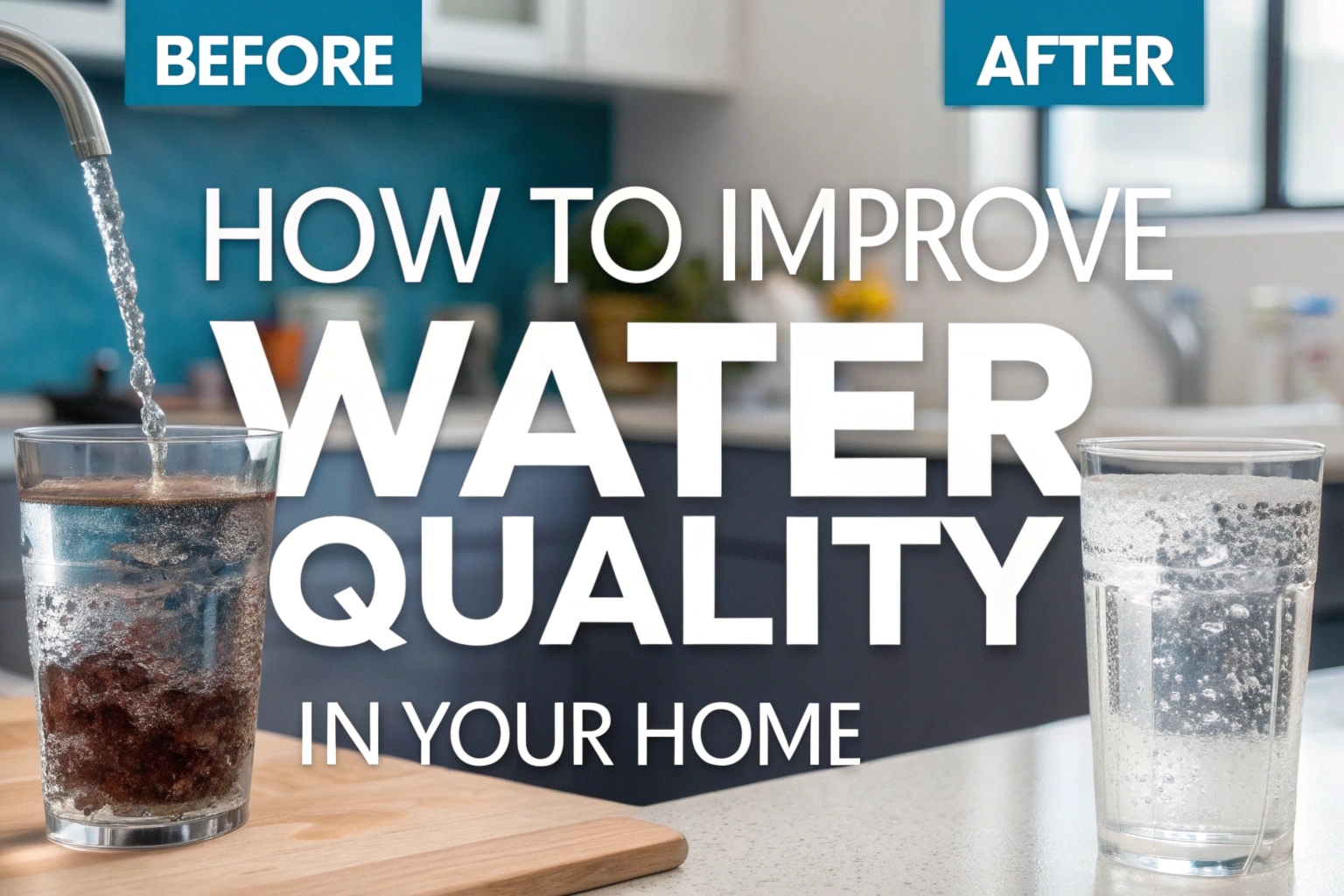
Have you ever turned on your tap and paused, listening as if the sound of the water could tell you whether it is safe, clear, or good enough for the people you care about?
How To Improve Water Quality In Your Home
There is a quiet intimacy to water. It is what you drink, cook with, bathe in, and give to the plants on your windowsill. When something about it changes — a metallic note, a cloudiness, an odd smell — it gets under your skin in a way that small everyday things do. You want to know how to make it better. This article speaks to that need in a practical, human way: clear steps, a thoughtful look at risks and remedies, and guidance so you can decide what to do, calmly and confidently.
Why Water Quality Matters
You think about how water feels on your skin, how it tastes in a cup, how it looks in a glass. It is easy to take good water for granted until you cannot. Poor water quality can cause health problems, damage appliances and fixtures, and change the flavor of your coffee. Beyond the practical, there’s a moral tinge to the question: you want your home to be a safe place. The quality of your water is part of that.
What Can Go Wrong: Common Contaminants
Water carries many things besides hydrogen and oxygen. Some are natural; some come from human activity.
- Microorganisms: bacteria (like E. coli), viruses, and protozoa can cause gastrointestinal illness.
- Metals: lead, arsenic, mercury, copper, and iron may be present from natural sources or corrosion of pipes.
- Chemicals: pesticides, herbicides, industrial solvents (like VOCs), and per- and polyfluoroalkyl substances (PFAS).
- Minerals and salts: calcium and magnesium cause hardness; too much sodium may be unwanted for health reasons.
- Disinfection byproducts: formed when chlorine reacts with organic matter; some are linked to long-term health risks.
- Sediment and particulates: make water cloudy, affect taste, and clog filters.
Each contaminant has a story: where it comes from, how it behaves, and what it means for your home. Understanding those stories helps you choose the right remedy.
How Contaminants Enter Your Water
The route that contaminants take matters. If you get municipal water, it usually comes from surface or groundwater sources treated at a plant. Treatment reduces many risks, but distribution systems and old plumbing can reintroduce problems. If you use well water, your source sits in the earth, making it vulnerable to agricultural runoff, septic system leaks, and natural mineral deposits.
How to Test Your Water
Before spending money on a solution, you need to know what you are treating. Testing is the compass that guides you.
First Steps: Observe and Note
You can glean useful information by paying attention:
- Smell: a chlorine smell, rotten-egg sulfur, or gasoline scent hint at particular issues.
- Taste: metallic, salty, bitter notes provide clues.
- Appearance: cloudiness, sediments, or colored water indicate particles or dissolved minerals.
- Stains: rust-colored stains on sinks or laundry suggest iron; blue-green staining points to copper.
Write these observations down. They will help when you speak with a lab or a water treatment professional.
Do-It-Yourself Test Kits
You can buy home test kits that measure pH, hardness, chlorine, nitrates, and lead. They are inexpensive and give quick answers. Use them as a screening tool, but treat their results as preliminary. Some kits lack the sensitivity needed for low-level contaminants that still have health implications.
Professional Laboratory Testing
A certified laboratory provides precise, reliable results. If you are on a private well, labs can test for bacteria, nitrates, heavy metals, and a broad suite of chemicals. Municipal customers can request a Consumer Confidence Report from their water supplier, which shows regulated contaminant levels. If you suspect lead or a complex contaminant like PFAS, choose a lab that tests specifically for those compounds.
Table: Recommended Tests by Situation
| Situation | Tests to Run |
|---|---|
| Municipal water, no symptoms but concerned | Review annual Consumer Confidence Report; test for lead if home built before 1986 or with older plumbing |
| Municipal water with taste/odor/staining | Bacteria, chlorine residual, iron, manganese, copper, pH |
| Private well, routine check | Bacteria (total coliform, E. coli), nitrates, pH, hardness, iron, manganese |
| Private well near agriculture or industry | Above plus pesticides, herbicides, and specific industrial chemicals as appropriate |
| Suspected heavy metal exposure | Lead, arsenic, mercury, copper (lab test required) |
| Concern about emerging contaminants | Ask lab about PFAS and other site-specific chemicals |
Interpreting Test Results
Test reports list concentrations and often reference regulatory limits or health-based guidelines. For municipal water, the Environmental Protection Agency (EPA) sets Maximum Contaminant Levels (MCLs) for many regulated pollutants. For private wells, there is no federal regulation, so you will compare results to EPA or state health advisory levels. If results show contamination above guidance, you will want to act.
Point-of-Use vs Point-of-Entry Solutions
When you choose treatment, think about scale.
- Point-of-Use (POU): These systems treat water where you use it — for example, a countertop pitcher, under-sink filter, or faucet-mounted unit. They are often less expensive and easier to install.
- Point-of-Entry (POE) or whole-house: These systems treat water as it enters your home, protecting all taps, showers, and appliances. They are more expensive but address bathing water and scale in appliances.
Your choice depends on contaminants, budget, and how much of your home’s water you want treated.
Filtration and Treatment Options
Here are the main technologies, what they remove, and what you should consider.
Activated Carbon Filters
Activated carbon adsorbs organic compounds, chlorine taste and odor, and some pesticides. It’s common in pitchers, faucet filters, and whole-house systems.
- Strengths: Improves taste and smell; removes many organic contaminants and disinfection byproducts.
- Limitations: Does not remove most dissolved salts, nitrates, or metals; needs regular cartridge replacement.
- Best for: Chlorine, bad taste or smell, some VOCs.
Reverse Osmosis (RO)
RO forces water through a membrane that removes dissolved salts, nitrates, fluoride, lead, and many other contaminants. It’s usually installed under the sink.
- Strengths: Very effective for a wide range of contaminants.
- Limitations: Wastewater production (brine) that must be managed; slower flow; removes beneficial minerals, which some people prefer to re-add; filters and membranes need maintenance.
- Best for: Drinking and cooking water where hardness, heavy metals, or salts are concerns.
Water Softeners (Ion Exchange)
Water softeners exchange calcium and magnesium ions for sodium or potassium, reducing hardness that causes scale and soap scum.
- Strengths: Protects appliances, improves lathering of soaps.
- Limitations: Does not remove contaminants like bacteria, lead, or pesticides; increases sodium content in softened water.
- Best for: Hard water problems, especially where scale damages water heaters, pipes, or appliances.
Ultraviolet (UV) Disinfection
UV systems expose water to ultraviolet light that inactivates bacteria and many viruses. It does not remove chemical contaminants.
- Strengths: Chemical-free disinfection; effective against most microbes.
- Limitations: Requires clear water (low turbidity) for effectiveness; no residual disinfection downstream; requires electricity and lamp replacement.
- Best for: Well water with microbial contamination that is not associated with high particulates.
Distillation
Distillation boils water and then condenses the steam, leaving many contaminants behind.
- Strengths: Removes many minerals, metals, and biological contaminants.
- Limitations: Energy-intensive; slow; can produce flat-tasting water; does not remove some volatile organic compounds unless designed to capture them.
- Best for: Removing a broad range of contaminants when you need a simple, robust method for drinking water.
Sediment Filters
These trap sand, rust, and particulate matter. They often precede other filters to protect membranes or carbon beds.
- Strengths: Protects downstream systems; inexpensive.
- Limitations: Only removes particulates; requires regular cleaning/replacement.
- Best for: Cloudy or turbid water, pre-filtration for RO or UV systems.
Specialty Filters for Specific Contaminants
- KDF and catalytic carbon: Improve chlorine removal and control bacteria when combined with other media.
- Arsenic-specific adsorption: Media designed to remove arsenic.
- Ion exchange for nitrate removal: For areas where nitrates are a problem.
- PFAS adsorbents: Activated carbon and some specialized resins can reduce PFAS, though effectiveness varies.
How to Choose the Right System
You do not need every technology. You need the right one.
- Start with testing to identify contaminants.
- Match the technology to the contaminants. Use the table below as a guide.
- Consider flow rate and your household’s water usage. Whole-house systems must handle peak flow.
- Think about maintenance: filter changes, cartridge costs, electrical needs.
- Check certifications: NSF/ANSI standards validate performance claims. Look for certified products for specific contaminants (e.g., NSF/ANSI 53 for health-related contaminant removal).
- Factor in installation: DIY-friendly under-sink RO units are different from professionally installed whole-house systems.
- Consider long-term costs: initial purchase, installation, filter replacements, electricity, and waste disposal.
Table: Common Systems and Contaminants Removed
| System | Removes or Reduces | Typical Maintenance |
|---|---|---|
| Activated carbon (POU or POE) | Chlorine, taste, odor, some VOCs, some disinfection byproducts | Replace cartridges every 3–12 months depending on usage |
| Reverse osmosis | Lead, fluoride, nitrate, sodium, many dissolved solids | Replace pre/post-filters and membrane per manufacturer (6–24 months for filters; 2–5 years for membranes) |
| Water softener | Calcium, magnesium (hardness) | Salt refills every 1–3 months; occasional resin cleaning |
| UV disinfection | Bacteria, many viruses, protozoa (if water is clear) | Replace lamp annually; clean sleeve as needed |
| Distiller | Broad removal of minerals and many contaminants | Clean boiling chamber periodically; energy cost ongoing |
| Sediment filter | Sand, rust, particulates | Replace or clean based on turbidity (monthly to yearly) |
Installation and Professional Help
Some systems are straightforward for you to install; others benefit from a professional. Whole-house systems, connections to your main line, and complex multi-stage systems often require plumbers or certified water treatment installers. A professional can size the system properly and ensure compliance with local codes.
When interviewing a professional:
- Ask for references and licenses.
- Request a clear breakdown of costs and services.
- Ask about follow-up maintenance and service agreements.
- Verify that replacement parts are readily available.
Maintenance and Replacement Schedules
A system is only as good as the care you give it.
- Follow manufacturer recommendations for filter changes and membrane replacement.
- Keep a log of service dates and filter changes.
- Check for pressure drops or changes in taste/odor as clues to required maintenance.
- Sanitize storage tanks and filter housings periodically to avoid bacterial growth.
Neglected filters can become breeding grounds for microbes or lose effectiveness. Treat maintenance as part of household routine, like changing batteries in a smoke alarm.
Plumbing, Fixtures, and Corrosion
Sometimes the problem isn’t the source but the pipes. Lead pipes, old solder, brass fixtures, and corroded distribution lines can leach metals into water.
- Homes built before the mid-1980s are more likely to contain lead plumbing or lead solder.
- Flushing taps for 30 seconds to 2 minutes before using water for drinking can reduce lead exposure in many cases, especially after water has been stagnant for several hours.
- Replacing fixtures and lead-containing pipes is a permanent solution; use a licensed plumber to assess and replace piping as needed.

Health Considerations and Sensitive Populations
If you live with infants, pregnant people, elderly individuals, or people with weakened immune systems, you should be particularly cautious.
- Infants are vulnerable to nitrate contamination.
- Pregnant people should avoid high lead exposure.
- Immune-compromised people are more susceptible to waterborne pathogens and may require point-of-use filters that remove bacteria and viruses (or use bottled/boiled water when necessary).
Always consult health professionals if you suspect water-related illness.
Municipal vs. Well Water: Different Paths, Different Priorities
Your action plan depends on your source.
- Municipal water: The supplier treats for many contaminants and monitors compliance. Your focus may be on taste, chlorine, or household plumbing issues like lead.
- Well water: You are responsible for testing and treating. Test at least annually for bacteria, nitrates, and other local concerns. After heavy rains or nearby construction, test again.
Emergency Measures and Short-Term Fixes
If testing reveals contamination or if you suspect acute contamination, there are short-term actions you can take.
- Boiling: Boiling water for at least one minute (three minutes at altitudes above 6,500 feet) kills most pathogens. Boiled water should be refrigerated and used within 24–48 hours.
- Chlorination: Household bleach (unscented) can disinfect water in emergencies. Use 2 drops of 6%–8.25% unscented bleach per quart (liter) of water, mix, and let stand 30 minutes. If water is cloudy, pre-filter with a cloth.
- Bottled water: Use for drinking and cooking if you cannot assure safety.
- Point-of-use filters: Some portable filters can remove bacteria and protozoa; read product claims carefully to ensure they cover the contaminants of concern.
Environmental Impacts and Sustainability
You care about your water and the planet. Some solutions have environmental tradeoffs.
- Reverse osmosis produces wastewater — consider units with lower waste ratios or use the waste for irrigation (if safe).
- Single-use filter cartridges create plastic waste; opt for systems with recyclable cartridges or that use long-life media.
- Water softeners discharge brine that can impact municipal wastewater systems; check local regulations and consider salt-free alternatives if needed.
Balancing health benefits and environmental stewardship is a personal choice, informed by the specifics of your situation.
Costs and Financing
Costs vary widely.
- Pitcher or faucet filters: low upfront cost ($20–$200), ongoing filter replacement.
- Under-sink RO: moderate ($250–$1,000) plus maintenance.
- Whole-house systems: higher ($2,000–$6,000+) including installation.
- Ongoing costs: replacement filters, salt for softeners, electricity for UV or distillers.
Remember to budget for maintenance. A lower-cost system that you neglect may perform worse than a higher-cost system you maintain.
Regulations and Standards
In the United States, the EPA regulates public water systems and sets MCLs for many contaminants. Private wells are not regulated federally. For treatment technologies, look for NSF/ANSI certifications:
- NSF/ANSI 42: Aesthetic effects (taste, odor, chlorine).
- NSF/ANSI 53: Health-related contaminant reduction (lead, VOCs, etc.).
- NSF/ANSI 58: Reverse osmosis systems.
- NSF/ANSI 55: UV disinfection.
Certifications mean third-party testing verified a system’s claims.
What to Expect During Installation
Expect a few practicalities:
- Shutoff valves will be used; water may be turned off briefly.
- For whole-house systems, a bypass valve often lets you bypass treatment during maintenance.
- If drilling or excavation is needed for external tanks or tanks for softeners, expect some yard disturbance.
- Permit requirements vary; a professional should advise you.
Keep a folder with manuals, warranties, and a maintenance log.
Frequently Asked Questions
Q: Do I need a filter if I have municipal water? A: Not always. If your municipal supplier reports compliance and you are not seeing taste, odor, health, or plumbing issues, a filter may be optional. Many people choose a point-of-use filter for improved taste and peace of mind.
Q: How often should I test my well? A: At minimum, annually for bacteria, nitrates, and other local concerns. Test more frequently if you have infants, notice changes, or after heavy rains.
Q: Will boiling remove chemicals like lead? A: No. Boiling kills microbes but concentrates dissolved chemicals like lead and salts.
Q: Do reverse osmosis systems remove fluoride? A: Yes, RO systems commonly remove fluoride. If you use RO water for drinking, consider whether you want to reintroduce minerals or take supplements if necessary.
Q: Can I treat my whole house with RO? A: Whole-house RO is possible but expensive and generates significant wastewater. Most people use RO for drinking water at the tap and whole-house softeners or filters for scale and particulates.
Checklist: A Practical Action Plan
- Observe: Note tastes, smells, staining, and changes.
- Test: Start with a home kit for screening, then use a certified lab for detailed results.
- Read your Consumer Confidence Report if you have municipal water.
- Identify the contaminants of concern.
- Choose whether you need point-of-use or whole-house treatment.
- Compare technologies and certifications (NSF/ANSI).
- Get quotes from reputable installers if needed.
- Install, then log maintenance and filter changes.
- Retest after significant changes or annually for wells.
Summary: A Quiet Assurance
You do not need to be an expert to make sensible choices about the water in your home. You need curiosity, careful observation, and a willingness to act when tests tell you there is something to fix. Water treatment can feel technical and sometimes expensive, but it is also an investment in daily comfort and health. Take it one step at a time: observe, test, choose a treatment that matches the problem, and keep up with maintenance. The result is a small, private peace — a glass of water you can give to anyone you love without hesitation.
Additional Resources
- Contact your local health department for guidance on well testing and local contaminants.
- Look for NSF/ANSI certification numbers on product specifications.
- Your water utility’s Consumer Confidence Report (CCR) typically available online gives a starting view of municipal water quality.
You will find, in time, that small actions a test here, a filter change there yield steady reassurance. The water that comes from your tap becomes, in a practical and quiet way, part of how you show care for your household.