
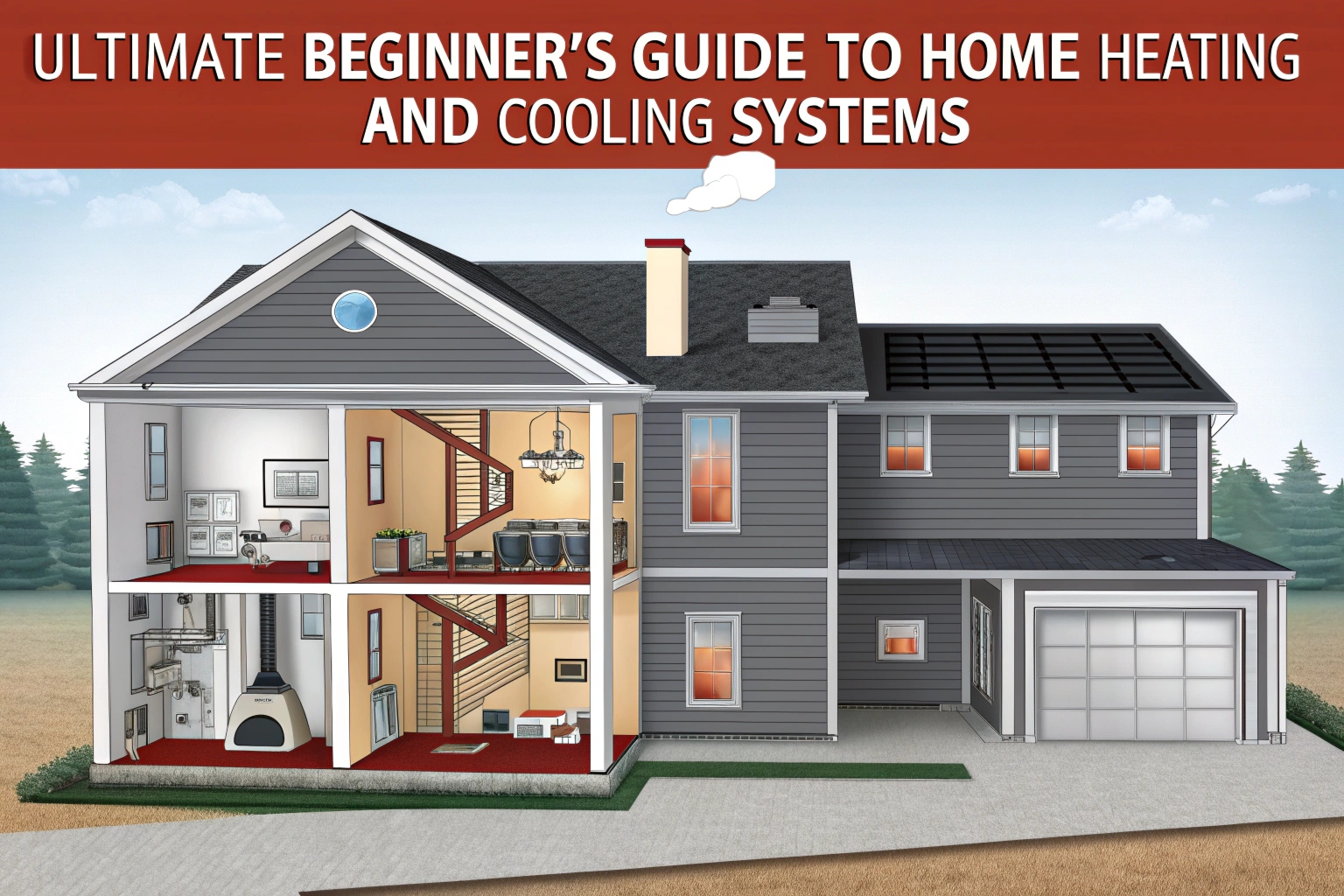
Are you feeling overwhelmed trying to choose, maintain, or understand your home heating and cooling system?
Ultimate Beginner’s Guide To Home Heating And Cooling Systems
This guide is written for you if you’re new to home HVAC (heating, ventilation, and air conditioning) or if you want to make smarter decisions about comfort, efficiency, and costs. You’ll get clear explanations of the main system types, how they work, what each component does, how to size and maintain equipment, and how to troubleshoot common problems. The goal is to make the topic approachable so you can feel confident planning, buying, or caring for your system.
Why understanding your heating and cooling system matters
Knowing how your system works saves you money, improves comfort, and helps prevent emergency breakdowns. You won’t feel at the mercy of contractors or seasonal surprises when you understand basic operation, efficiency ratings, and maintenance needs. This section explains the practical benefits you’ll get from learning the essentials.
Basic HVAC concepts you should know
Before tackling specific systems, it’s useful to know a few core concepts that apply across the board. These include how heat moves, what “load” means, and the role ventilation and humidity play in comfort and health. Understanding these basics helps you follow the rest of the guide with confidence.
Heat transfer and thermal comfort
Heat moves by conduction, convection, and radiation, and your home’s insulation and air sealing control how fast heat is lost or gained. Thermal comfort is affected by air temperature, humidity, air movement, and mean radiant temperature; this is why two rooms with the same thermostat reading can feel different. Getting the balance right reduces energy use and increases comfort.
Heating and cooling load
A load calculation estimates how much heating or cooling capacity your home needs to maintain comfortable temperatures. It considers square footage, insulation, windows, orientation, occupancy, and climate. Proper load calculations prevent oversized or undersized equipment that can be inefficient or ineffective.
Ventilation, indoor air quality, and humidity
Ventilation exchanges indoor and outdoor air to control pollutants and moisture. Proper humidity (roughly 30–50% in most climates) improves comfort and reduces mold risk. You’ll often manage humidity separately through humidifiers or dehumidifiers or indirectly through your HVAC system.
Common types of heating systems
Different homes and climates call for different heating approaches. Below are the primary options you’ll encounter, with pros and cons to help you choose.
Furnaces (gas, oil, electric)
Furnaces heat air and distribute it through ducts and vents. Gas furnaces are common in cold climates and are typically efficient; oil furnaces are less common but used where gas isn’t available. Electric furnaces are simpler but often cost more to run. Furnaces come in various efficiency levels and cabinet sizes to fit different homes.
Boilers (hot water and steam)
Boilers heat water to provide radiant heat through baseboard heaters, radiators, or in-floor tubing. They can be powered by gas, oil, electricity, or biomass. Boilers are quiet and provide even heat, making them popular in older homes. Steam systems are less common but still found in some properties.
Heat pumps (air-source, ground-source)
Heat pumps move heat rather than create it, offering both heating and cooling. Air-source heat pumps are common and increasingly efficient, even in colder climates with modern cold-climate models. Ground-source (geothermal) heat pumps are very efficient but require significant upfront investment. Heat pumps are a strong option if you want a single system for heating and cooling.
Radiant heating (in-floor, panels)
Radiant systems warm surfaces that then radiate heat to occupants, creating comfortable, even temperatures. They can be powered by boilers or electric heating elements. Radiant systems reduce drafts and can be more efficient in some installations, especially with in-floor hydronic systems.
Common types of cooling systems
Cooling systems remove heat from indoor air and discharge it outside, typically using refrigerant and a refrigeration cycle. Here are the most common options you’ll see.
Central air conditioners
Central ACs use a compressor and condenser outside, and an evaporator coil inside, circulating cool air through ductwork. They cool whole homes efficiently and work well with existing ducts. You’ll choose capacity and efficiency ratings when replacing or installing central AC.
Heat pumps (cooling mode)
As noted above, the same heat pump that heats your home can also cool it by reversing the refrigeration cycle. This makes heat pumps versatile, especially in moderate climates. They can be efficient year-round and are available in both ducted and ductless formats.
Ductless mini-splits
Mini-splits have an outdoor compressor and one or more indoor air-handling units mounted on walls or ceilings. They avoid duct losses and provide zoning flexibility, making them ideal for additions, older homes without ducts, or rooms with different comfort needs. Their efficiency ratings are often high, especially when you have multiple zones.
Window and portable units
Window and portable air conditioners cool individual rooms and are lower cost up front. They’re less efficient and noisier than central systems, but they can be a practical short-term or spot-cooling solution.
Key HVAC components and how they work
Breaking down the main parts will help you understand service recommendations and troubleshooting steps.
Thermostat and controls
The thermostat senses temperature and tells the HVAC system when to run. Modern smart thermostats add scheduling, learning algorithms, and remote control via apps. Proper placement of the thermostat affects comfort and efficiency, so don’t put it near a draft, direct sunlight, or heat-producing appliances.
Furnace/boiler components
Furnaces include a combustion chamber or electric elements, heat exchanger, blower, and controls. Boilers include burners, heat exchanger, and pumps for hydronic circulation. Regular checks of the ignition system, heat exchanger integrity, and safety controls are essential for safe operation.
Compressor, condenser, evaporator, and refrigerant
In cooling systems, the compressor pressurizes refrigerant, the condenser expels heat outdoors, and the evaporator absorbs heat indoors. Refrigerant is the working fluid that changes state to move heat. Leaks or low refrigerant reduce cooling and can damage compressors.
Ductwork and air handlers
Ducts distribute conditioned air throughout the house. Leaky, undersized, or poorly insulated ducts reduce comfort and efficiency. The air handler contains the blower and the indoor coil; it’s vital for airflow and filtration.
Fans, blowers, and motors
Blowers and fans move air through the system and the home. Variable-speed motors offer better comfort and efficiency by matching airflow to demand. Maintenance includes cleaning and making sure motors run smoothly.
Sizing your system correctly
Choosing the right capacity is crucial for comfort and energy performance. Oversized or undersized equipment both cause problems.
Load calculations: Manual J and beyond
A Manual J load calculation is the industry-standard method for determining heating and cooling needs. It accounts for local climate, building envelope, solar gain, occupancy, and internal loads. You should get a qualified technician to perform this calculation when selecting equipment.
Why oversized equipment is bad
Oversized systems cycle on and off frequently, which reduces efficiency, increases wear, and leads to poor humidity control. Short cycling also shortens lifespan and causes temperature swings. Proper sizing avoids these issues.
Why undersized equipment is bad
Undersized systems run continuously without keeping up, causing high energy bills and comfort problems. They may never reach setpoint on hot or cold days. Correct sizing ensures the system can meet peak demand while operating efficiently most of the time.
Efficiency ratings and what they mean
Efficiency ratings help you compare systems and estimate running costs. Here are the main terms you’ll encounter.
SEER, EER, and HSPF for cooling and heat pumps
SEER (Seasonal Energy Efficiency Ratio) measures cooling efficiency over a season; higher is better. EER (Energy Efficiency Ratio) measures efficiency at a specific test condition. HSPF (Heating Seasonal Performance Factor) applies to heat pumps and indicates seasonal heating efficiency. Look for higher SEER and HSPF values when you want lower energy bills.
AFUE for furnaces
AFUE (Annual Fuel Utilization Efficiency) measures how much fuel energy a furnace converts to heat. A 90% AFUE furnace converts 90% of fuel into heat, losing 10% through exhaust. Higher AFUE means lower fuel costs.
COP and efficiency for heat pumps and geothermal
COP (Coefficient of Performance) indicates the instantaneous efficiency of a heat pump (heat out divided by electrical input). Ground-source heat pumps often have very high COPs, making them attractive despite higher installation costs.
Comparing systems: quick reference
This table summarizes common systems, how they work, typical pros and cons, and lifespan to help you compare at a glance.
| System | How it works | Pros | Cons | Typical lifespan |
|---|---|---|---|---|
| Gas furnace | Burns gas to heat air, distributes via ducts | Fast heating, reliable, lower fuel cost in gas areas | Combustion safety concerns, venting required | 15–20 years |
| Electric furnace | Electric elements heat air | Simple, safe combustion-free | Higher operating cost in many places | 15–20 years |
| Boiler (hydronic) | Heats water for radiators or in-floor tubing | Even heat, quiet | Higher upfront cost, slower response | 15–30+ years |
| Air-source heat pump | Moves heat between indoors and outdoors | Heats and cools, efficient in mild climates | Performance drops in extreme cold unless cold-climate model | 10–20 years |
| Geothermal heat pump | Moves heat to/from ground loops | Very efficient, low operating costs | High installation cost, site-dependent | 20–25+ years |
| Central AC | Refrigeration cycle with ducts | Efficient whole-home cooling | Duct-dependent | 10–15 years |
| Mini-split | Outdoor compressor, indoor units per zone | Zoning, no ducts needed | Higher upfront cost per zone | 10–20 years |
| Window/portable AC | Self-contained units for rooms | Low cost, easy install | Noisy, less efficient | 5–10 years |
Ducted vs ductless systems
Choosing between ducts and no ducts affects comfort, efficiency, and renovation complexity.
When ducts make sense
If your home already has well-designed ducts, central systems are often the most cost-effective way to heat and cool the entire house. Ducts provide even distribution and are easy to maintain if they’re in good condition.
When to choose ductless systems
If you don’t have ducts, have an addition, or want individual room control, ductless mini-splits can be ideal. They save the expense and disruption of installing ducts and can provide better zone control and higher efficiency for certain setups.
Zoning and controls
Zoning divides your home into areas with separate temperature controls for better comfort and energy savings.
How zoning works
Zoning uses multiple thermostats and motorized dampers in the ductwork (or separate ductless units) to control air delivery to specific areas. This prevents you from heating or cooling unused spaces and allows tailored comfort.
Pros and cons of zoning
Zoning can reduce energy waste and improve comfort, but it adds complexity and cost to installation. Proper design is essential to avoid short-cycling or uneven pressure in ducts.
Indoor air quality and humidity control
Heating and cooling do more than change temperature; they also affect air quality and moisture.
Filtration and air cleaning
Filters trap dust and particles; higher MERV-rated filters catch smaller particles but can restrict airflow if your system isn’t designed for them. You can add electronic air cleaners or UV lights to reduce biological contaminants. Regular filter replacement is one of the most effective maintenance steps you can take.
Humidifiers and dehumidifiers
Humidifiers add moisture during dry winter months to improve comfort and protect woodwork. Dehumidifiers remove excess humidity in summer to improve comfort and reduce mold risk. Some systems integrate with HVAC controls for automatic management.
Maintenance checklist (what you can do and what pros should do)
Regular maintenance keeps systems efficient and reliable. Use the table below for a quick maintenance plan.
| Task | Frequency | Why it matters |
|---|---|---|
| Replace or clean filters | Every 1–3 months | Maintains airflow, improves efficiency and indoor air quality |
| Clean outdoor condenser (AC/heat pump) | Annually or as needed | Prevents airflow restriction and improves efficiency |
| Inspect and clean ducts | Every 3–5 years or as needed | Reduces dust, improves airflow, and avoids leaks |
| Annual professional tune-up | Annually | Ensures safe, efficient operation and catches issues early |
| Check thermostat placement/settings | Annually | Ensures accurate temperature control and energy savings |
| Lubricate motors and inspect belts | Annually | Reduces wear and prevents failures |
| Inspect heat exchanger/venting (furnaces/boilers) | Annually | Safety check to prevent carbon monoxide risk |
| Test safety controls and refrigerant pressures | Annually | Ensures reliable operation and prevents compressor damage |
Troubleshooting common problems
You can often identify simple issues before calling a technician. This section covers frequent problems and practical checks.
System won’t start
Check the thermostat settings, circuit breakers, and emergency switch near the air handler. Replace dead batteries in thermostats. For gas furnaces, ensure the pilot is lit or that electronic ignition is functioning.
Insufficient heating or cooling
Verify the thermostat setpoint and fan mode, clean or replace filters, and check for blocked vents. If the system runs but doesn’t reach temperature, it might be undersized, low on refrigerant (for cooling), or have a failing component.
Short cycling
Short cycles (system turns on and off frequently) may indicate oversized equipment, thermostat issues, or airflow restrictions. Change filters and check for blocked return vents, and call a pro if the problem persists.
Strange noises
Rattles may mean loose panels; grinding or squealing can signal motor or bearing failure. Hissing in cooling systems often indicates a refrigerant leak. Turn off the system if you suspect a mechanical failure and call a technician.
Uneven temperatures
Imbalanced ducts, closed vents, poor insulation, or improper system sizing can cause hot and cold spots. Zoning or duct adjustments usually solve these issues.
Safety considerations and carbon monoxide
Safety is paramount if your system uses combustion.
Carbon monoxide risks
Gas and oil-burning equipment can produce carbon monoxide (CO) if combustion is incomplete or venting is blocked. Install CO detectors near sleeping areas and have combustion systems inspected annually. Never ignore the smell of exhaust or unusual furnace behavior.
Proper venting and combustion air
Make sure vents and chimneys are clear of debris and that fresh combustion air is available. Sealed-combustion appliances draw air from outside and are safer in tightened homes.
Electrical safety
Turn off power at the breaker before doing any work on electrical components. Electrical issues should be handled by qualified technicians.
Costs and financial considerations
Understanding upfront costs and operating expenses helps you make a cost-effective choice.
Installation vs operating costs
Lower-cost equipment can cost more to run, while high-efficiency systems save money over time. Compare lifetime costs by considering equipment price, estimated annual energy use, fuel prices, maintenance, and lifespan.
Rebates, tax credits, and incentives
Many utilities and governments offer rebates or tax credits for high-efficiency equipment, heat pumps, and home efficiency upgrades. Check local programs before purchasing to reduce your net cost.
Financing options
Many HVAC dealers and utilities offer financing for equipment replacement or energy upgrades. Consider loan terms, interest rates, and payback periods when evaluating options.
Choosing a contractor and what to expect
Selecting the right HVAC professional is essential for proper installation and service.
Questions to ask contractors
Ask about licenses, insurance, references, experience with your system type, and whether they perform proper load calculations. Request a written estimate with equipment models, efficiency ratings, warranty details, and a breakdown of labor and material costs.
Installation details to check
Ensure ductwork is sized properly, refrigerant lines are charged to manufacturer specs, and controls (like thermostats) are programmed correctly. Properly installed systems last longer and perform better.
Warranties and service agreements
Understand manufacturer warranties for parts and compressors and ask about labor warranties from the installer. Consider a service agreement for annual maintenance and priority service.
When to repair vs when to replace
Deciding whether to fix or replace aging equipment can be tricky.
Rule of thumb for replacement
If your system is near the end of its expected lifespan, requires frequent repairs, or has a major failure (like a cracked heat exchanger or failed compressor), replacement may be more cost-effective. Consider energy savings from newer, more efficient equipment as part of the decision.
Cost comparison and payback
Estimate repair cost plus projected operating costs versus replacement cost and future energy savings. If repair costs are more than 50% of replacement value or the system is inefficient, replacement is often the smarter long-term choice.
Seasonal checklists: what to do each season
A few seasonal tasks keep your system running smoothly and reduce surprises.
Fall (pre-winter)
Change filters, check insulation and weatherstripping, schedule a furnace or boiler tune-up, and test carbon monoxide detectors. Make sure exterior vents are clear and outdoor condensing units are clean before winter.
Winter (ongoing)
Monitor thermostat settings, keep vents clear, and check humidifier operation if installed. If you have a heat pump, be aware of defrost cycles and winter efficiency differences.
Spring (pre-summer)
Clean or replace filters, schedule AC or heat pump maintenance, clear debris from outdoor units, and check refrigerant levels and airflow. Inspect attic and duct insulation before cooling season.
Summer (ongoing)
Keep thermostat at efficient setpoints, ensure return vents are open, and maintain proper indoor humidity. If cooling performance drops, check the condenser for blockage or schedule a professional check.
Smart thermostats and home integration
Smart controls can improve comfort and save energy.
Benefits of smart thermostats
They provide scheduling, learning algorithms, remote control, and energy reports. Integration with other smart devices and voice assistants allows convenient control. Geofencing features can adjust temperature based on whether you’re home.
Compatibility and installation
Make sure the thermostat is compatible with your system type (heat pump, multi-stage systems, or systems requiring a C-wire). Professional installation ensures proper wiring and configuration.
Glossary of helpful HVAC terms
A short list of terms you’ll see when researching or talking with contractors.
- AFUE: Annual Fuel Utilization Efficiency (furnace efficiency)
- SEER: Seasonal Energy Efficiency Ratio (cooling efficiency)
- HSPF: Heating Seasonal Performance Factor (heat pump heating efficiency)
- COP: Coefficient of Performance (heat pump instantaneous efficiency)
- BTU: British Thermal Unit (measure of heat energy)
- Manual J: Load calculation standard for sizing HVAC systems
- MERV: Minimum Efficiency Reporting Value (filter performance)
- Refrigerant: Chemical fluid used in the cooling cycle
- Short cycling: Frequent on/off operation of HVAC equipment
Final tips to get the most from your system
A few practical recommendations can lead to big improvements in comfort and cost.
- Replace filters regularly and keep returns and supply vents unobstructed.
- Program thermostats for occupied and unoccupied periods to save energy.
- Invest in an annual professional tune-up to extend equipment life and maintain efficiency.
- Consider zoning or smart controls to match comfort needs and reduce waste.
- Evaluate heat pumps if you want combined heating and cooling with high efficiency, especially if you can take advantage of incentives.
Conclusion
You now have a comprehensive view of home heating and cooling systems, including how different systems work, what components do, basic sizing, efficiency metrics, maintenance, common troubleshooting, and safety considerations. Use this knowledge to make informed decisions about repairs, upgrades, and everyday operation so your home stays comfortable and energy-efficient year-round. If you need help with a specific situation like choosing between a heat pump and a gas furnace or figuring out why your AC isn’t cooling feel free to ask for tailored advice.