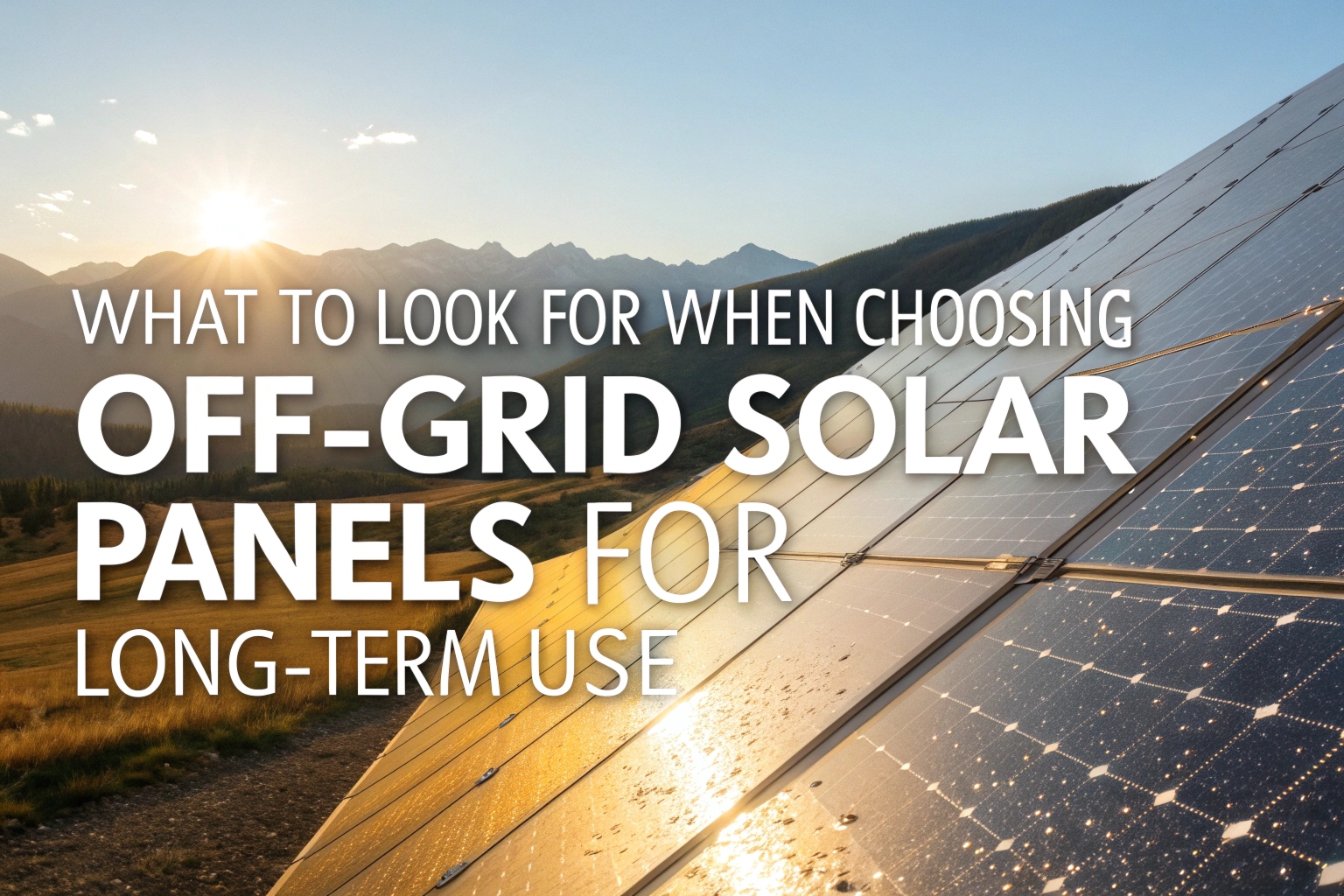
Are you confident the solar panels you choose today will still serve you well a decade or more from now?
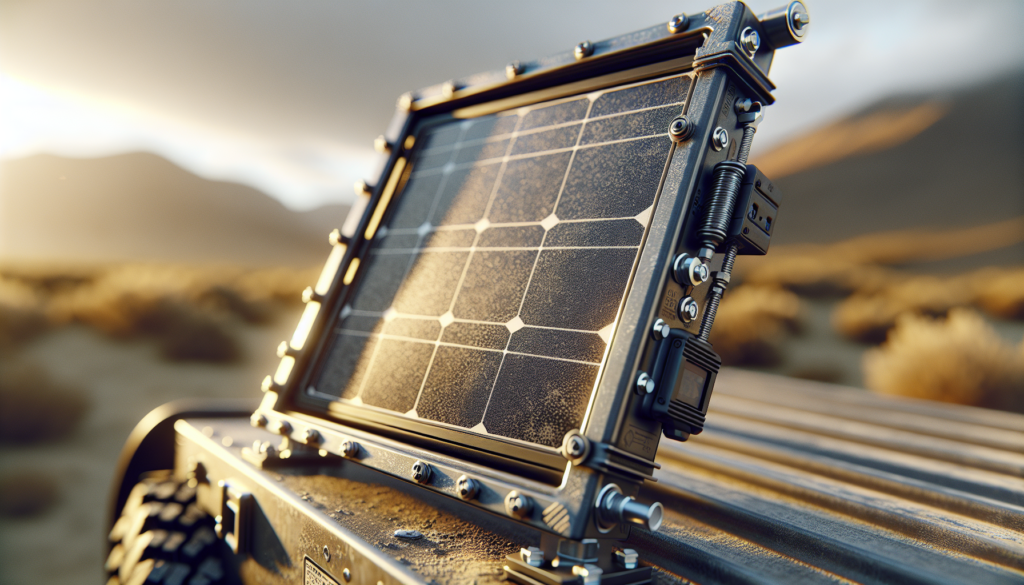
Why long-term thinking matters for off-grid solar
When you’re planning an off-grid solar system, short-term cost is only one piece of the puzzle. You’re committing to a system that must perform reliably through seasons, weather events, and natural ageing. Thinking long-term helps you avoid costly replacements, maintenance surprises, and energy shortages when you need power most.
How off-grid requirements differ from grid-tied systems
Off-grid systems must be self-sufficient and resilient. That means you can’t rely on grid backup, so every component — panels included — needs to be selected for reliability, maintainability, and compatibility with batteries and charge controllers. You’ll prioritize different specs and installation practices than someone merely tying panels to the grid.
Types of solar panels and how they affect longevity
Choosing the right panel technology is foundational. The three main types are monocrystalline, polycrystalline, and thin-film. Each has trade-offs in efficiency, temperature behavior, cost, and long-term degradation.
Monocrystalline
Monocrystalline panels are made from single-crystal silicon and generally offer the highest efficiency and the best performance per area. They often have lower degradation rates and perform better in low-light conditions, making them a strong choice when you want longevity and high energy yield.
Polycrystalline
Polycrystalline panels cost less up front but are slightly less efficient and can show modestly higher degradation over time. If you have ample roof or ground space and want to reduce initial spend, these can work if you accept lower energy density.
Thin-film (CdTe, CIGS, a‑Si)
Thin-film panels are lighter and can perform better in high heat, but historically they have higher degradation rates and larger area requirements. Newer thin-film products can be competitive, yet they rarely match the long-term warranties and proven life of crystalline panels for off-grid systems.
Key panel specifications to prioritize
Understanding specifications helps you compare different models objectively. Focus on efficiency, power tolerance, degradation rate, temperature coefficient, mechanical load rating, and warranty terms.
Efficiency
Panel efficiency determines how much sunlight converts to electricity on a given area. Higher efficiency matters when you have limited mounting space. For long-term use, higher efficiency often correlates with higher-quality manufacturing.
Power tolerance and rated output
Manufacturers state a nominal wattage under Standard Test Conditions (STC). Look for positive power tolerance (e.g., +5W or +3%) rather than negative tolerance; that ensures you aren’t getting less than the rated output over time.
Degradation rate
This is crucial for long-term planning. Typical degradation ranges from 0.3% to 1% per year depending on technology and quality. Lower annual degradation preserves output and value: for example, 0.3% per year leads to better long-term yield than 0.8% per year.
Temperature coefficient
This spec tells you how performance changes as the panel gets hotter. Off-grid systems in hot climates should use panels with a lower (less negative) temperature coefficient so you lose less power during hot days.
Mechanical durability and wind/snow load ratings
Panels should be rated for the wind and snow loads you expect. Off-grid installations in exposed locations or high altitudes often face heavier snow loads and higher wind pressures. Choose panels and racking rated accordingly.
Warranty terms
Warranties usually include a product (material/workmanship) warranty and a performance warranty. Common performance warranties guarantee ~80–92% of rated power after 25–30 years. Read the fine print: what conditions void warranty, and who pays for labor?
Certifications and quality indicators
Certifications demonstrate that panels meet recognized safety and performance standards. It also signal manufacturers that invest in testing and compliance.
Common certifications to look for
- IEC 61215 and IEC 61730 — basic design, performance, and safety testing.
- UL 1703 or UL 61730 — safety for rooftop use (US market).
- CE marking — required for many markets in Europe.
- IEC 62716 — ammonia corrosion resistance (useful for agricultural sites).
- IEC 61701 — salt mist corrosion testing (marine/coastal sites).
Factory audits and traceability
Manufacturers that allow third-party factory audits and have serial-number traceability often provide better quality control. Ask suppliers for manufacturing location, batch testing results, and independent lab reports when possible.
Construction details that influence longevity
Beyond the basic specs, small construction choices greatly affect durability: cells, encapsulant, backsheet, frame, glass, junction box, and connectors.
Cells and cell architecture
Look at cell type (PERC, bifacial, half-cut, shingled). Half-cut cells reduce resistive losses and improve shade tolerance. Bifacial panels recover extra energy from reflected light, but you need a reflective surface and proper mounting to gain benefits.
Encapsulant: EVA vs POE
Ethylene-vinyl acetate (EVA) has been standard but is prone to yellowing and potential PID-related issues over decades. Polyolefin elastomer (POE) offers better resistance to degradation and moisture ingress and is increasingly used for long-term systems.
Backsheet vs glass-glass
Traditional panels use a backsheet (polymer layer). Glass-glass modules sandwich cells between two glass layers and often have better mechanical stability, lower degradation, and improved moisture resistance, though they’re heavier and more expensive.
Frame and mounting interface
Anodized aluminum frames resist corrosion. Check for robust frame profiles, drainage paths for water, and secure attachment points. Frames should be compatible with racking systems you’ll use and allow easy module replacement over time.
Junction box and bypass diodes
Quality junction boxes with IP67 or higher ratings help prevent moisture ingress. Bypass diodes protect against hotspots when partial shading occurs. Ask about replaceability of the junction box and availability of spare parts.
Connectors and cabling
MC4-compatible connectors are standard and proven. Make sure connectors are UV-resistant and rated for outdoor use. Use appropriate gauge cable and consider temperature-related current derating.
Electrical compatibility with off-grid systems
Panels must work well with charge controllers, battery chemistries, and inverters. Mismatch here can reduce efficiency or damage components.
MPPT vs PWM charge controllers
For off-grid systems, MPPT controllers are generally preferred because they harvest more energy, especially in cold or variable conditions. MPPT regulators allow you to use higher-voltage panels and longer strings with lower current losses.
Voltage and string sizing
Know the maximum input voltage (Voc) and current (Isc) of your panels and ensure they remain below charge controller and inverter limits in extreme cold (Voc increases when cold). Also confirm that string voltage stays within safe limits for your MPPT at the lowest expected temperature.
Battery chemistry compatibility
Different battery types have different charging profiles. Ensure your inverter/charger and charge controller support adjustable charge parameters for lead-acid (flooded, AGM), lithium iron phosphate (LiFePO4), or other chemistries. A mismatch can drastically reduce battery life.
Inverter and hybrid setups
If you plan to run AC loads, select an inverter sized for surge and continuous loads. For off-grid, hybrid inverters with built-in chargers and generator interfaces can simplify maintenance and improve resiliency. Check efficiency and idle consumption — lower standby draw saves stored energy.
Sizing your panel array for long-term needs
Correct sizing accounts for current loads, seasonal variations, battery losses, and future growth. Over- or undersizing has cost and reliability implications.
Calculate daily energy needs
List all loads, run-time, and wattage. Factor in inefficiencies: inverter (AC) losses, charge controller losses, wiring losses, and battery round-trip efficiency. This yields the daily solar energy you need to generate on average.
Factor in autonomy and seasonal storage
If you expect cloudy seasons, size battery bank for several days of autonomy. That affects how much daily generation you must budget for recharging batteries after extended cloudy periods.
Use derating factors
Real-world output is less than STC ratings. Use a derate factor (commonly 0.75–0.9) to account for soiling, temperature, shading, inverter losses, and aging. Conservative derate numbers help ensure reliability.
Example sizing table
| Parameter | Example value |
|---|---|
| Daily energy use | 8 kWh |
| Inverter + wiring losses | 10% |
| Battery round-trip efficiency | 85% |
| Needed solar energy per day | 8 kWh / 0.85 / 0.9 ≈ 10.5 kWh |
| Average sun hours (winter worst-case) | 3 hours |
| Required array size | 10.5 kWh / 3 h ≈ 3.5 kW |
| Choose panels (e.g., 350 W) | 10 panels → 3.5 kW |
Adjust inputs for your location and expected worst-case conditions. Conservative estimates prevent shortfalls.
Array layout, shading, and site planning
Panel placement directly affects production. Small shading can dramatically reduce output unless you design around it.
Avoid partial shading and string losses
If panels in a string are shaded, the whole string’s output can drop. Use microinverters, power optimizers, or more MPPT inputs to mitigate shading effects. Consider half-cut cell or advanced layouts to reduce hotspot risks.
Orientation and tilt
Aim panels within ±10–20 degrees of true south (northern hemisphere) for general use; tilt depends on latitude and whether you want to optimize for summer or winter. For long-term off-grid systems, tilting to better capture seasonal sun (higher tilt in winter) can improve winter reliability.
Spacing and maintenance access
Leave space between rows to reduce shading at low sun angles and to allow cleaning and maintenance. Proper spacing avoids future production losses as vegetation grows or snow accumulation patterns change.
Installation, mounting, and mechanical protection
A well-executed installation extends the useful life of panels and ensures safe operation.
Racking and grounding
Use corrosion-resistant racking rated for wind and snow loads at your site. Proper grounding reduces fire and shock risks; follow local electrical codes and manufacturer guidance.
Tilted vs flat mount
Flat mount on ground can increase dust and snow accumulation; tilted mounts shed snow and improve self-cleaning with rain. Consider maintenance access and wind uplift when selecting mounting type.
Lightning and surge protection
Off-grid sites are often in remote, exposed areas and may be more vulnerable to lightning. Use surge protection devices on DC and AC sides and consider proper grounding and bonding practices to reduce damage risk.
Maintenance and monitoring for longevity
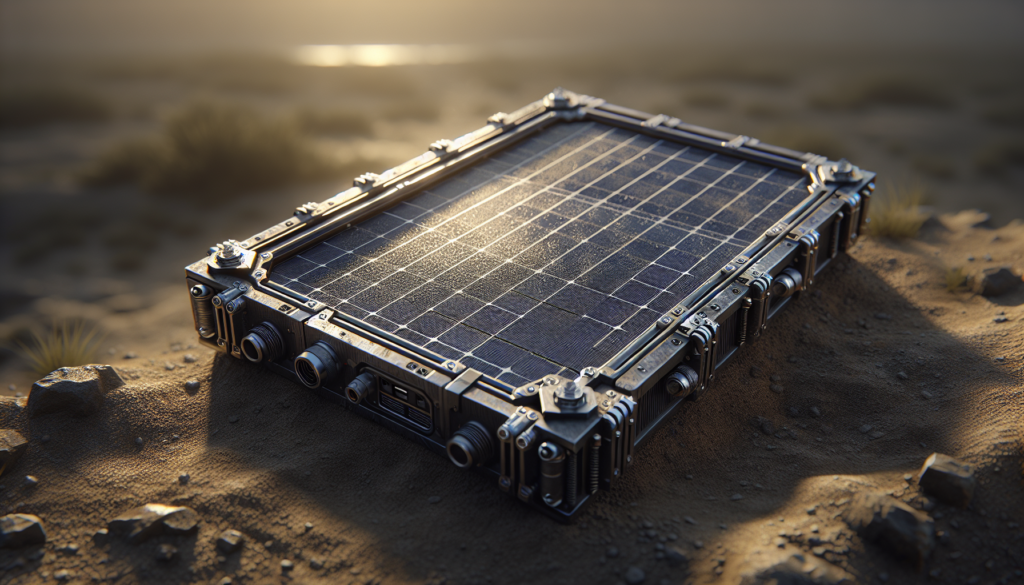
Routine maintenance ensures you catch small problems before they grow.
Cleaning and soiling management
Dust, pollen, bird droppings, and seasonal debris reduce output. Clean panels according to local conditions: higher frequency in dusty deserts, lower in rainy climates. Use manufacturer recommendations to avoid scratching anti-reflective coatings.
Inspection schedule
Inspect mounting hardware, wiring, connectors, junction boxes, and frames annually. Look for discoloration, delamination, cracked glass, or corrosion. Early detection reduces repair costs and safety hazards.
Monitoring systems
Install a monitoring solution that reports per-string or per-panel performance if possible. Monitoring alerts you to underperformance, soiling, or component failure before you experience energy shortages.
Batteries and energy management for long-term off-grid reliability
Solar panels produce energy, but batteries store and supply it when the sun isn’t shining. The two must be sized and managed together.
Battery capacity and depth of discharge (DoD)
Choose battery capacity to match your autonomy goals and load profiles. Batteries with higher recommended DoD give more usable energy but may cycle shorter life if not managed properly. LiFePO4 offers deep DoD (80–100%) and long cycle life compared to lead-acid.
Battery cycle life and temperature sensitivity
Battery lifetimes depend on cycling, DoD, and temperature. Protect batteries from extreme temperatures with insulation, heating, or ventilation. Place batteries in a controlled environment when possible.
Battery management system (BMS)
A proper BMS helps balance cells, prevent over/under-voltage, and manage charging currents — essential for lithium batteries. Ensure BMS communicates with your inverter/charger for coordinated control.
Generator and alternative backup
Consider a backup generator for prolonged cloudy periods or heavy winter loads. Automatic or manual backup should integrate with your charge controller and inverter to avoid overcharging and to manage fuel efficiency.
Parts availability, serviceability, and spares
Long-term use means you’ll need replacements or upgrades. Plan for spares and service access.
Spare modules and parts
Buy an extra panel or two, replacement connectors, and a spare junction box when you install the array. Having spares minimizes downtime and avoids compatibility issues years later.
Manufacturer support and local installers
Pick manufacturers with a track record of honoring warranties and with local service networks or authorized service centers. Local installers who understand off-grid challenges will perform better long-term maintenance than generic roof contractors.
Cost vs lifetime value: LCOE for off-grid systems
Compare options using lifetime cost, not just upfront price. Levelized cost of energy (LCOE) helps you see cost per kWh over expected life, factoring in degradation and maintenance.
Estimating LCOE for panels
Consider initial cost, expected annual energy output accounting for degradation, maintenance costs, and eventual replacement. A slightly higher upfront cost for higher efficiency and lower degradation may reduce lifetime cost per kWh.
Non-monetary considerations
Reliability, safety, and the risk of downtime are harder to quantify but critical for off-grid living. A resilient, lower-maintenance system often brings greater peace of mind than minimal initial savings.
Environmental and installation-specific considerations
Your local climate informs many choices.
Hot climates
Prioritize lower temperature coefficients, good ventilation behind panels, and dust-resistant modules. Cooling improves long-term output and reduces heat stress on materials.
Cold climates and snow
Choose panels and mounting that shed snow and withstand snow loads. Remember that cold increases Voc, so ensure system voltage limits won’t be exceeded.
Coastal and corrosive environments
Use modules and racking with high corrosion resistance and check for salt-mist certifications. Stainless fasteners, aluminum with proper anodizing, and protective coatings prolong life.
High-UV or desert environments
UV-resistant backsheets, durable encapsulants, and sturdy frames help overcome UV-induced degradation. Regular cleaning protocols reduce soiling losses.
Redundancy, scalability, and futureproofing
Design for growth and resilience.
Redundancy in arrays and charge controllers
Multiple strings and multiple MPPT inputs reduce single-point failures. If a string fails, you still have power from other strings while repairs happen.
Modular design for expansion
Use charge controllers and inverters that allow additional input capacity. You might want to add more panels or battery capacity as energy needs increase.
Standardized components
Stick with widely used connectors and inverter brands so future spares and upgrades are easier to source internationally.
Safety and code compliance
Off-grid systems must meet electrical and building codes. Non-compliance risks safety and warranty denial.
Permits and inspections
Even for remote sites, secure required permits and inspections. Compliance reduces liability and ensures proper grounding, overcurrent protection, and safe wire sizing.
Labels and documentation
Keep wiring diagrams, component manuals, serial numbers, and warranty paperwork organized and accessible. That helps technicians and accelerates warranty claims.
Final checklist: what to look for when choosing off-grid panels
Use this checklist when evaluating options.
| Category | What to check |
|---|---|
| Technology | Monocrystalline preferred; consider half-cut/bifacial for performance |
| Efficiency | Higher if space-limited |
| Power tolerance | Positive tolerance preferred |
| Degradation | Look for ≤0.5%/yr if possible |
| Temp coefficient | Lower (less negative) for hot climates |
| Mechanical ratings | Wind and snow load match site |
| Encapsulant/backsheet | POE or glass-glass preferred for longevity |
| Junction box/connectors | IP67+, replaceable, MC4 standard |
| Certifications | IEC, UL, salt-mist/ammonia as needed |
| Warranty | 10–12 year product, 25+ year performance with clear terms |
| Compatibility | Check Voc/Isc vs MPPT/inverter limits |
| Serviceability | Local support, spare parts availability |
| Monitoring | String-level or panel-level if shading is an issue |
Making the final decision
Balance cost, reliability, and expected lifetime production. Ask manufacturers for datasheets, IEC/UL test reports, and warranty claim procedures. Get a professional site assessment and system design if you’re unsure. For critical off-grid setups, invest a bit more in higher-quality panels, better encapsulants, and a robust balance of system components — it pays off over years.
Summary and practical next steps
You want a system that gives energy reliably for years with minimal surprises. Prioritize panel durability, low degradation, proper electrical integration with batteries and MPPT controllers, and site-specific design that responds to shading, weather, and maintenance realities. Before you buy, request detailed datasheets, check independent test results, compare warranties closely, and plan for spares and service.
If you’d like, provide your location, average daily loads, and site photos (roof or ground mount area), and you’ll get a tailored walkthrough for panel selection, array sizing, and recommended components for a long-lasting off-grid system.